

5/10/25 – 7/10/25
Located on the western coast of Honshu, Kanazawa is home to a vast array Edo-era architecture and historical sites, giving it the moniker of Little Kyoto, and putting it high on my to-see list. We arrived in the afternoon, after a two-legged journey from Kyoto – the Thunderbird Express taking us to Tsuruga, where we jumped on the Hokuriku Shinkansen Line to Kanazawa (the 10 minute connection proving more than manageable in a train station designed for this specific transfer in mind!).
At Kanazawa Station, you’re greeted by the incredible Tsuzumimon Gate, modelled on the traditional Japanese tsuzumi drums, and the Motenashi Dome, a large, glass-domed structure connecting the station’s exit to the gate. We made our way through, and decided to walk the 30 minutes to our accommodation – there was a slight drizzle of rain, but it was nothing too onerous!
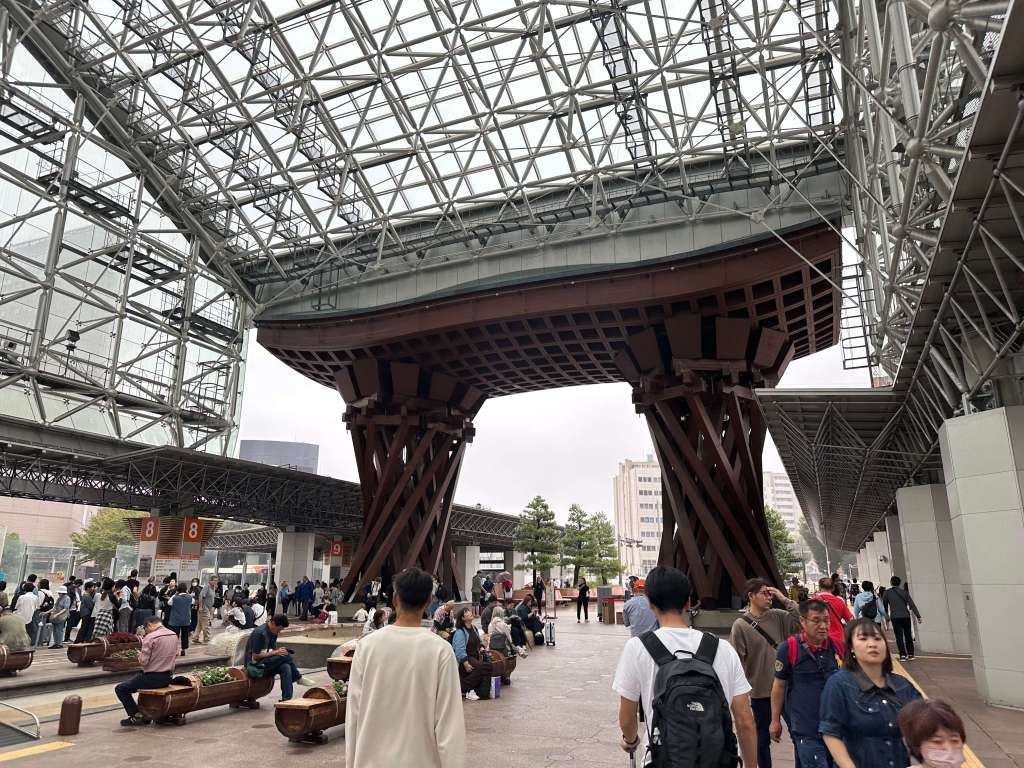
The Tsuzumimon Gate, located at the entrance to Kanazawa Station
After dropping our bags off, we wandered next door to the Omicho Markets, an indoor food and produce market (very much like Nisheki in Kyoto). Amongst the fruit and vegetable stalls, and the fresh seafood on display, were counters serving up delicious Japanese street food. We stopped off at several to try the dishes, including an absolutely delicious A5 wagyu nigiri!
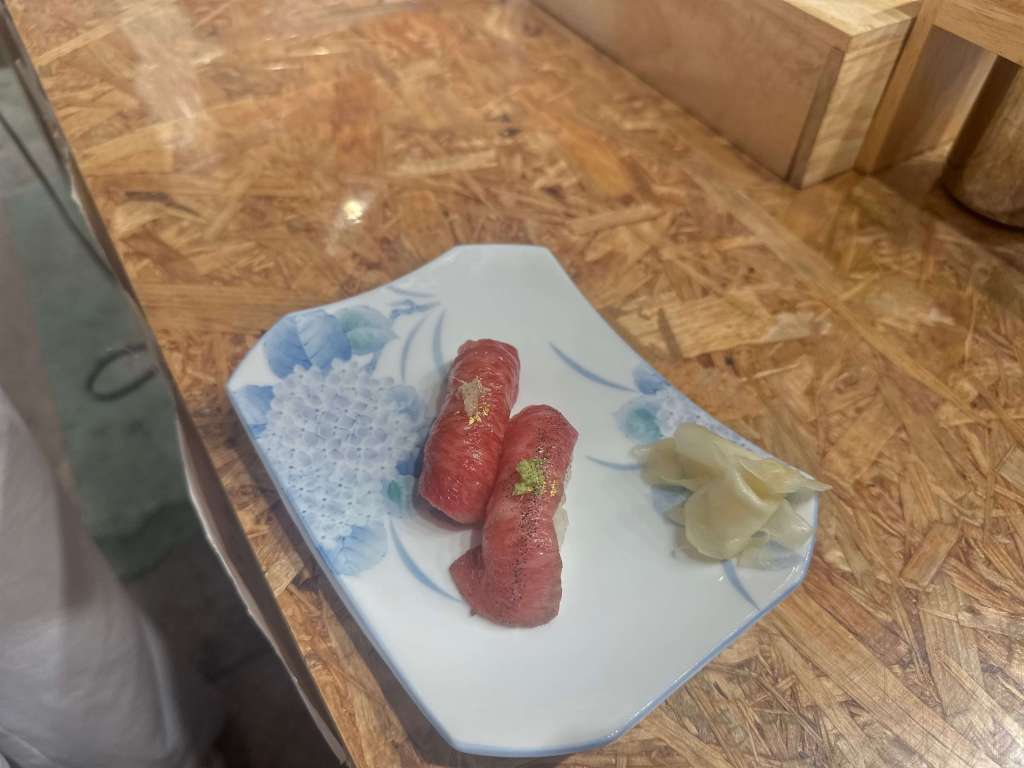
A5 wagyu has an almost buttery taste – it is sliced raw and briefly seared with a flame before being placed on the rice
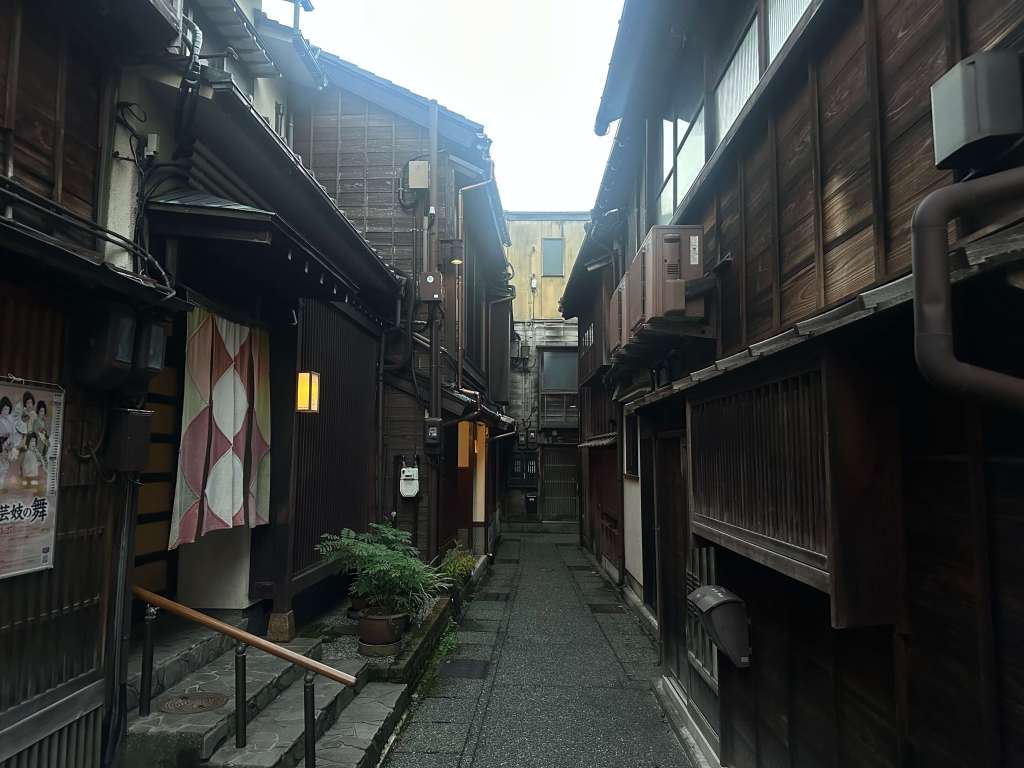
Leaving the markets behind, we headed for the Higashi Chaya geisha district, one of Kanazawa’s Edo-period neighbourhoods. The streets here, whilst completely empty (probably due to the weather) were very reminiscent of Kyoto – it was unsurprising, then, to learn that the Japanese government has been heavily promoting Kanazawa as a way of reducing the tourism burden on Kyoto. We had the streets practically to ourselves, and despite the occasional downpour, were able to see quite a bit before sunset.
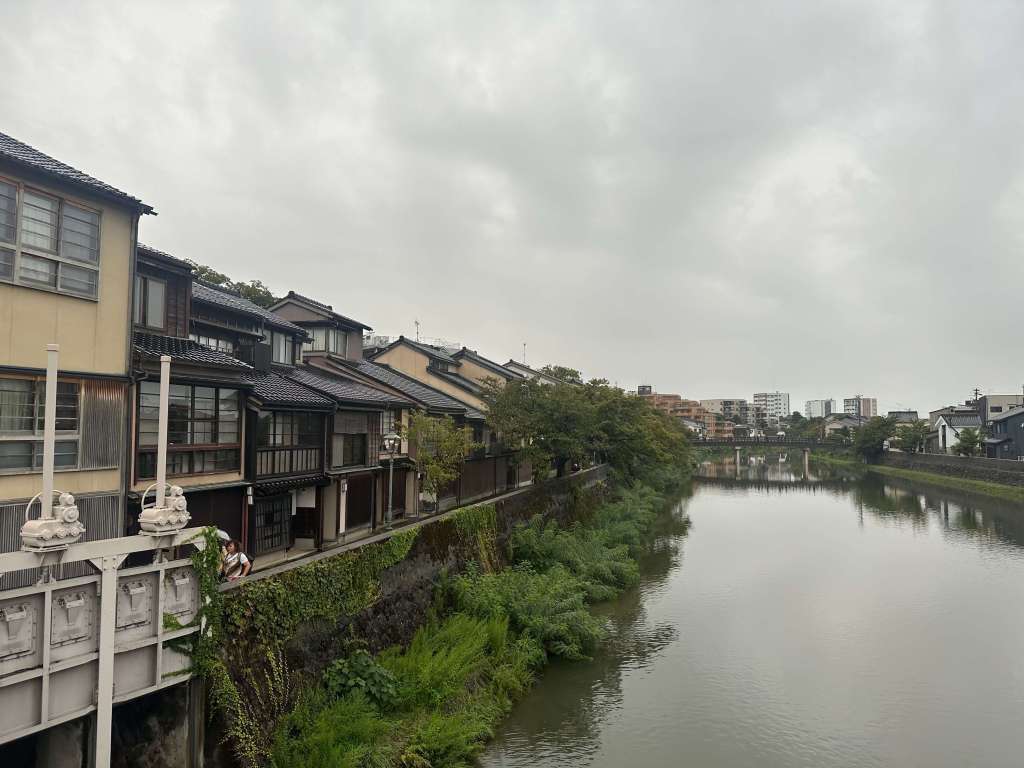
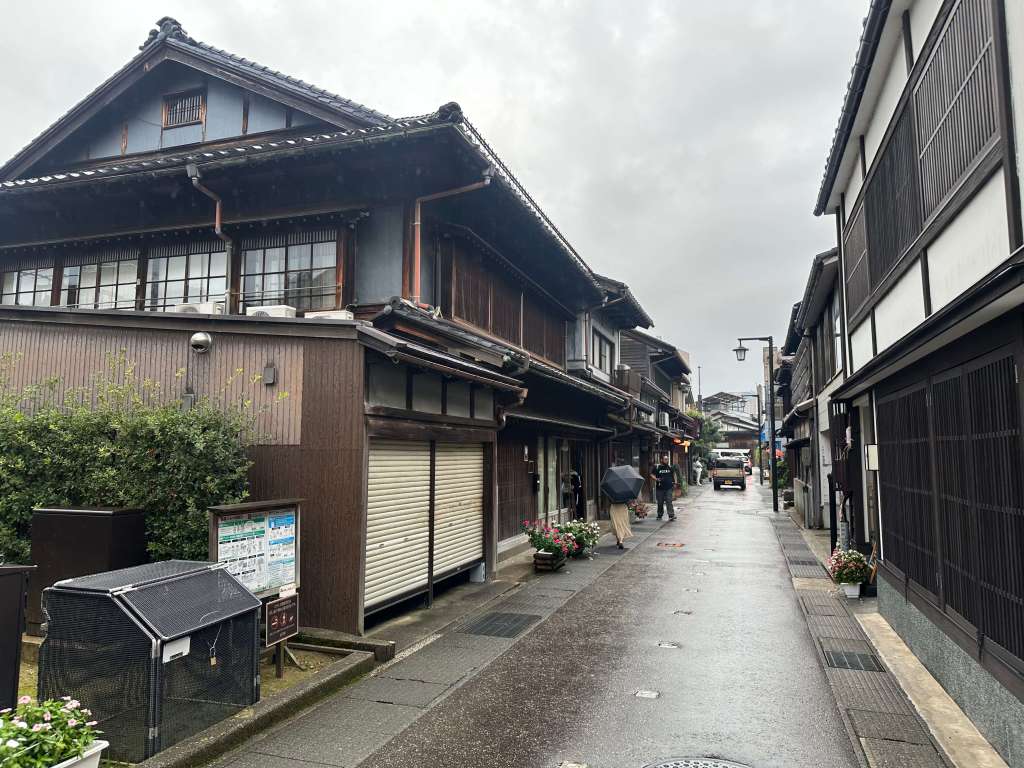
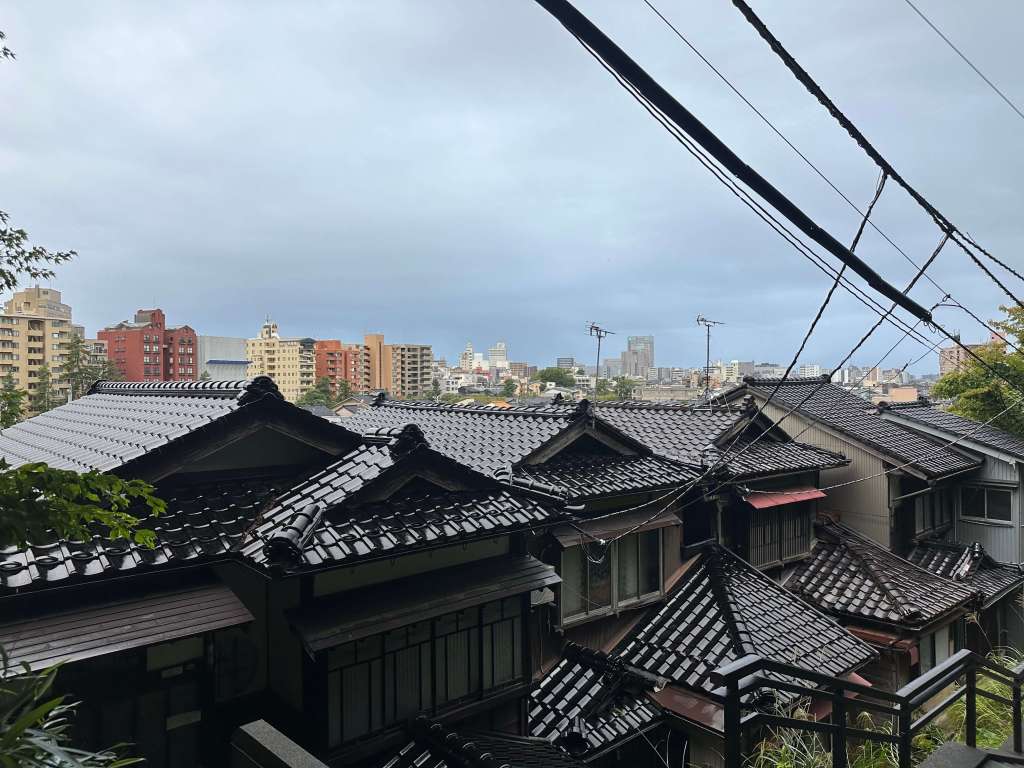
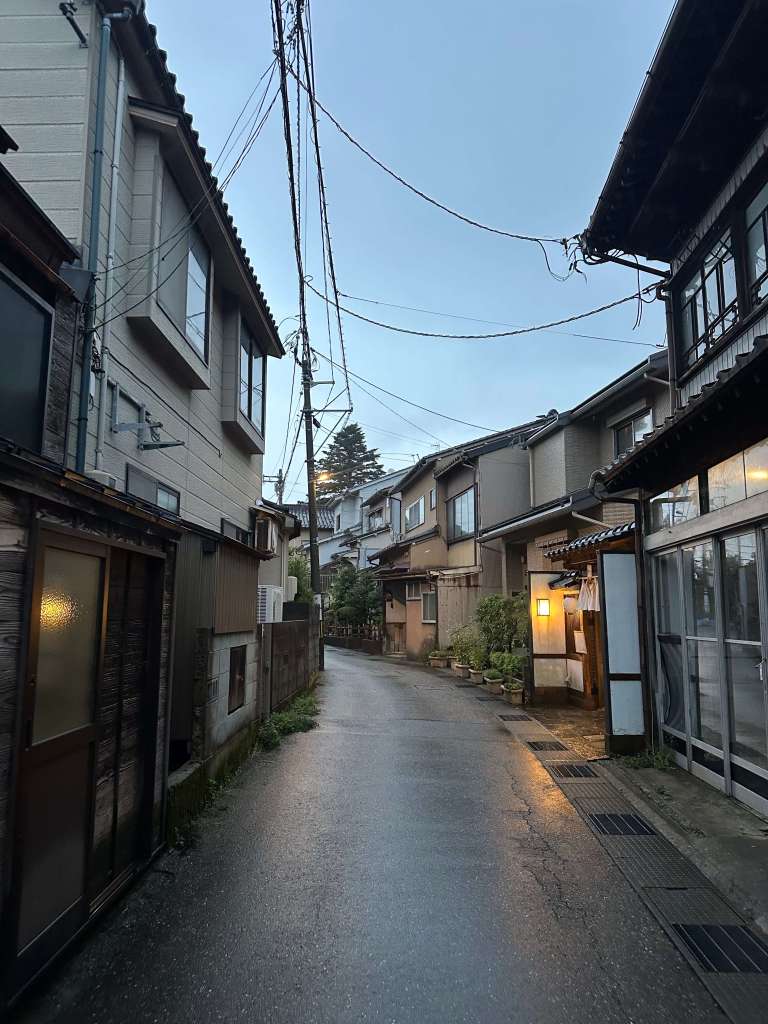
The streets and buildings of Higashi Chaya, one of Kanazawa’s main ‘geisha districts’
Dinner that night, we decided, would be back at Omicho Markets, at what is apparently the best Japanese curry restaurant in town – Curry Laboratory. As we’d discovered previously on our trip, queuing and waiting for a good meal was par for the course here (restaurants, especially the good ones, are pretty tiny), and so we sat outside for about 40 minutes until a space finally opened up. Verdict = very tasty!
The next morning, after a donut and coffee at a nearby cafe, we made our way towards the Sai river, for a wander through the Samurai district. Located at the foot of city’s castle, this was where noble samurai families once lived, and despite all of the changes in the city, it is one of the best preserved areas. The buildings, impressive examples of Edo engineering, are well taken care of, and it is easy to feel transported back to the samurai period! Interestingly, as we walked through one of the main pedestrianised streets in the area, we came across a film crew shooting a scene – we stopped for a few minutes, and watched the actors prepare for the shot (whilst being shielded from the sun by assistants with umbrellas, of course).
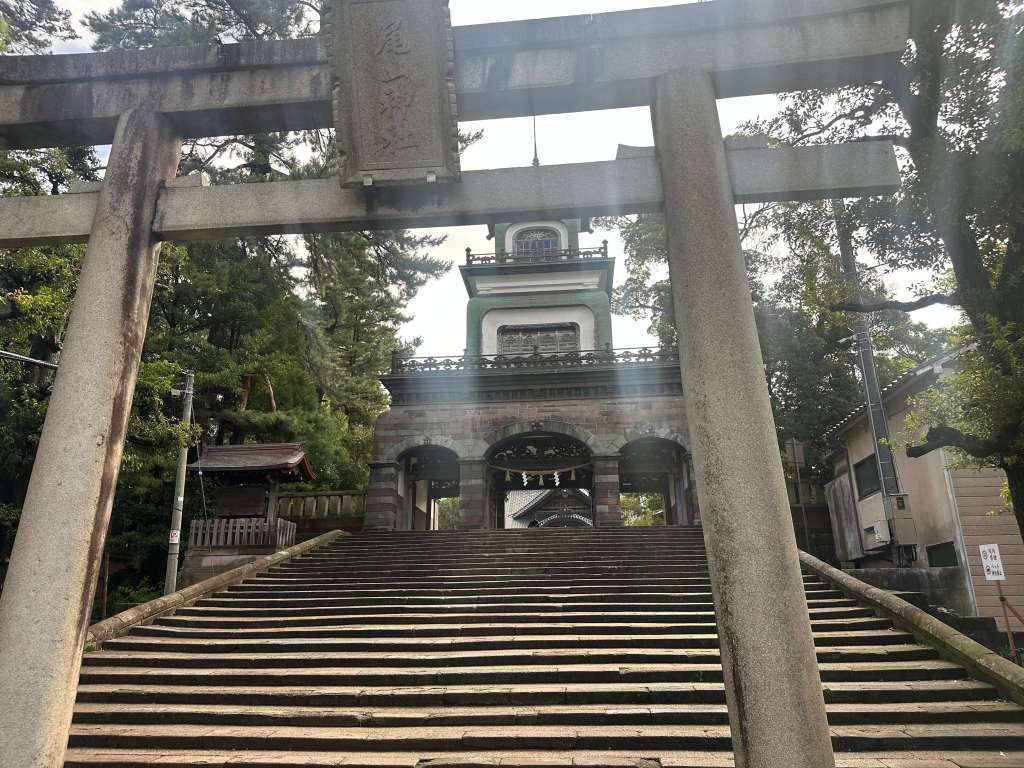
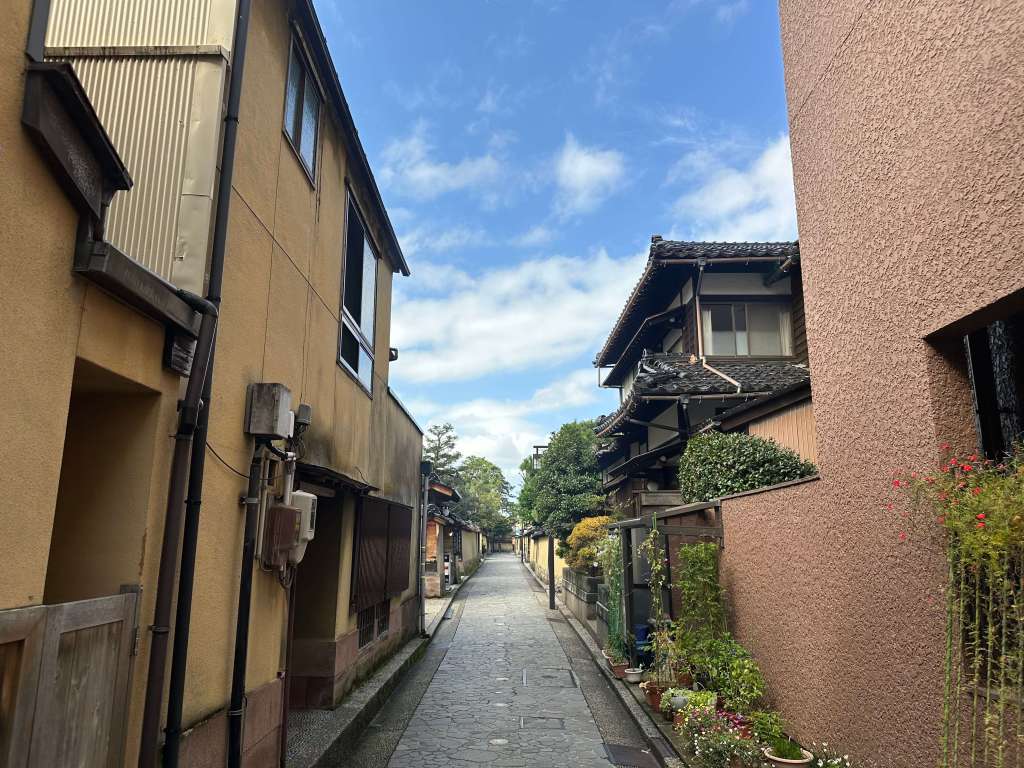
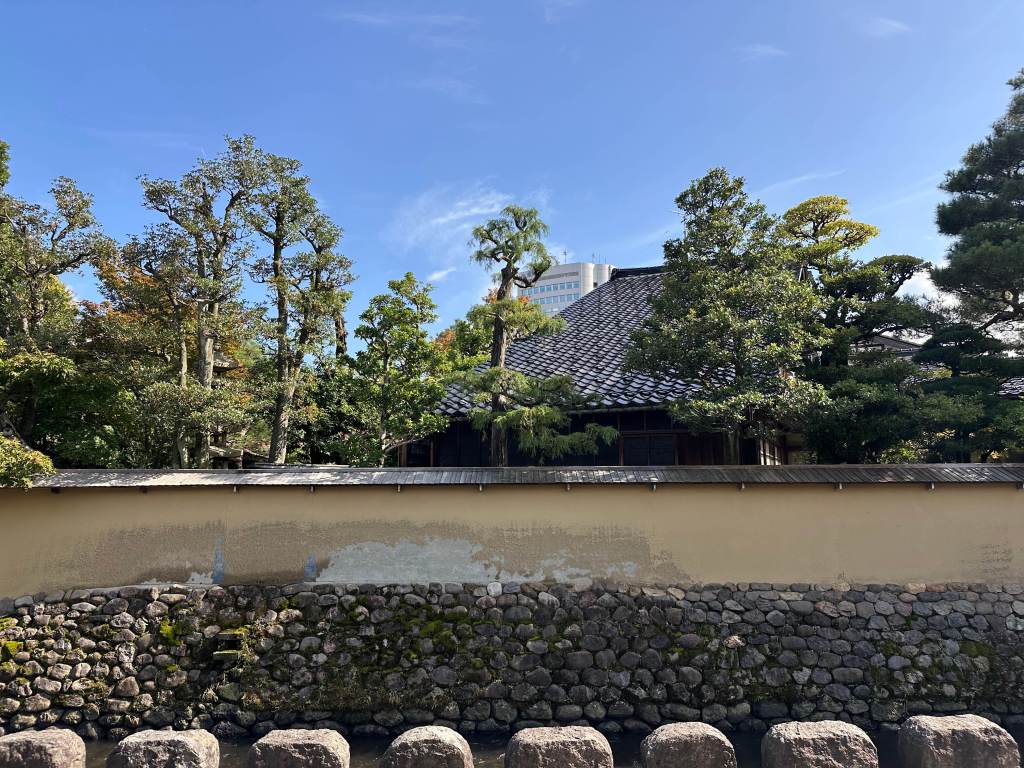
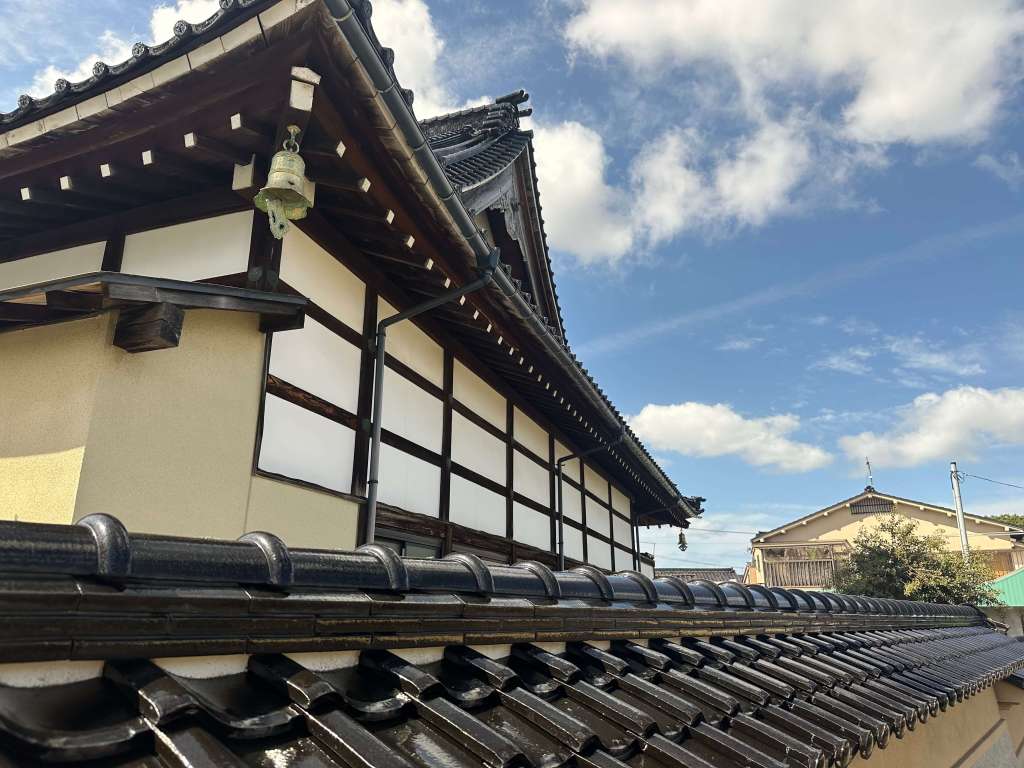
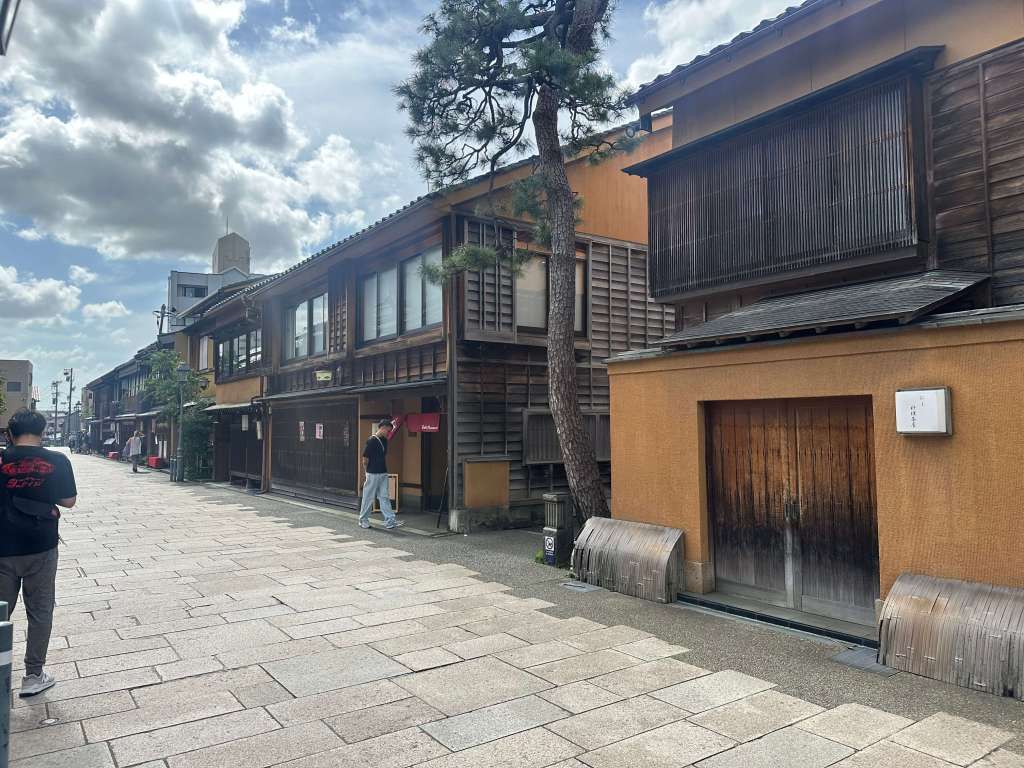
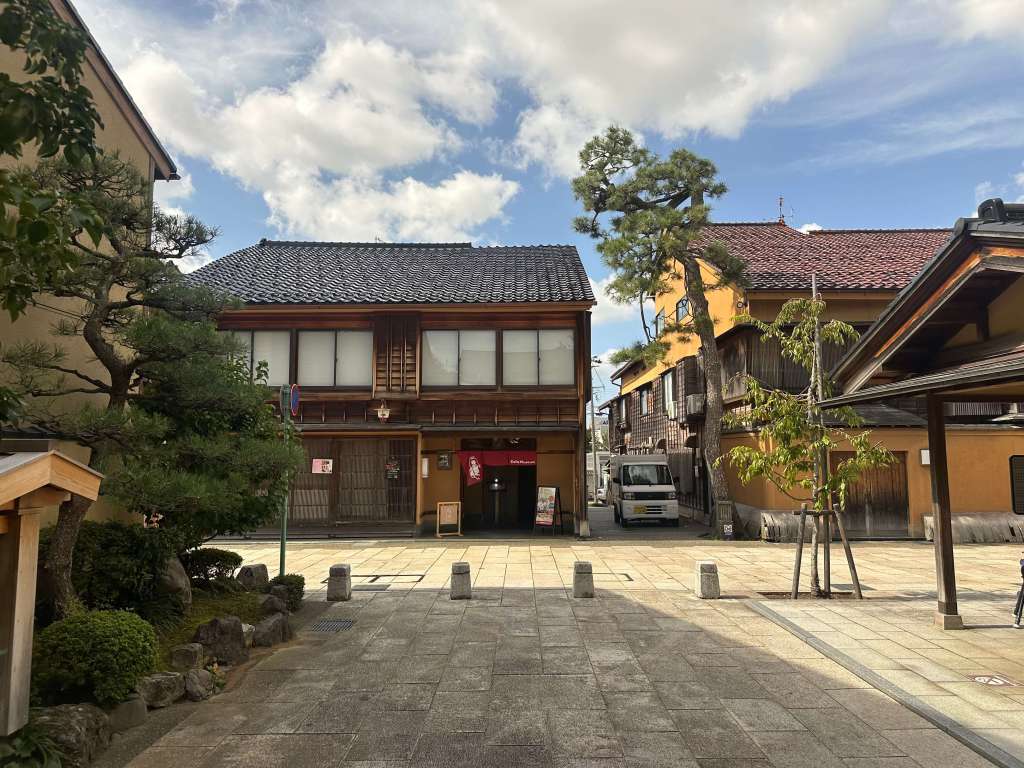
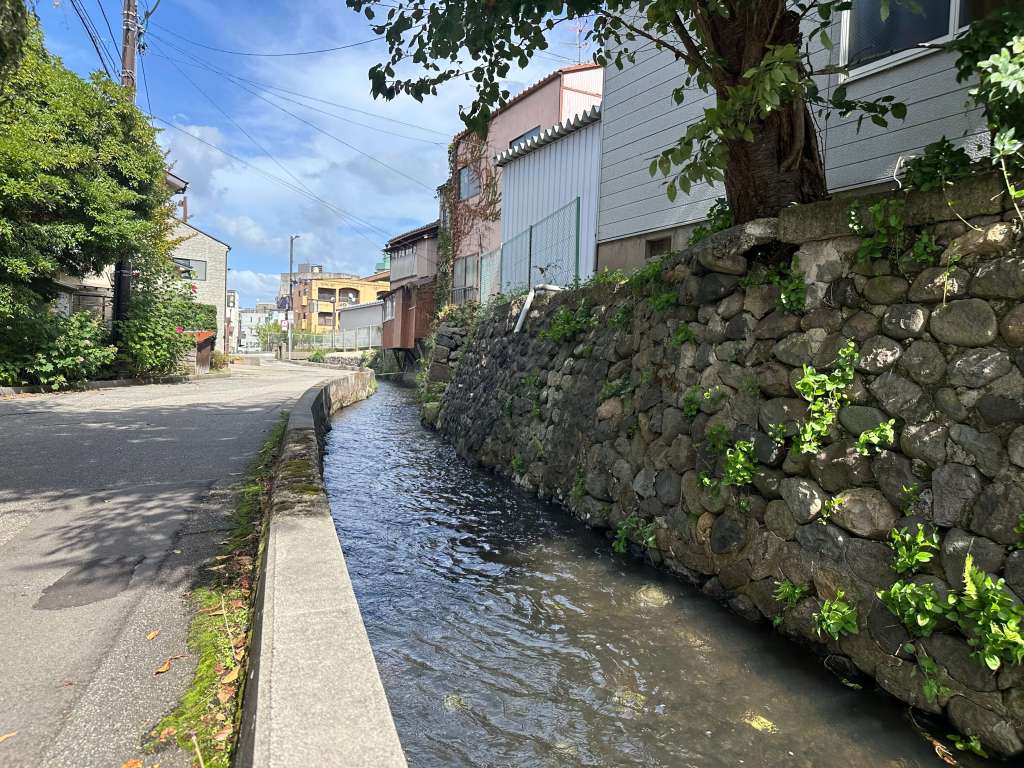
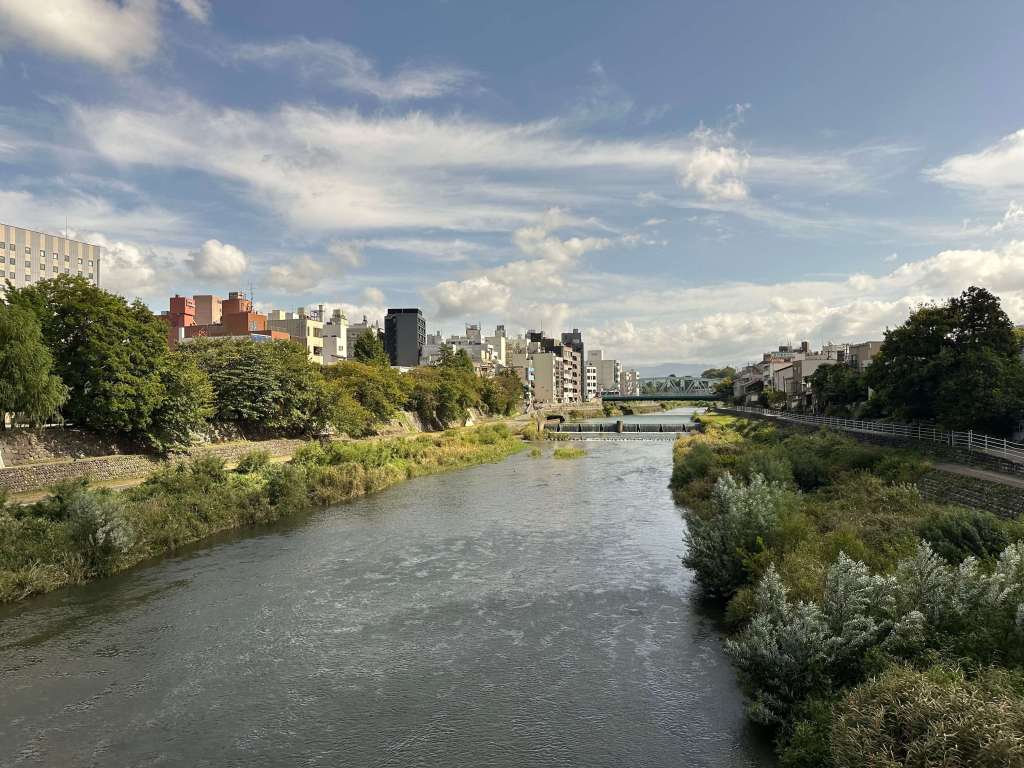
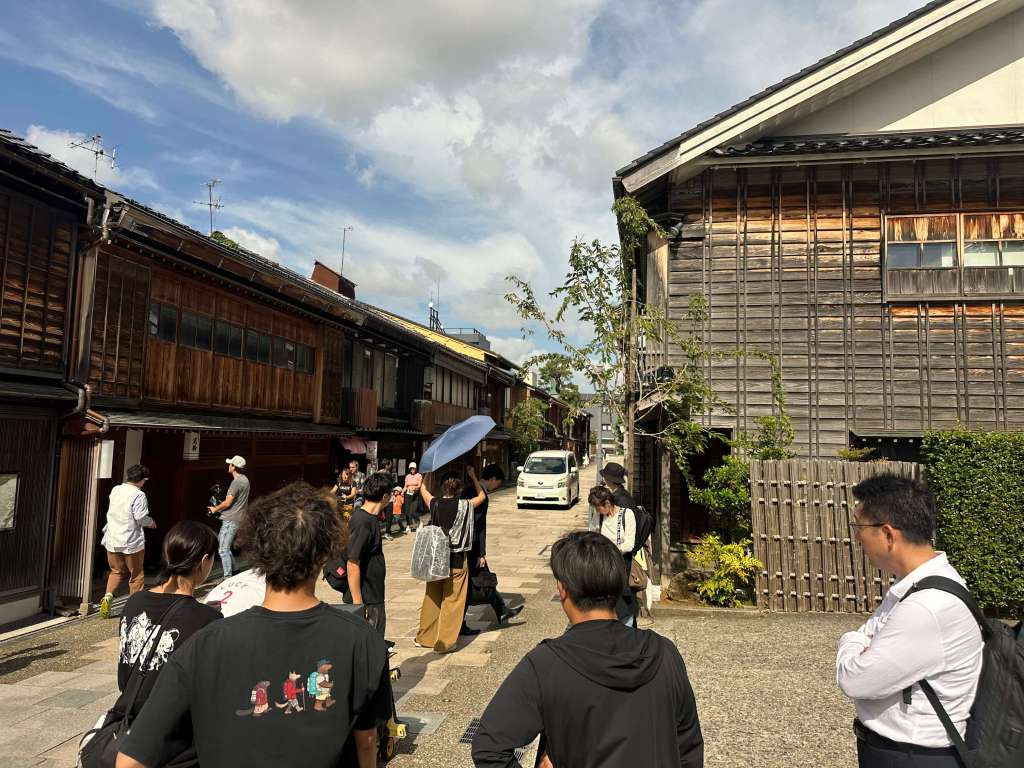
Some shots from around Higashi Chaya. The bottom left is the set for whatever film shoot we managed to crash!
One particularly impressive site in this district is Myouryuji, or the Ninja Temple, an unassuming building built by the Maeda family that once ruled over the region. Feeling under threat by the government of the time, the temple was kitted out with a number of impressive defence mechanisms, hence the Ninja Temple name. We took a tour of the site (entirely in Japanese – but a written English translation is provided which I can confirm is pretty much word-for-word what the guide says!), which was 100% worth it! The building contains secret ‘in-between’ levels, hidden rooms, trapdoors, covert staircases, and other features that were to be deployed in the event of a raid by government forces. This experience was definitely one of my highlights in Japan!
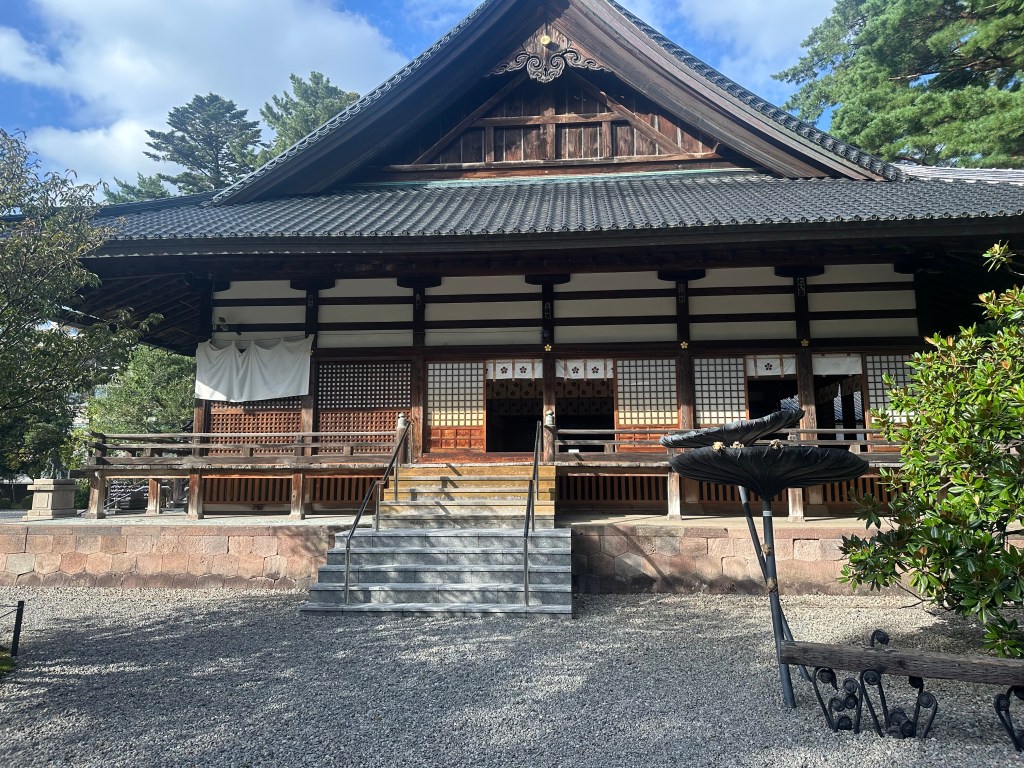
The unassuming Ninja Temple – a hugely worthwhile visit in Kanazawa
After the tour of the Ninja Temple, we stopped off for a quick coffee break at Isotope, a very hipster-y cafe in the heart of old Kanazawa – highly recommend! We then made our way up to Kanazawa Castle, and Kenrokuen Garden, widely considered to be one of Japan’s most beautiful. They certainly live up to this reputation – gurgling streams, perfectly manicured plants and hedges, and impressively green grass made these gardens a great place to while away the afternoon.
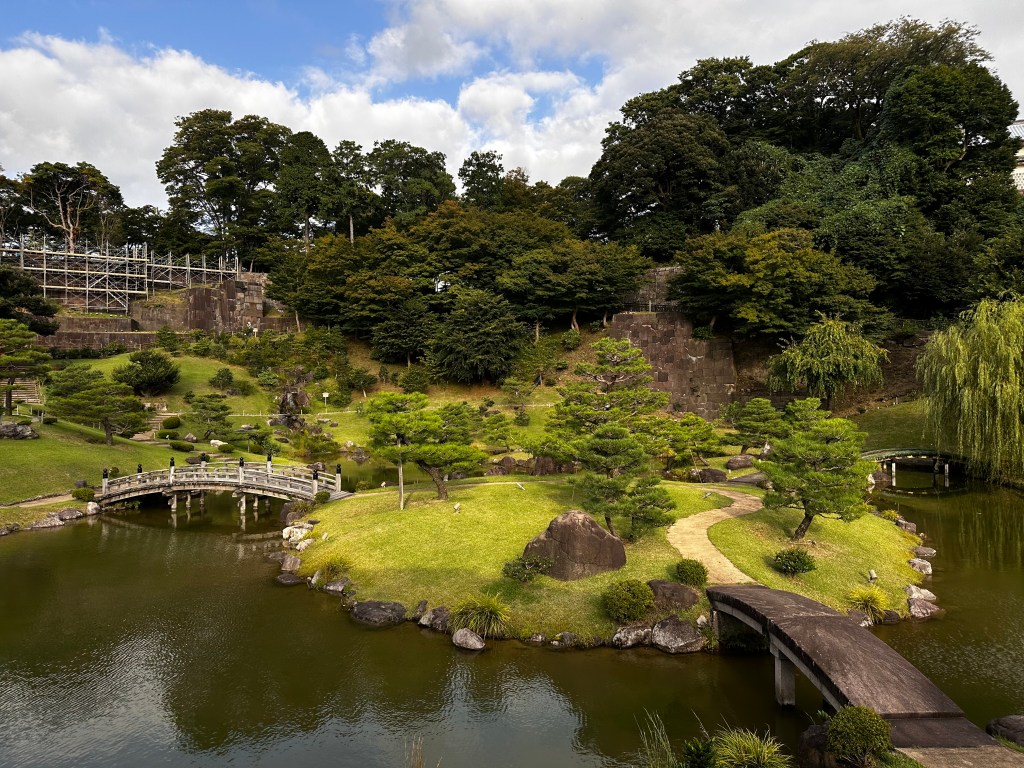
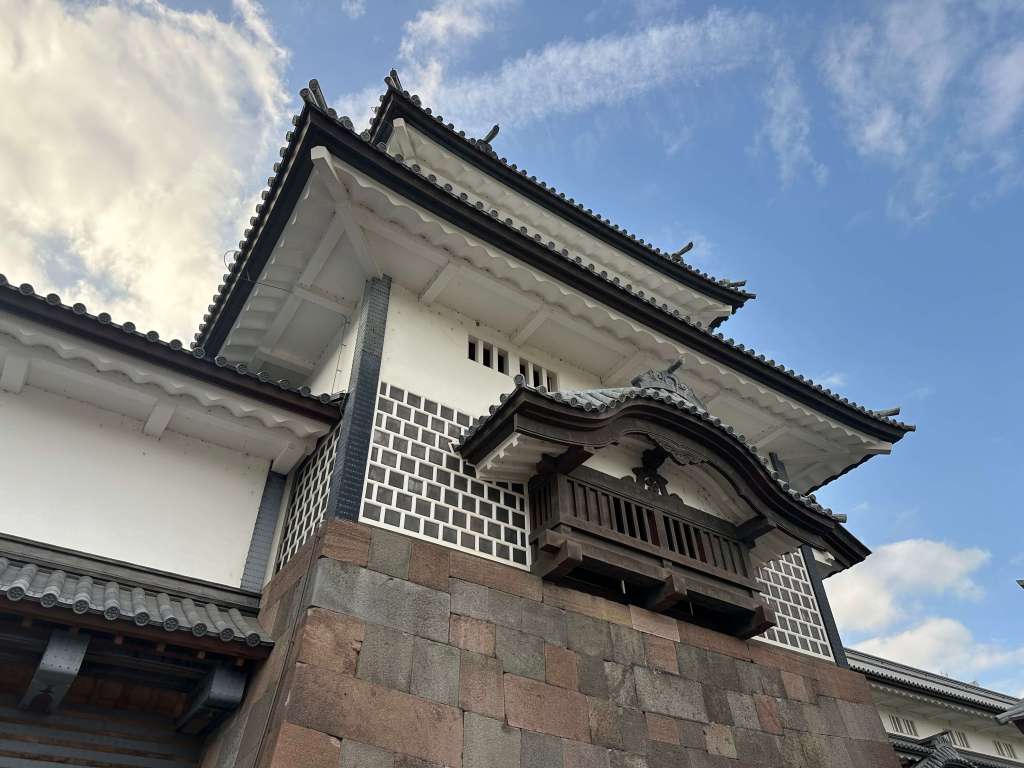
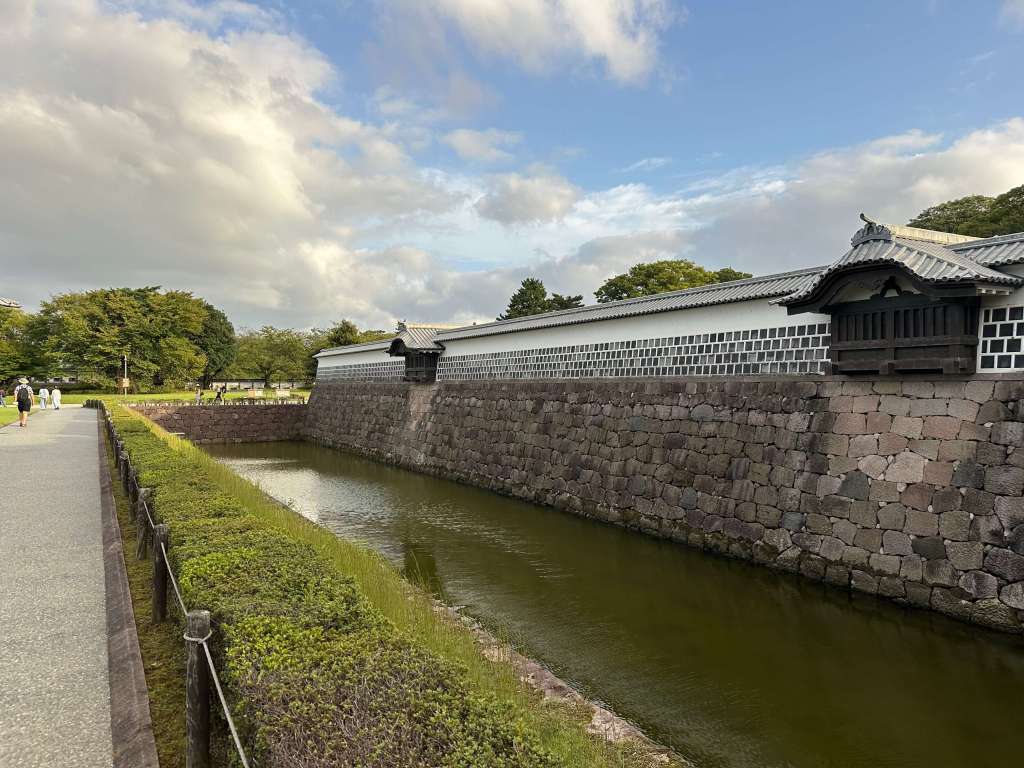
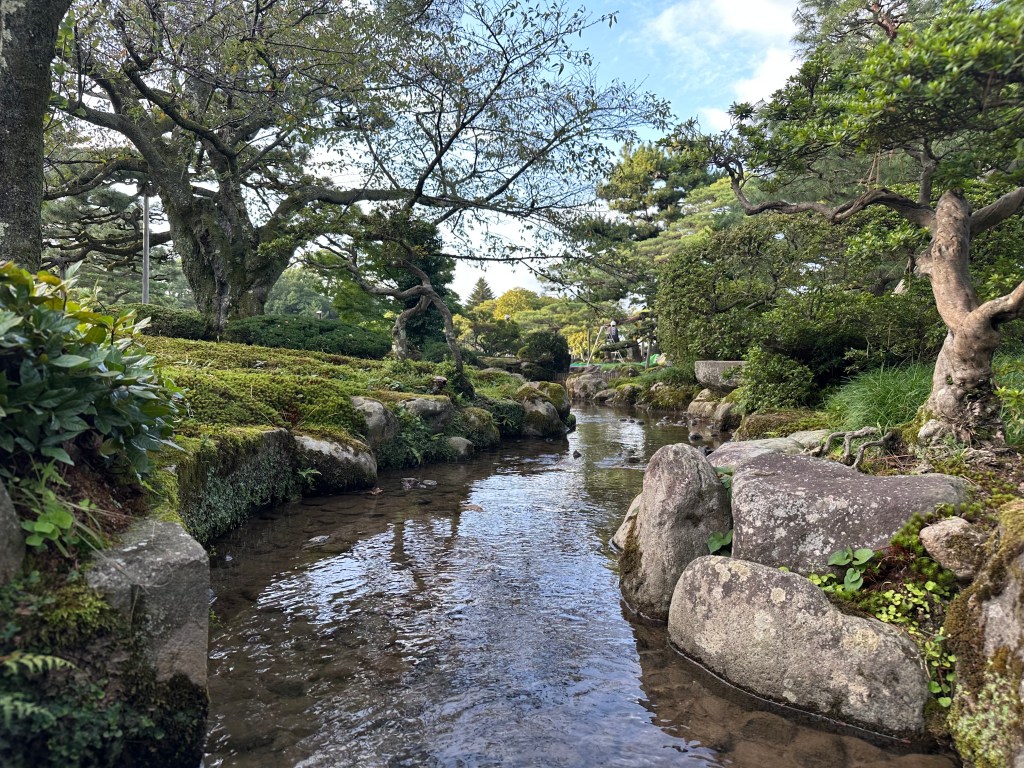
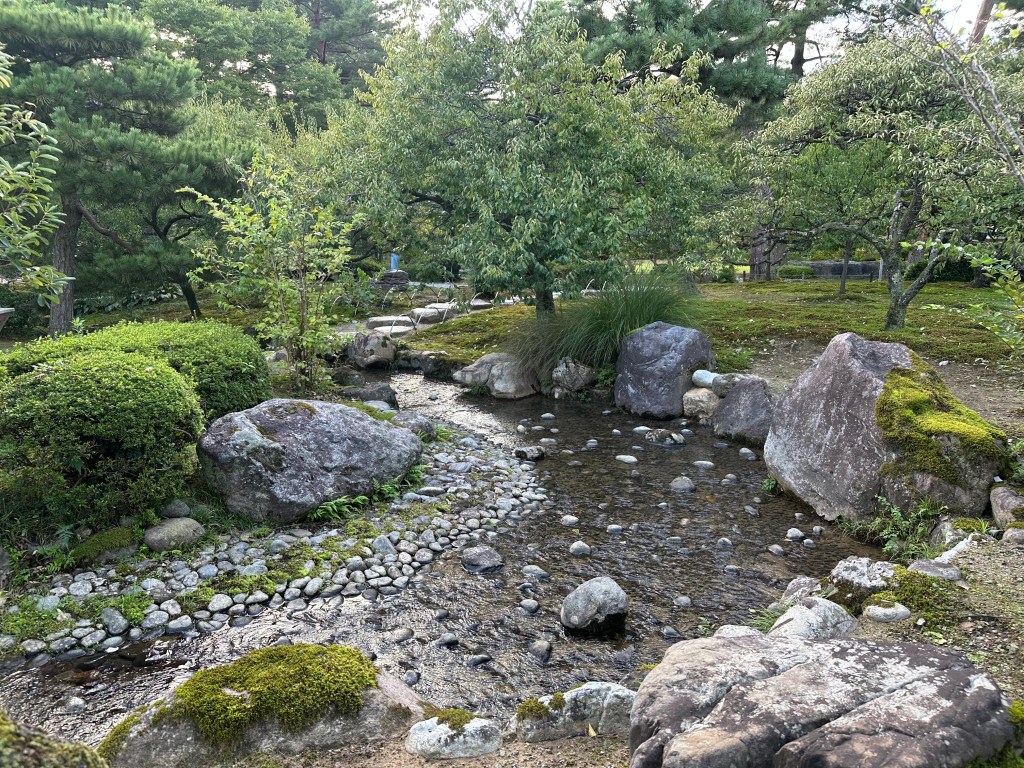
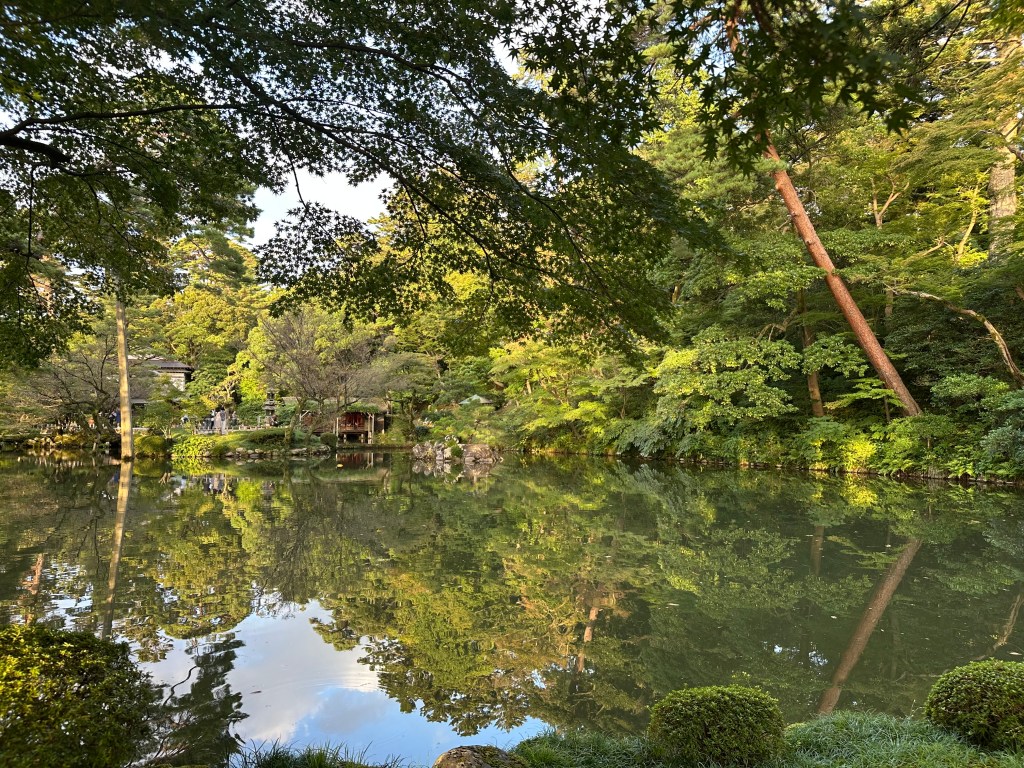
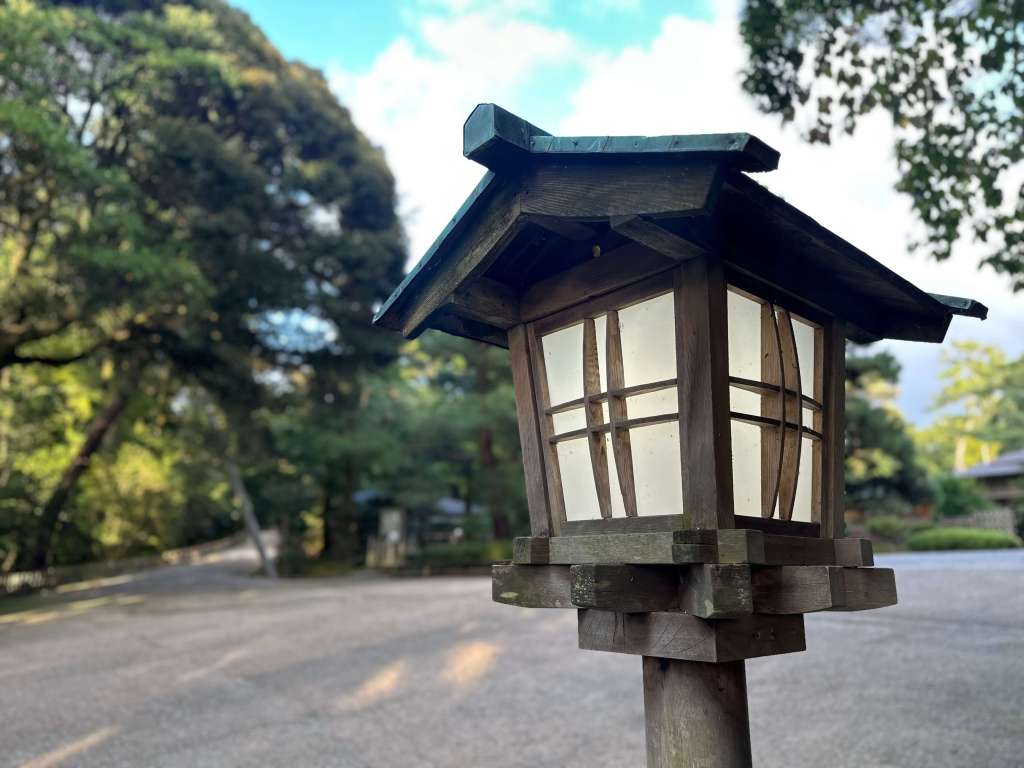
Kenrokuen gardens are beautiful – it’s easy to see why they are so highly regarded in Japan. Despite quite a few visitors, the site still managed to feel peaceful
Leaving the garden, we headed towards Kanazawa’s other geisha district, alongside the river. Kanazawa’s architecture certainly stacks up to that of Kyoto’s, and I’m sure that as people begin to notice, tourism numbers here will grow dramatically! As the sun began to set, the old-fashioned street lamps began to turn on, illuminating the buildings and creating an amazing atmosphere along the riverside.
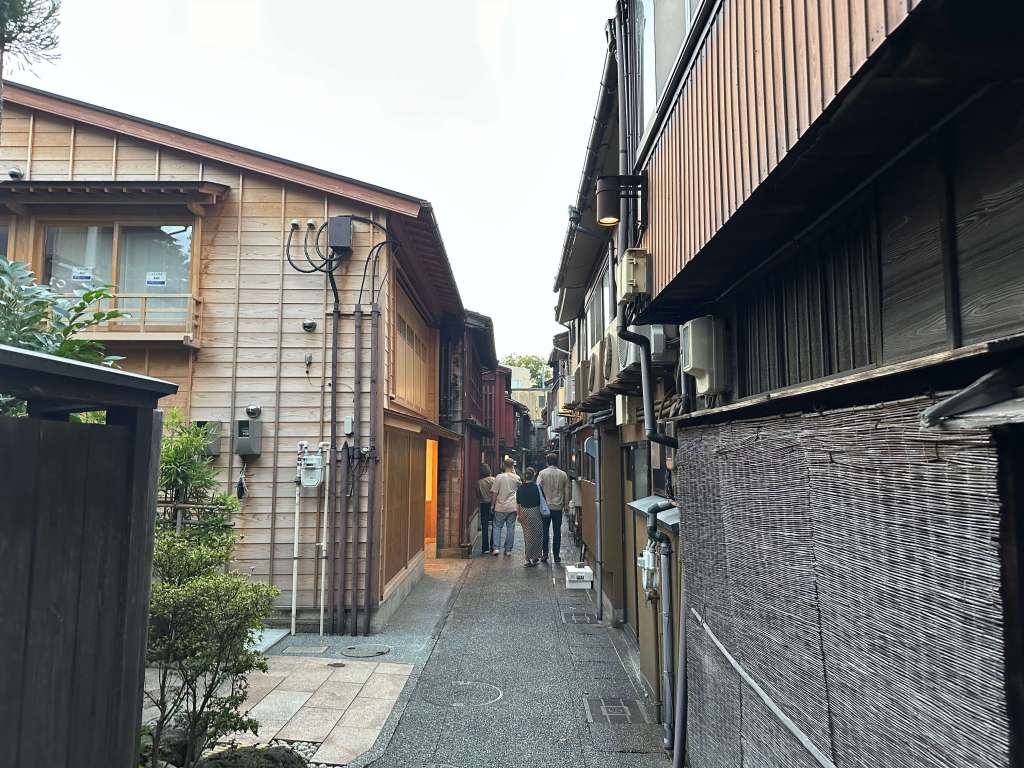
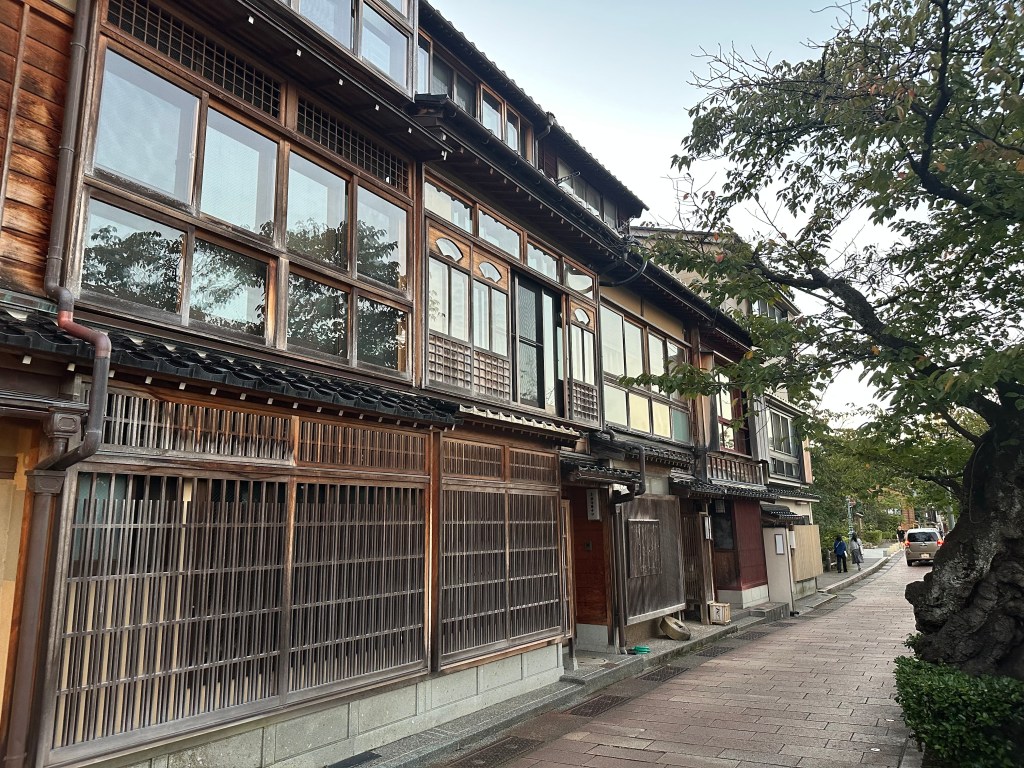
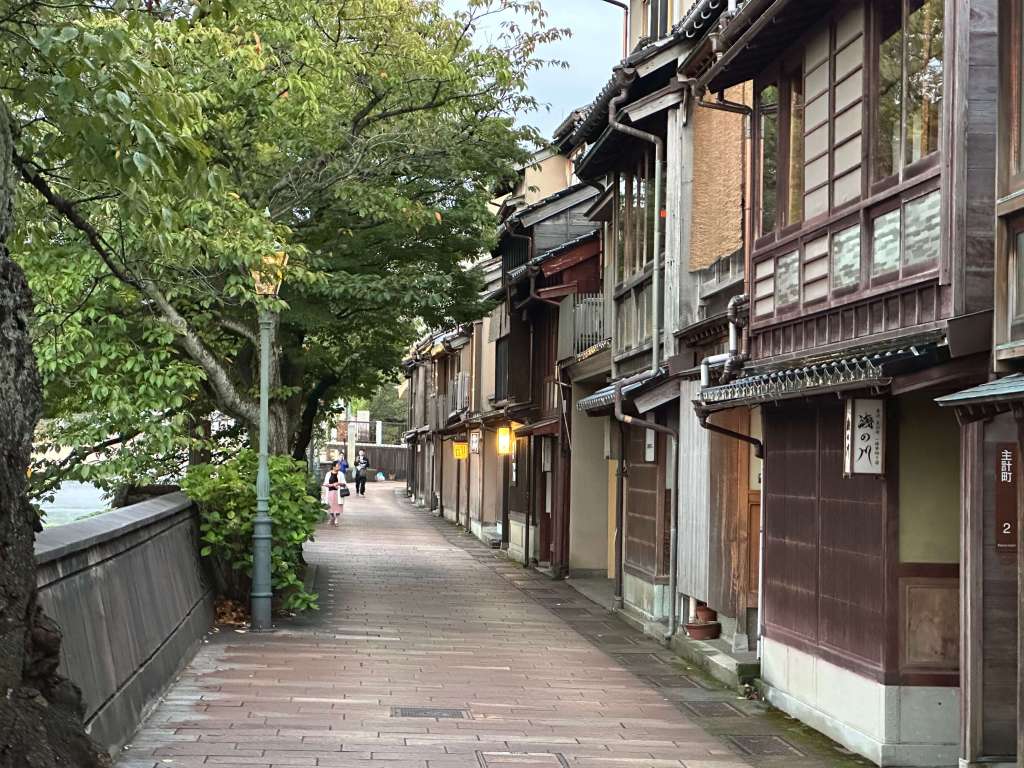
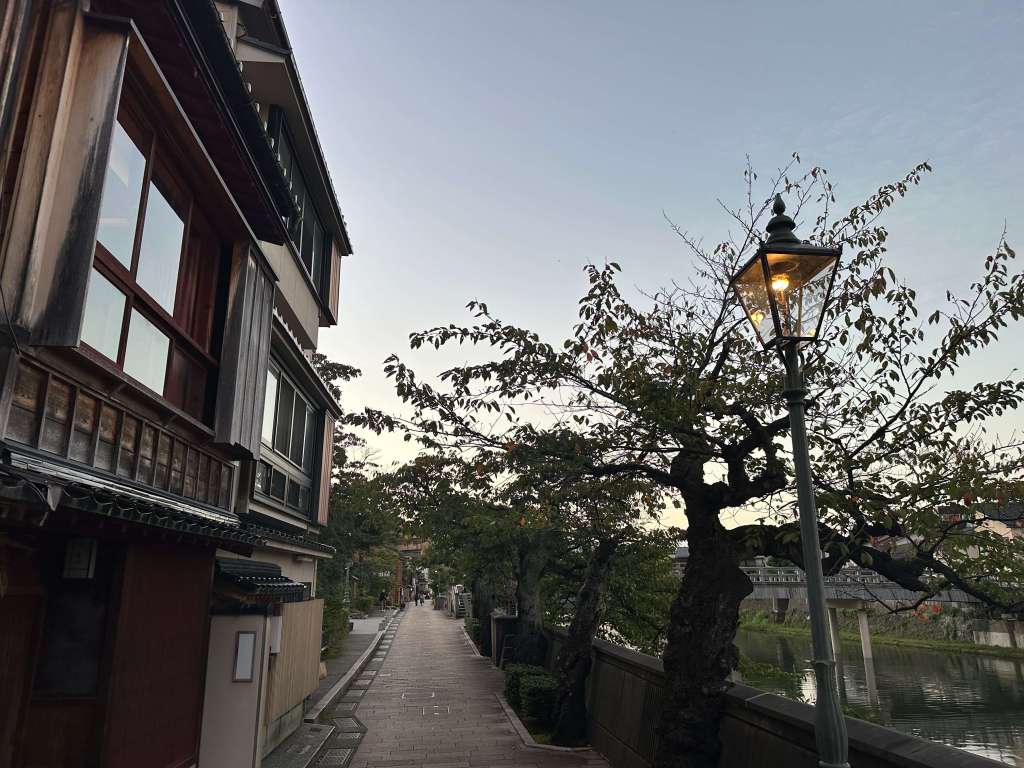
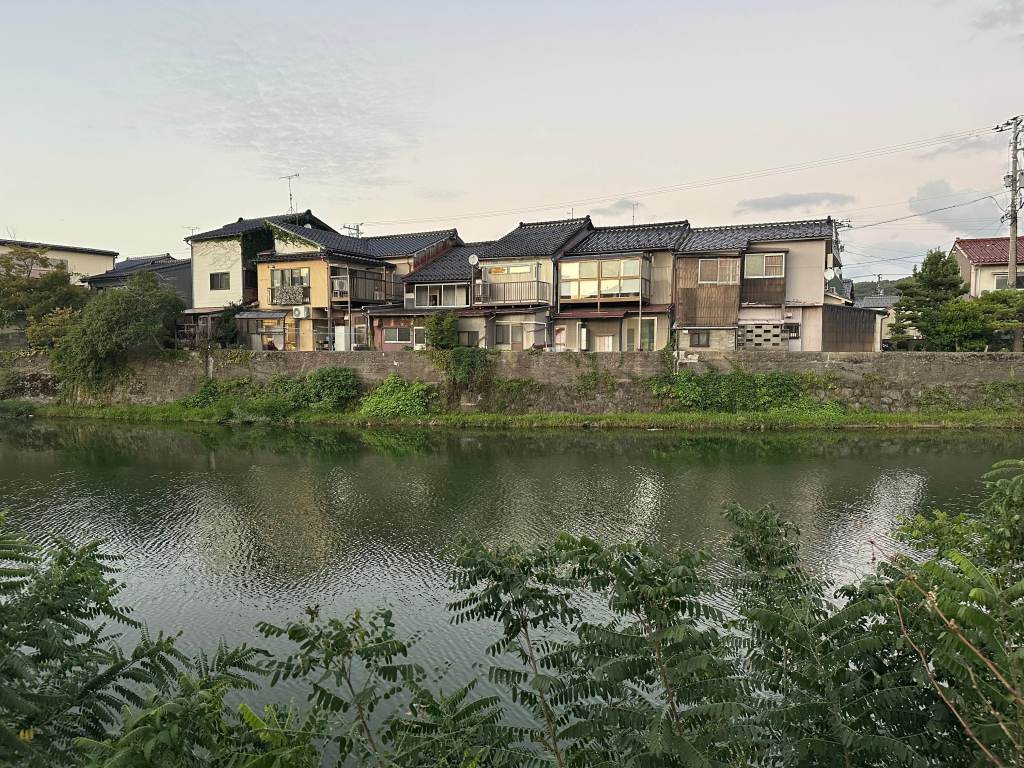
I fully expect Kanazawa’s popularity to explode – it offers the same kind of historical architecture as Kyoto, minus the hordes of tourists!
Dinner that night, our last in Kanazawa, was at Yakitori Gechijo Tabidori, a yakitori joint we had discovered earlier in the day and had wisely made a booking for. A fantastic meal ensued, with one of the highlights being a chicken heart (I promise, tastes better than you’d imagine!), and chicken skin (obviously tasty). After the meal, we took a late-night stroll back through the old samurai district, taking in the peace and quiet before our impending return to the hustle and bustle of Tokyo the next day. It really capped off our time in Kanazawa – somewhere I think is absolutely underrated, and one of my favourite places on the trip!
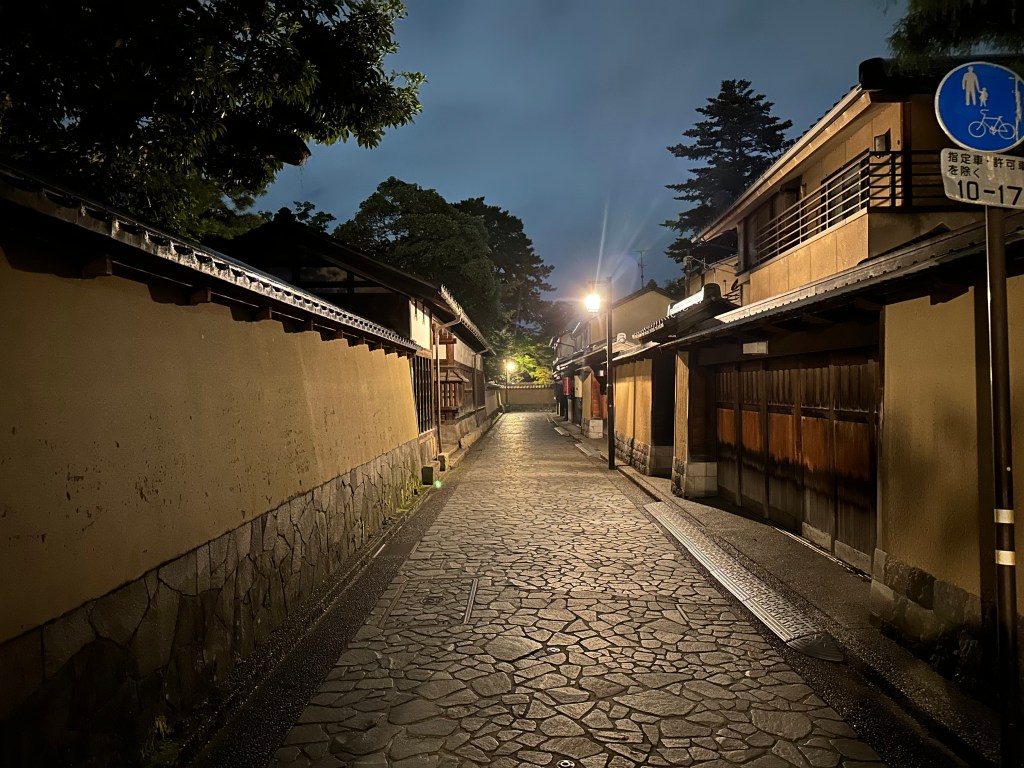
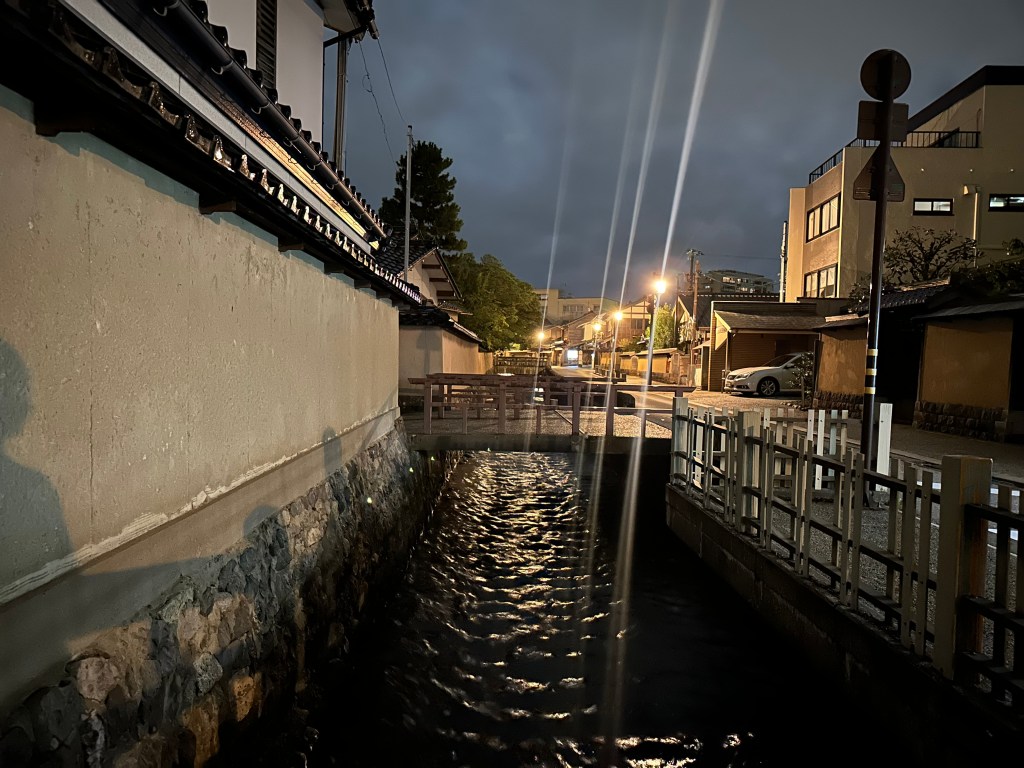
Kanazawa’s samurai district at night


Leave a Reply