

17/4/25 – 18/4/25
Getting out to Bamyan is not particularly difficult to do by shared taxi – the slightly harder part is getting from Bamyan to Band-e-Amir and back, as most Afghans tend to take their own vehicles out here. To save ourselves a bit of hassle, we’d organised with ATE for a driver and guide to take us out there on a 2 day, 1 night trip. This turned out to be the best decision we made all trip, as Belal, the driver, and Hamza, the guide, both of whom were similar in age to us, became good friends over the course of the journey. We left Kabul early (after the fresh eggs and bread, of course!), making one quick stop on our way before heading out of the city – to get me a new set of traditional clothes! Aside from the first checkpoint on the outskirts of Kabul, we faced no real issues, mostly thanks to Hamza, who knew just about everybody’s uncle or cousin, and Belal, who took ‘just joking’ with the Taliban to a whole new level. Both men’s lives had been damaged through the conflict – Belal had lost his father, and an uncle, whilst Hamza, who had come from an enormous family, explained to us each of the uncles and cousins of his who had died in the conflict. Turns out that even within families, loyalties during the wars were split – Hamza’s grandfather was one of the anti-Soviet mujahideen, whilst his relatives had, during the civil war, fought for various militias opposing each other at times.


Belal (left) and Hamza (right)
The road from Kabul to Bamyan runs through Wardak Province, an area of Afghanistan that was brutally fought over by the U.S. and the Taliban – being a key supply route, the U.S. made heavy use of the road, but Taliban militants holed up in the mountains nearby had a different view, making this one of the most dangerous locations in the country. The road is pockmarked frequently by remnants of IED blasts – it is crazy to imagine that just a few years ago, American convoys were making their way down this particular stretch of street whilst Taliban militants tried to blow them up.
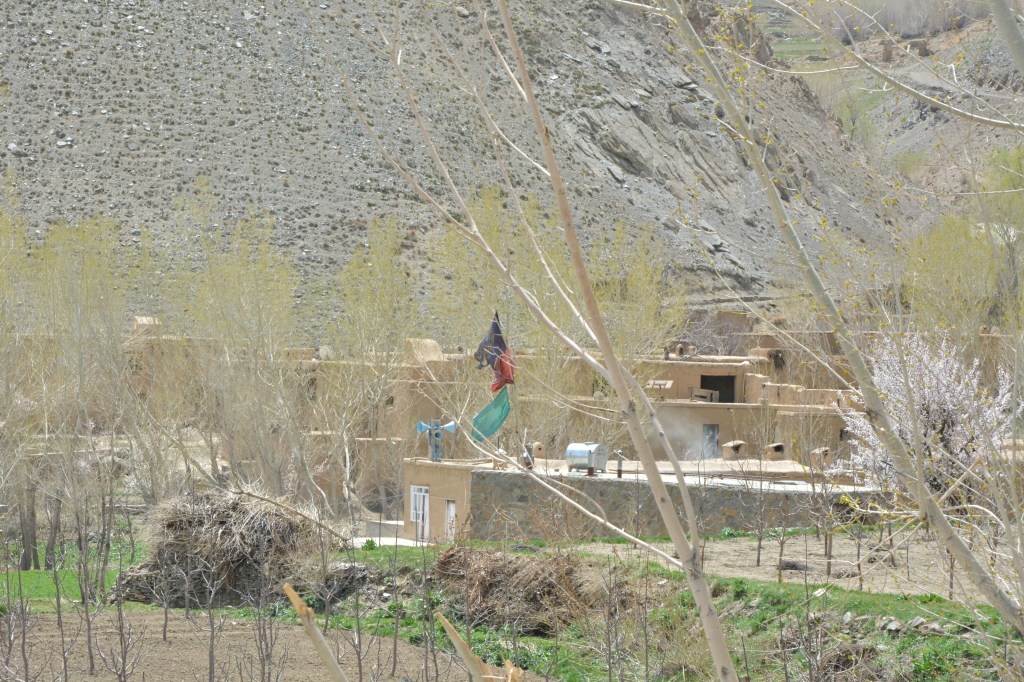


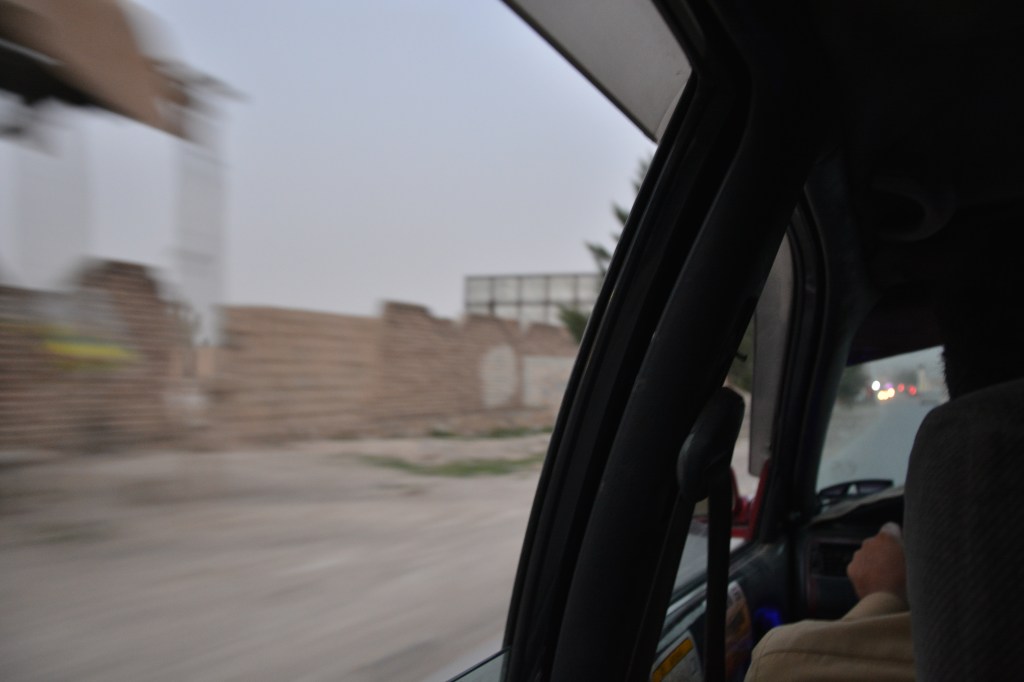
Some photos from the drive to Bamyan – and the remains of a vehicle used in a suicide bombing
Finally, after several hours of driving (and blasting the music!), we arrived in Bamyan town, and stopped for a spot of lunch in a local restaurant Hamza knew. For 240AFN each ($3.40USD), we had 10 sticks of kebab meat each, some kabuli pulao (Kabul-style rice dish), alongside a variety of chutneys, spices, and copious amounts of bread and tea – cannot go wrong!
After waddling out of the restaurant, we headed off to the province’s star attraction – the Buddhas of Bamyan! These statues are quite famous around the world, as they existed for 1500 years until March 2001, when they were blown up by the Taliban on the orders of their leader, Mullah Omar. This was a tragic destruction of a major cultural landmark, and alienated the Taliban even from their international allies at the time. Speaking to people in Afghanistan, however, and doing my own research into it, the truth behind their destruction is a bit murkier. As late as 1998, Mullah Omar was publicly proclaiming the importance of protecting the Buddhas, because of their historical and cultural significance to the region and to Afghanistan’s tourism industry. However, as the conflict got worse, many international agencies and donors began offering quite a lot of money for restoration works and for the protection of the site. The Taliban were unhappy that overseas actors were willing to spend millions of dollars, on protecting a set of stone figures, whilst there were hundreds of thousands of Afghan children suffering from famine – so eventually, they got sick of it and ordered their destruction. That’s their story anyway, there are two sides to everything!


The site is immense!
At the base of the smaller Buddha, a Taliban soldier sat in the shade, guarding the Buddha. It is fascinating to see men from the group that destroyed the site, now sat protecting it from vandals. It has been reported too that the Taliban are looking at partnerships with donors now, to help restore the sites to their former glory – the pieces of rubble have been kept next to the site, for use in reconstruction efforts. Whilst apparently we were meant to be checked off by the local Taliban checkpoint, which we had missed on the way in to Bamyan (dressed in local clothes, and with a big beard, I was waved through most checkpoints without a second look!), Hamza convinced the guard to let us pass and explore the site – which was okayed, so long as we were quick!


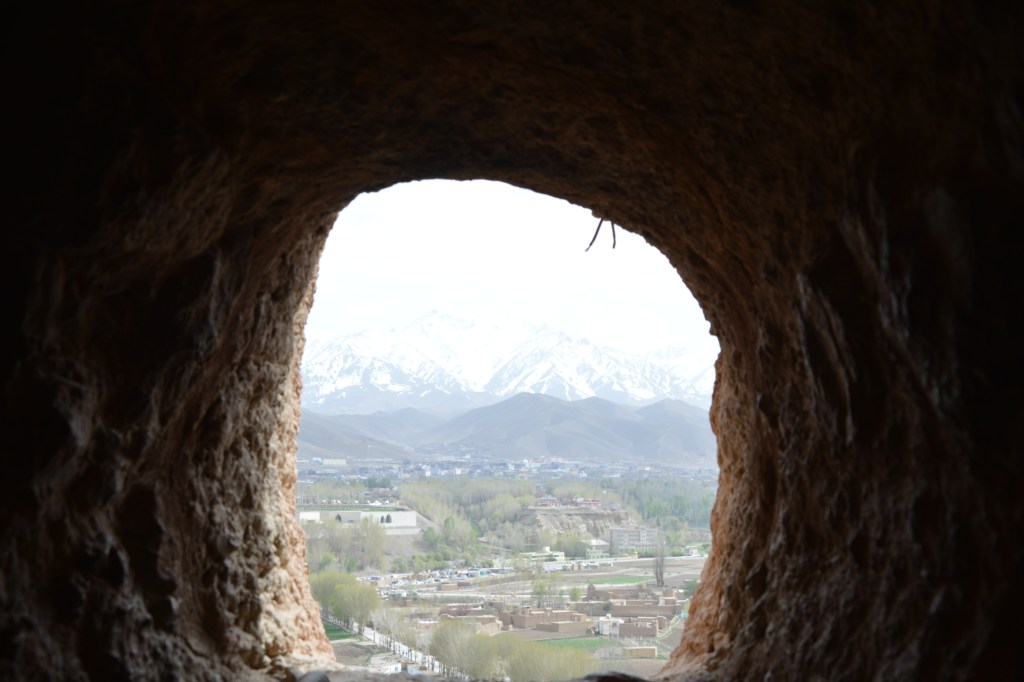

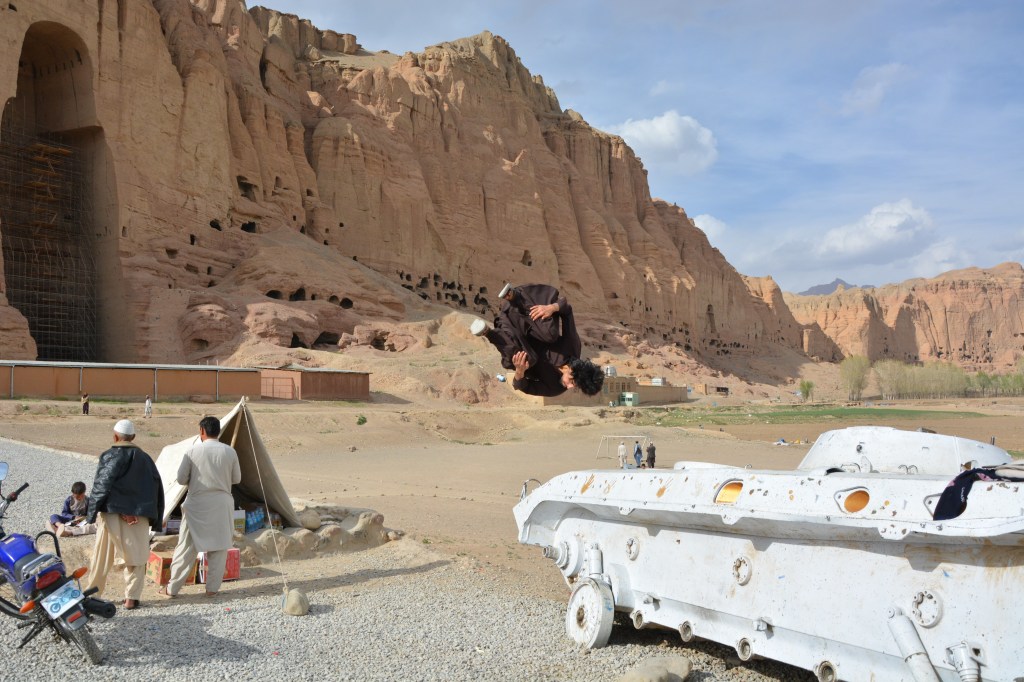
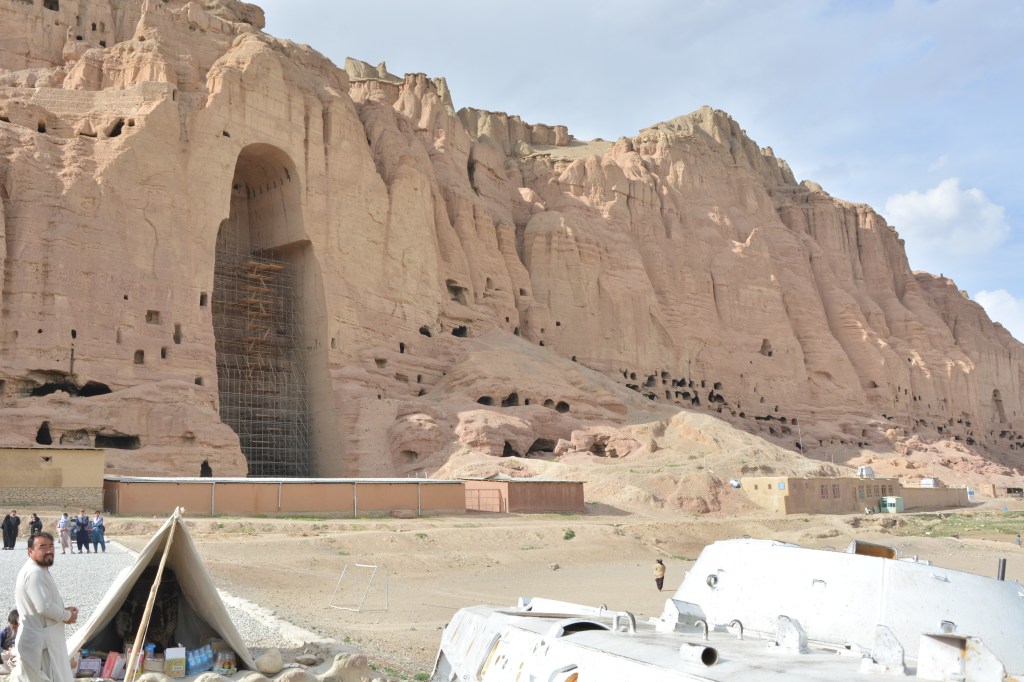
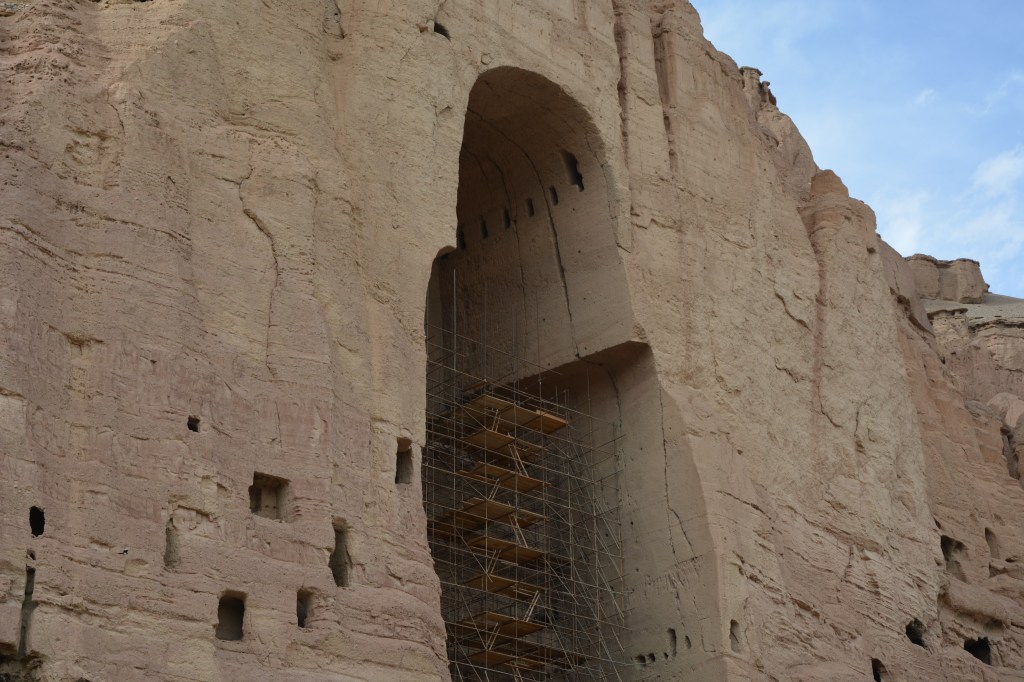

The Buddhas of Bamyan, and surrounding archaeological sites
The place where the statue stood is enormous, and is surrounded by a variety of caves carved into the mountainside – which still contain some remnants of the Buddhist past here in Bamyan. It is an absolutely incredible site to visit – and standing in the shadow of the Buddha remnants is quite surreal, knowing that the immense statues were once standing there.
After spending some time at the archaeological site, we eventually got back into the car, and began the 90 minute journey onward, to Band-e-Amir. A popular spot for Afghans wanting to escape the hustle and bustle of city life, Band-e-Amir is Afghanistan’s first national park, and is known for its incredible blue lakes, snow-capped mountain ranges, and beautiful natural environment. We arrived as it was getting dark, so headed to our guesthouse for the night – ready for an early morning start!
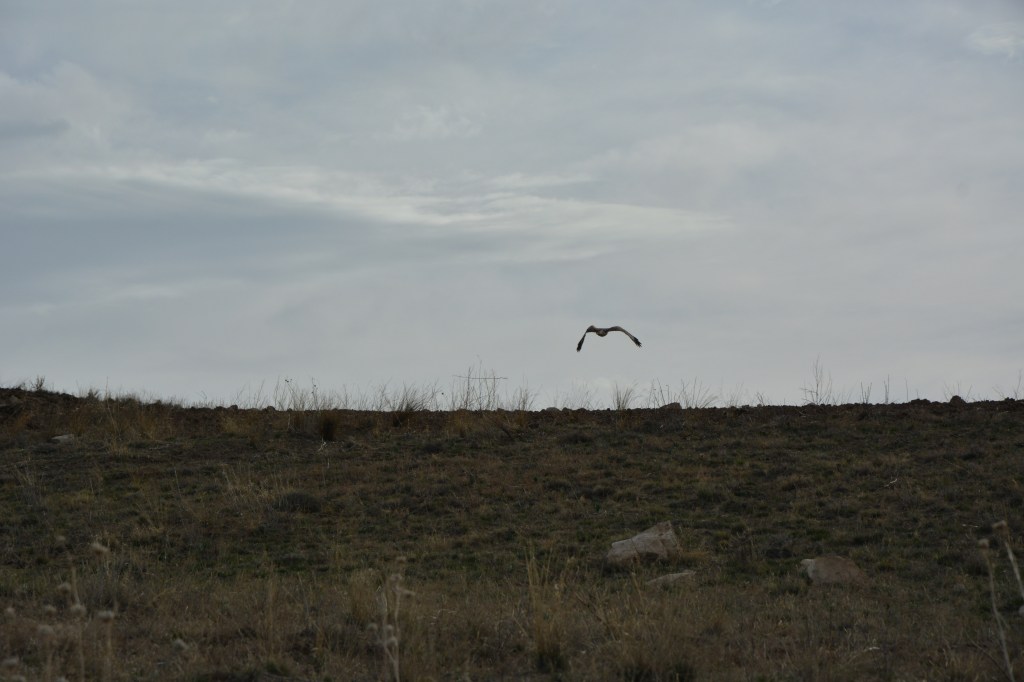


First sight of Band-e-Amir National Park
The next day, we were up early for an interesting experience – the Taliban commander at Band-e-Amir had invited us to join him for breakfast. Hamza came and brought us over to the police station, where the Taliban contingent were currently based – here, we met with the local commander, as well as several of his men, and were served a breakfast of omelettes, cream cheese, and fresh bread. Through Hamza, he told us that we were free to ask any questions we liked – giving us a fascinating insight into the thought processes of somebody within the Taliban, as well as a firsthand insight into the conflicts seen in the region over the years.
After breakfast, we wandered down to the Blue Lake, the iconic ‘face’ of Band-e-Amir, and hiked up to the top of the hill around it. It’s an incredibly beautiful sight – and also fascinating to see Afghans enjoying their weekends off. We bumped into a group of young Taliban guys, who were clearly taking the day off to chill out at the lake – one of them had a Canon DSLR and they were all posing for photos on the edge of the lake, guns in tow. Hilarious stuff!


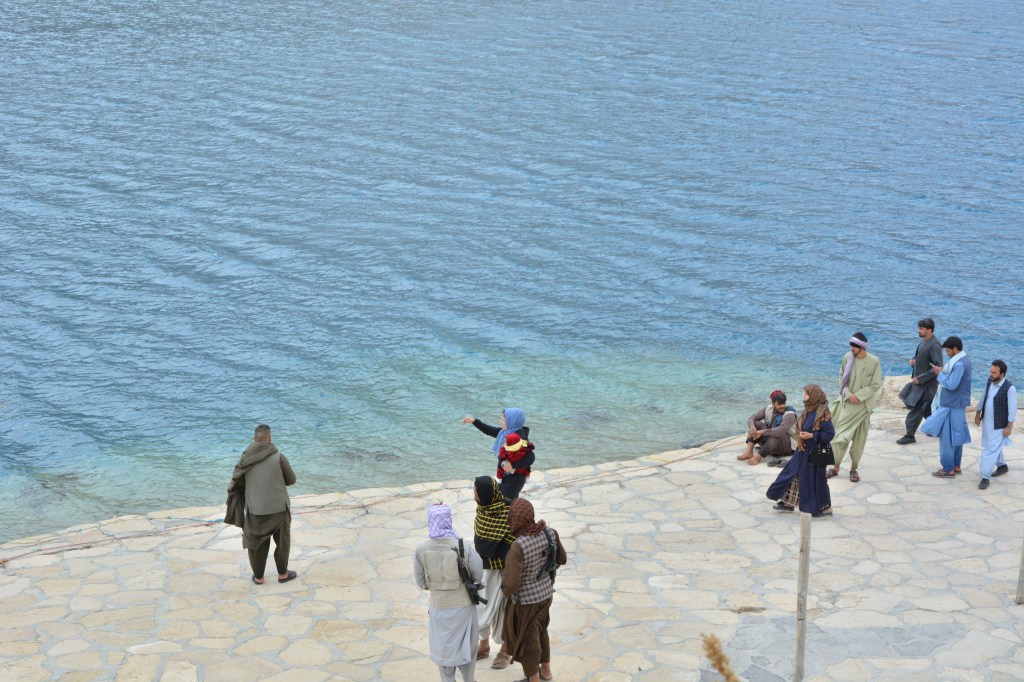
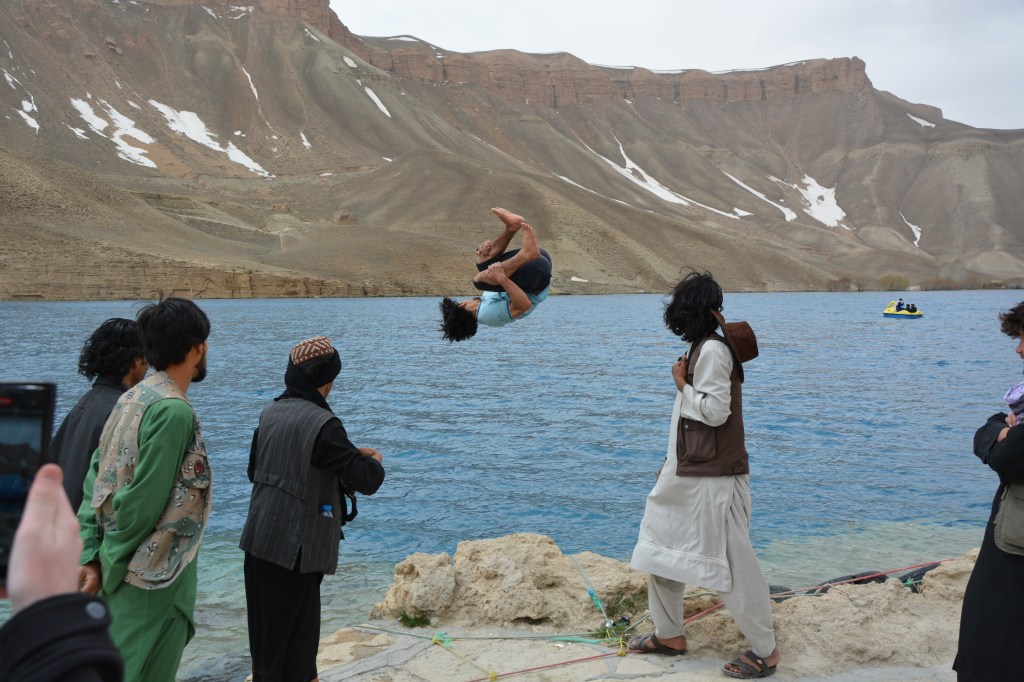
Some shots of Band-e-Amir – including Hamza doing a flip into the water for the locals
Finally, after taking some time to walk through the waterfalls and streams that dot around the lake, we packed up our things, and hopped in the car, ready for our drive back to Kabul. Bamyan and Band-e-Amir were certainly highlights on this trip – and having an interpreter with us really opened some fascinating doors! Next stop – the northern city of Mazar-e-Sharif!
Back to Kabul!


 Global Wanderer
Leave a comment