

14/12/24 – 18/12/24
The flight from Belgrade to Sarajevo was short and painless (unlike the chaos of the return journey, which I’ll get to later!). Sarajevo Airport isn’t too far away from the city, and there are apparently two bus routes – one which is a private bus from the airport to the city, and the public bus. We opted for the public bus, the stop for which is actually not in or near the airport, but in a residential neighbourhood nearby – it was only a 10 minute walk, but required a short walk along the hard shoulder of the highway! It was a good thing I waited the 10 minutes or so for the SIM card shop to open up at the airport, as there isn’t any signage pointing you to the bus stop.
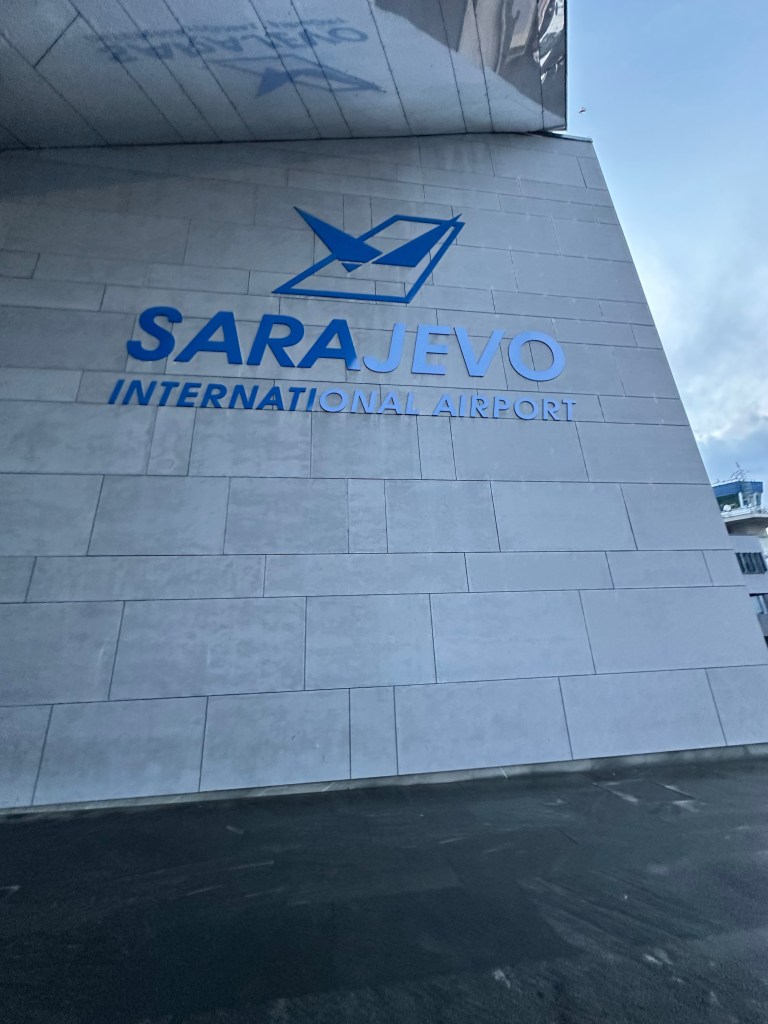
Welcome to Sarajevo!
We made it, however, without issue, and shortly afterwards were on the bus bound for the city centre. By the time we arrived, the sun had set, and we stepped out into the Bosnian night. We made our way to our accommodation in Sarajevo – Sana Hotel – walking across one of the many bridges and into the Ottoman-era old town. Sarajevo’s centre has two distinct parts to it – the Ottoman part, and an Austro-Hungarian part – there is even a clear dividing line between them on one of the main pedestrian streets, where you can see quite clearly the change in architecture. The Turkic part feels very much like a miniaturised Istanbul, with its mosques, bazaar-like alleyways, and cafes serving Bosnian coffee. This contrasts immensely with the Austro-Hungarian part of the city – some impressive pieces of architecture here that wouldn’t be out of place in Vienna! We had a decent walk around that evening, stopping at a local cevapi joint for food, getting our bearings in the city – it is small, but packs a real punch in terms of cultural exposure!


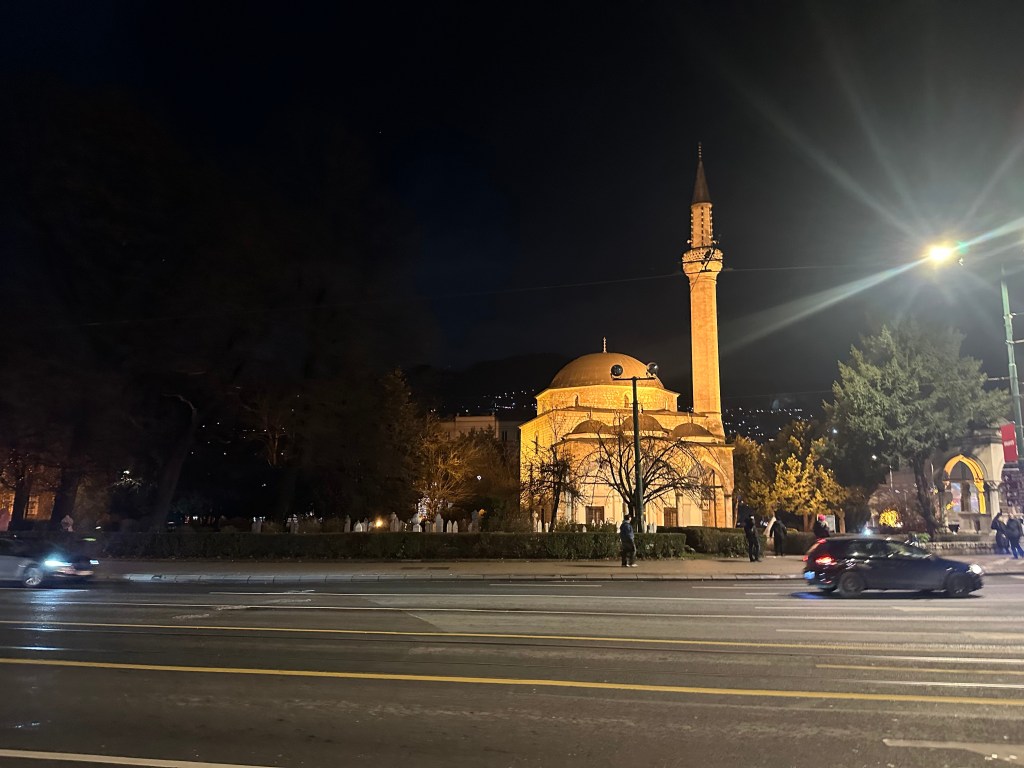

Sarajevo is a real historical melting pot!
The next morning, after a filling breakfast, we headed up a nearby hill to get some views of the city from the Yellow Fortress – once part of Sarajevo’s defensive walls, now one of the best spots to look out over the city. Nearby is a large cemetery – one of many that you’ll spot around Sarajevo.


The views from the Yellow Fortress lookout point are probably the best in the city!
We spent the bulk of the day checking out Sarajevo’s wide range of historical buildings, criss-crossing the Miljacka river over every little bridge we saw. Our first stop was the Sarajevo City Hall, a beautiful striped building constructed in 1896. It had been shelled (like many buildings in the city) during the Bosnian War, and had been painstakingly restored in the 1990s and 2000s, with works finally being completed in 2014. On the opposite side of the river here, lies the hilariously-named House of Spite – a 17th century house that was originally located near the City Hall on the opposing river bank. Due to traffic concerns (related to the construction of City Hall and a nearby tram line), it was required to be moved – so the city offered the owner a sum of money to buy him out. The story goes that the owner was so stubborn, he refused to accept the offers the city made, despite them going well over and above the value of the house. In the end, the owner made an offer to the city – a bag of money, and for the city to move his house, brick by brick, to the opposite river bank. The city accepted, and began the process – apparently the owner stood by every day, watching the long and painful process unfold – the reconstructed building was given the name ‘House of Spite’ as a result – the building now contains a restaurant, but it’s still a popular site to visit in Sarajevo thanks to its interesting history.
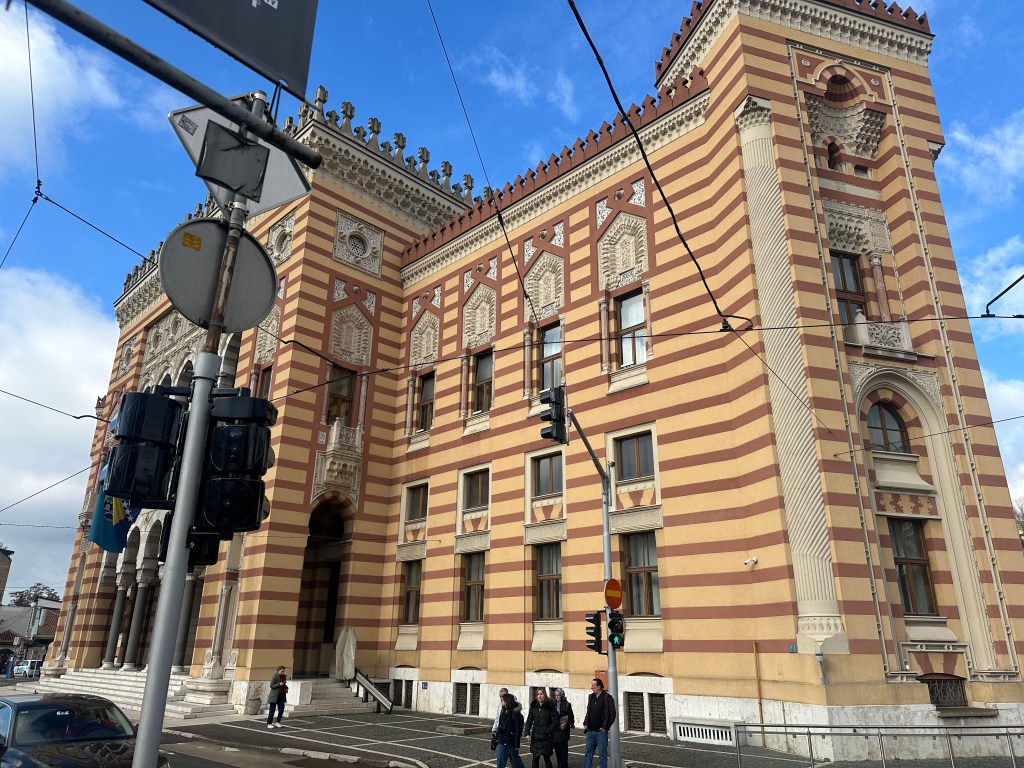
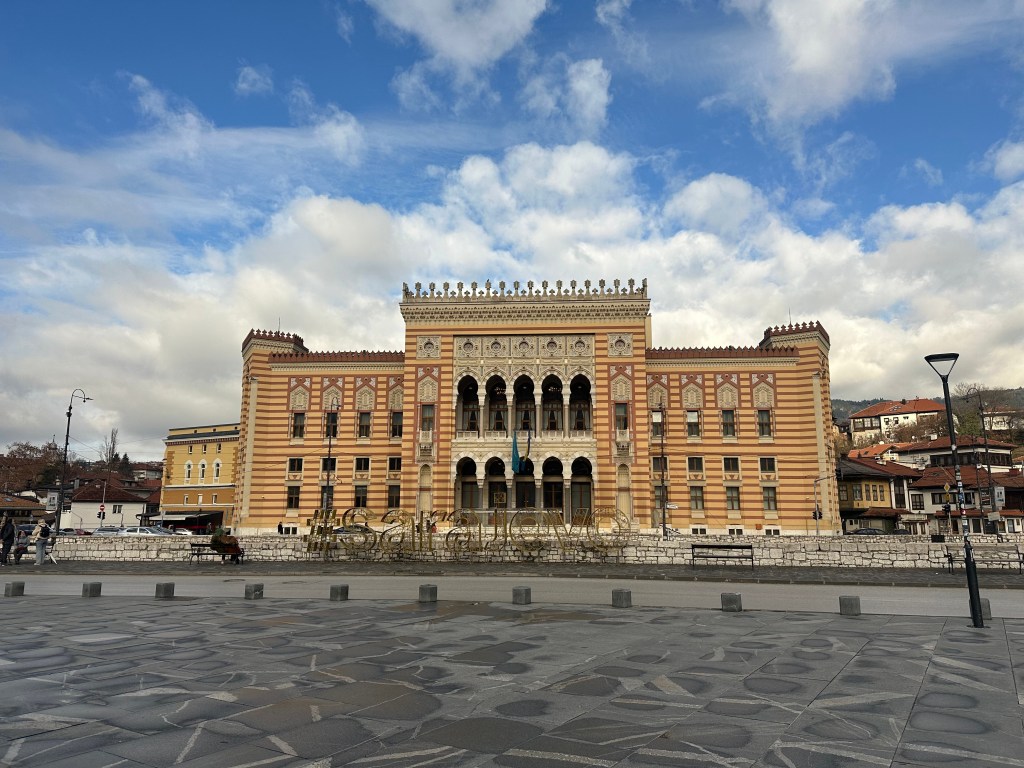

City Hall building, and the House of Spite
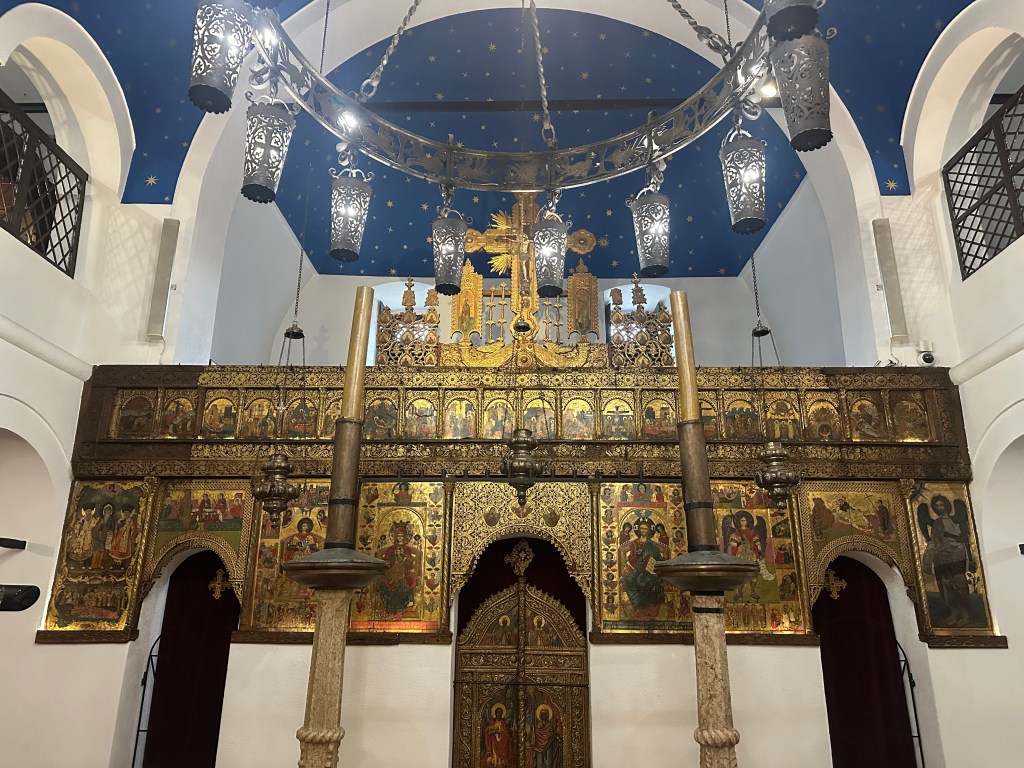
After wandering through Bascarsija (the Ottoman old town), we came across the Old Serbian Orthodox church, a beautiful 16th century building which served as the centre of the Serbian Orthodox faith in Sarajevo.

One of Sarajevo’s most infamous sights is the location of Archduke Franz Ferdinand’s assassination in 1914. When Gavrilo Princip, a Yugoslav nationalist, fired that fatal shot at the Archduke, he precipitated a crisis that would lead to the outbreak of World War One (and, some historians would argue, indirectly led to World War Two).
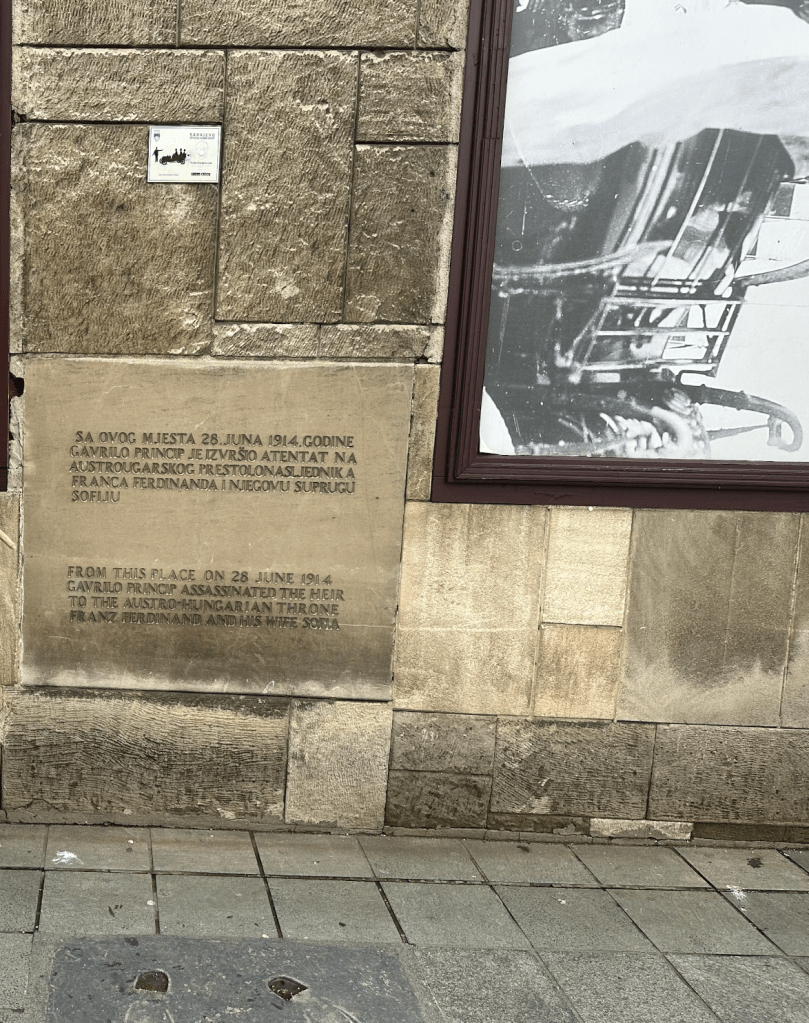
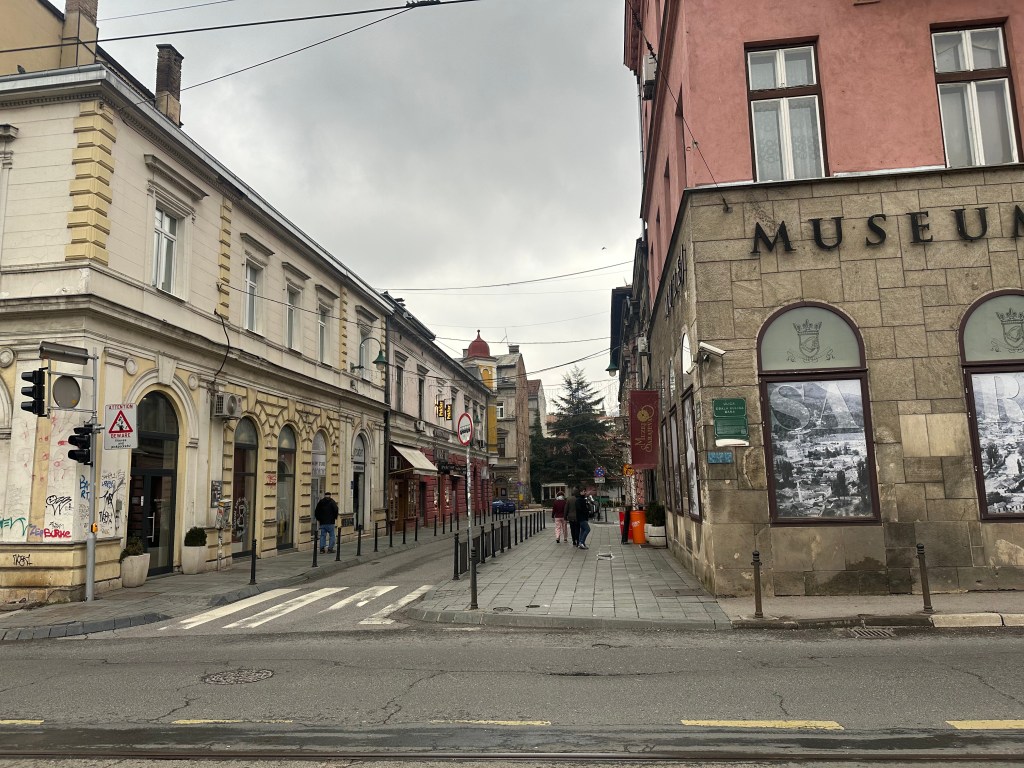
One of the most historically-significant sites in Sarajevo, the assassination of the Archduke set into motion the chain of events that led to the outbreak of WWI
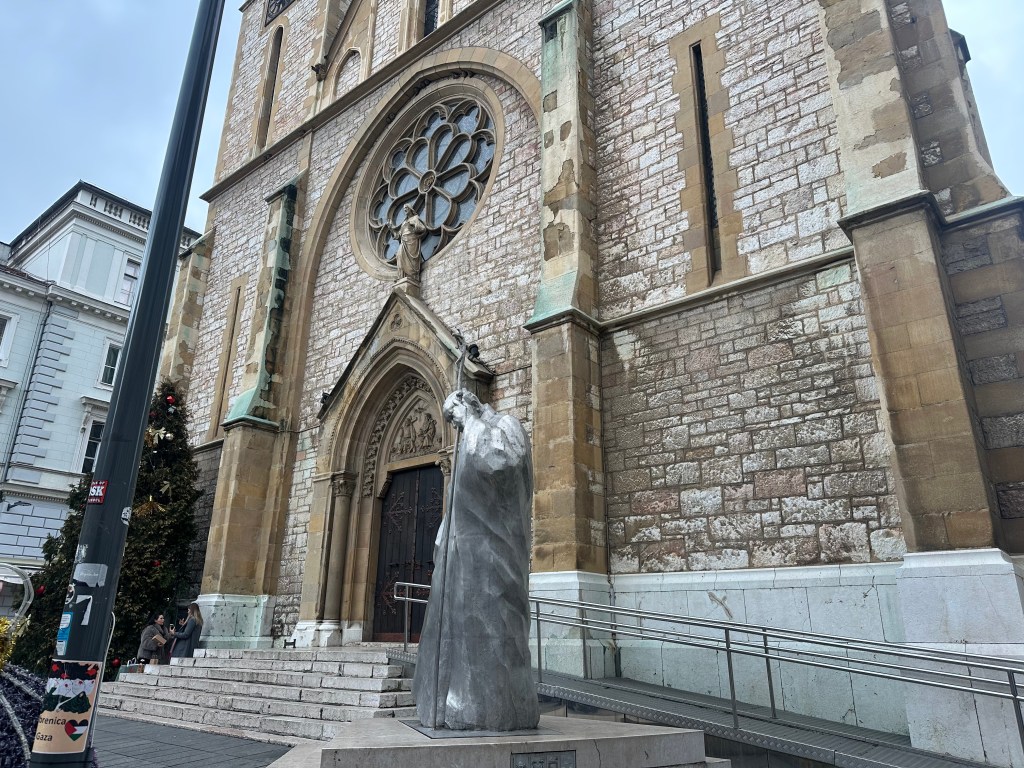
Sarajevo is full of religious buildings, with mosques and minarets being interspersed with church spires and crosses – we came across a wide variety of places of worship throughout the day, including the old Jewish synagogue, and the very impressive Sacred Heart Cathedral, gothic 19th century Catholic church which stands triumphantly in the centre of a square, next to a statue of Pope John Paul II. Sometimes, you can forget that Bosnia is actually a Muslim-majority country!

The walls of the synagogue were covered in bullet holes – remnants of the Bosnian War
After spending some time walking through the Austro-Hungarian part of the city, and randomly locating the Australian Honorary Consulate, we decided to make the long walk down Zmaja od Bosne, the main street known during the Siege of Sarajevo as ‘Sniper Alley’. During the Bosnian War, Sarajevo was blockaded, and Bosnian Serb snipers took up positions along the street, targeting those who made their way along it. It is easy to forget sometimes just how recently it was that Sarajevo was a warzone, but walking along Sniper Alley provides some stark reminders – the buildings are still scarred, and on the pavements you can find the ‘Sarajevo Roses’, which are memorials created by filling in concrete destroyed by mortar explosions with red resin.
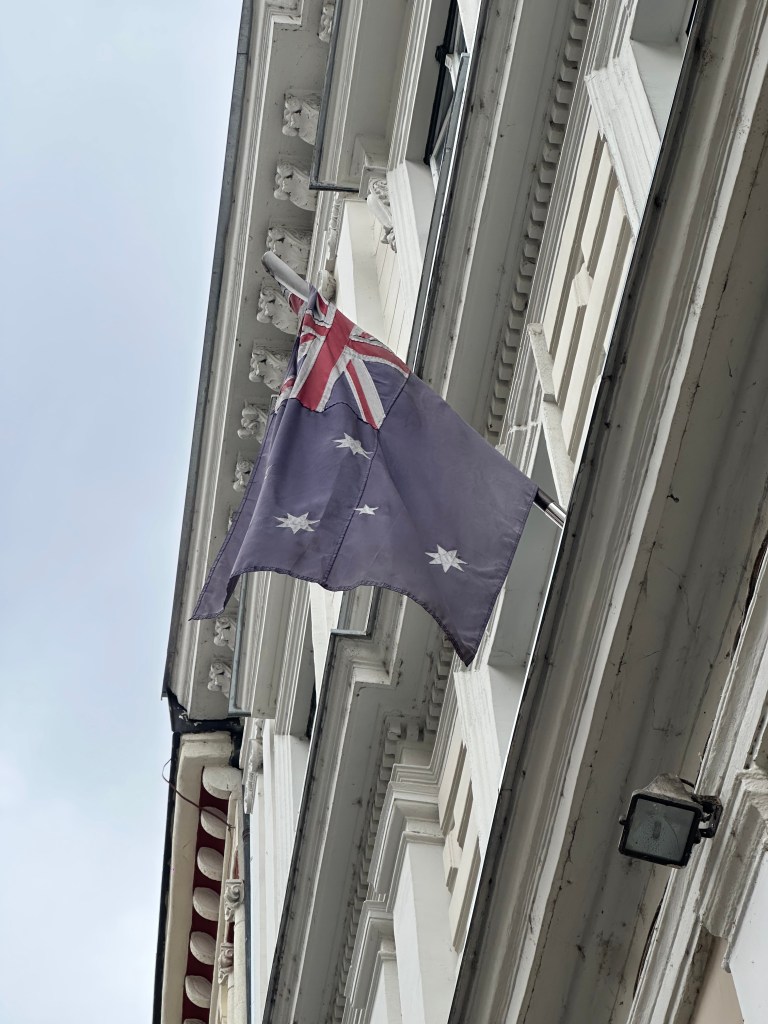


The Australian Consulate, located on a pretty street in town, several buildings bearing the scars of war along Sniper Alley, and one of Sarajevo’s infamous ‘Roses’
The long walk required a just reward – located on the premises of Twin Cakes, an incredible cafe serving up delicious, handmade cakes and great coffee. It was definitely worth the 4.5km walk!

Twin Cakes is definitely worth the trek!
The next day was a day trip out to Mostar – I’ll cover that in another post! – but the morning after was meant to be our last in Sarajevo! Located near Sarajevo Airport is one of the most fascinating museums I have ever been to – the Sarajevo Tunnel of Hope. During the Siege of Sarajevo, Bosnian Serb forces had surrounded the city and completely cut it off. The airport, administered by the UN, and unable to be transited, separated Sarajevo from the Bosniak-held territory – and so an audacious plan was hatched to dig a tunnel from one side to the other, underneath the airport and its runway. The tunnel became the city’s lifeline, with all other access points cut off by the siege – food, medicine, animals and people made their way back and forth along the length of the tunnel, earning it the moniker, Tunnel of Hope (alternatively, Tunnel of Salvation). Strangely, to actually get to the Tunnel from the bus stop, you’re required to cross over into Republic Srpska territory – the part of Bosnia and Herzegovina that is governed by the country’s Serbs, before returning to Federation territory before reaching the tunnel.

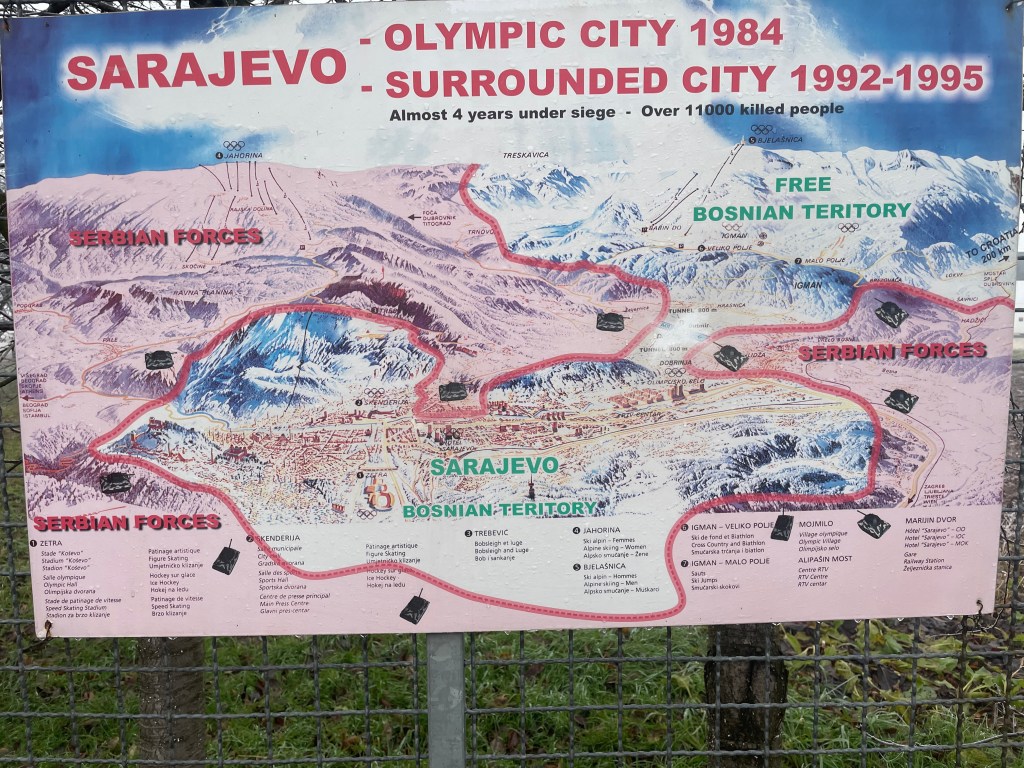

Views of the Sarajevo Tunnel, as well as a map of the besieged city
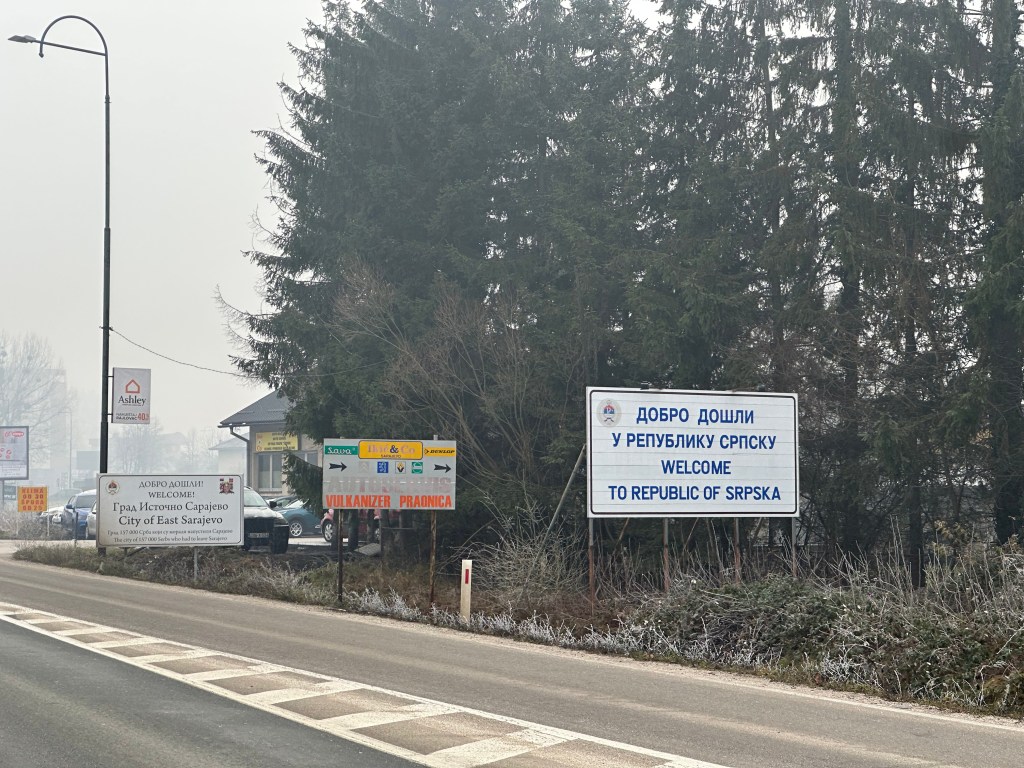

Republic Srpska territory – notice the Serbian flags on the light poles
During our walk to the tunnel, a thick fog had descended over the city – apparently quite common during winter. This meant that flights in and out of the city were being delayed and cancelled – including our own flight back to Belgrade! Fortunately, we were given a hotel room for the night, and new plane tickets to our final destination of Tirana – to get us there sooner, Air Serbia had given us a new routing of Sarajevo-Belgrade-Vienna-Tirana, which sounds ridiculous, but was quicker than waiting for the next flight from Belgrade straight to Tirana!
The airline put us up in the Holiday Inn overnight – whilst old, dimly lit and, well, not fantastic, this place has seen a LOT over the years. Built for the 1984 Winter Olympics, the Holiday Inn became known as a base for journalists in Sarajevo during the Bosnian War. Prior to this, Radovan Karadzic, the Bosnian-Serb leader, used the hotel as a base before being turfed out by the Bosnian Army! Safe to say, the Holiday Inn is no longer as glamorous as in its heyday – but it was still fascinating to stay in a part of Sarajevo’s history.


Inside the once-grand Holiday Inn
That evening, we wandered around the streets of New Sarajevo, checking out some of the light displays that had been installed around the city – unlike everywhere else we’d been so far though, the light displays were, generally speaking, not Christmas-themed! (With the exception of the snowman!)
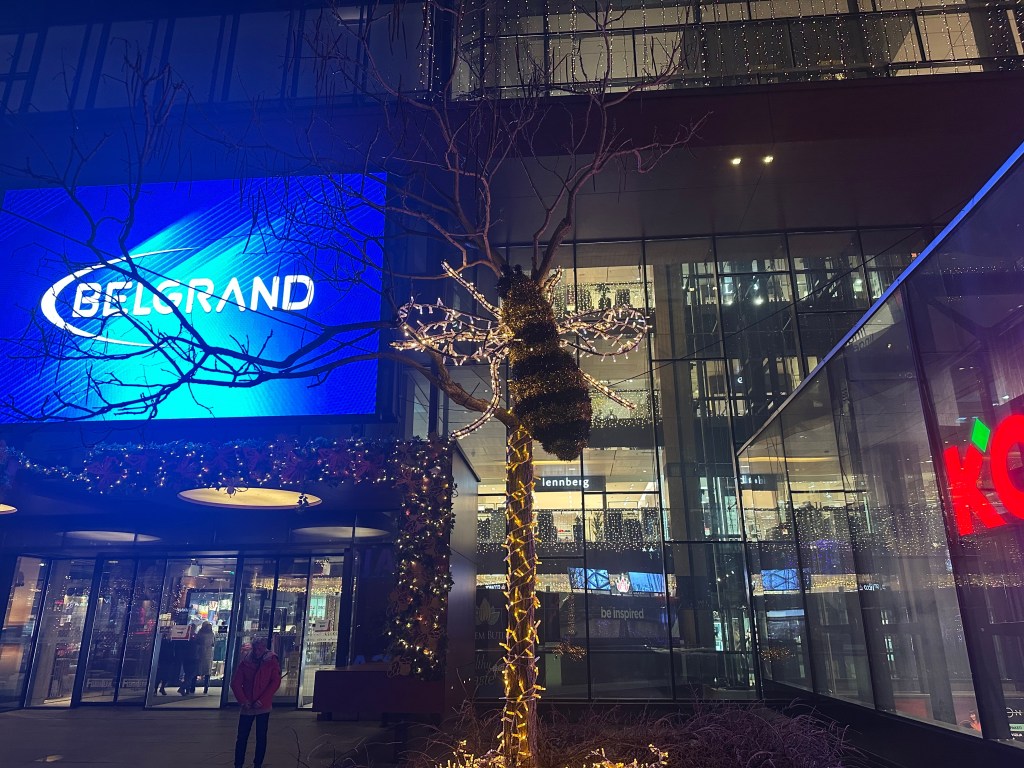
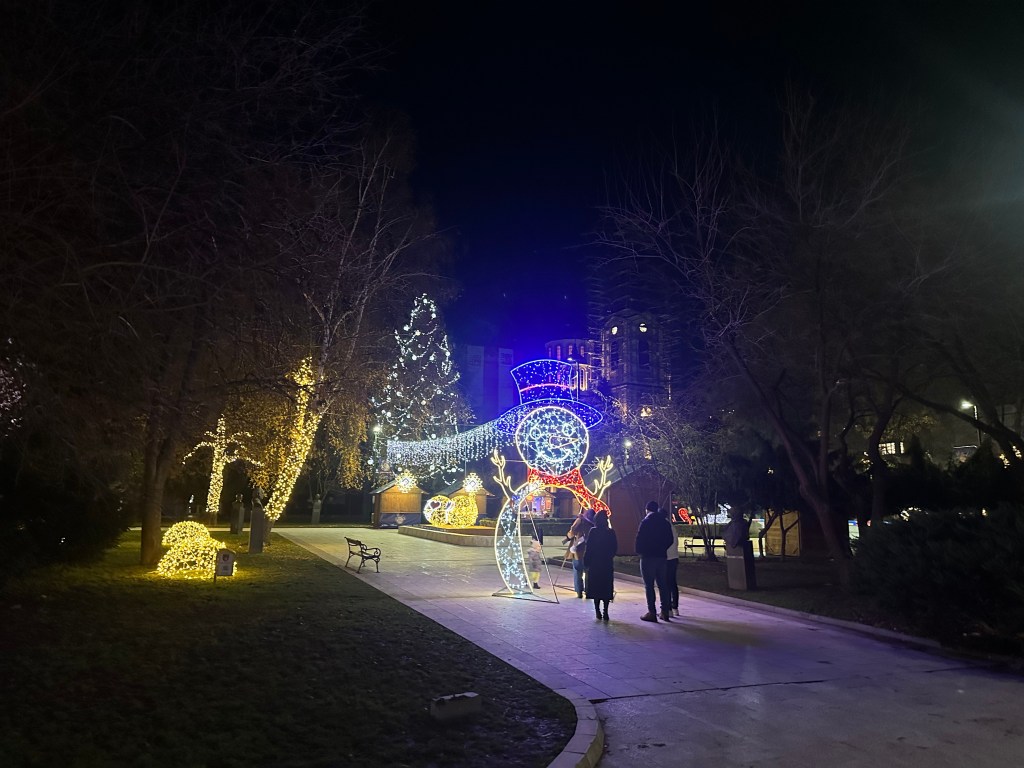


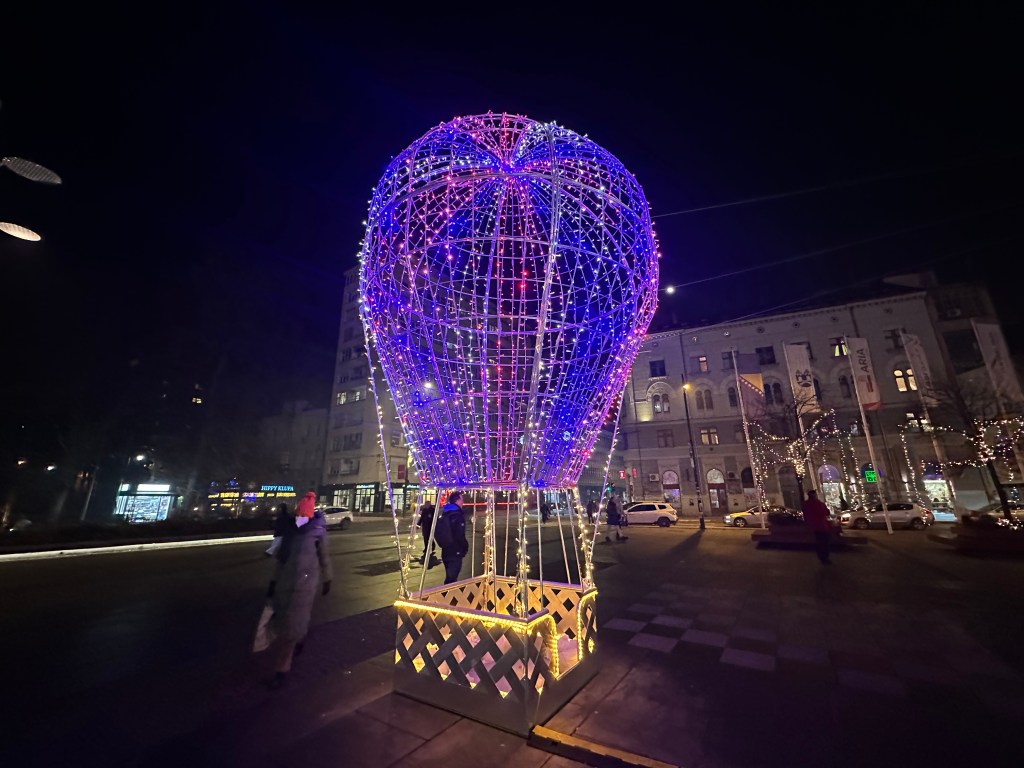
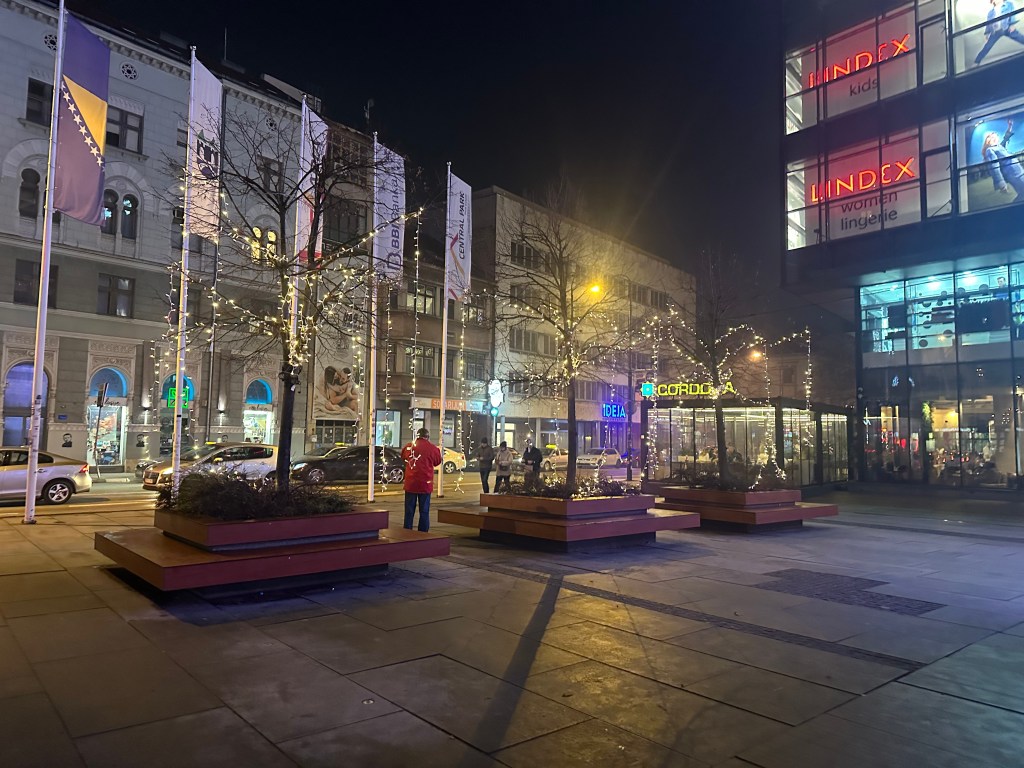
Sarajevo – lit up at night!
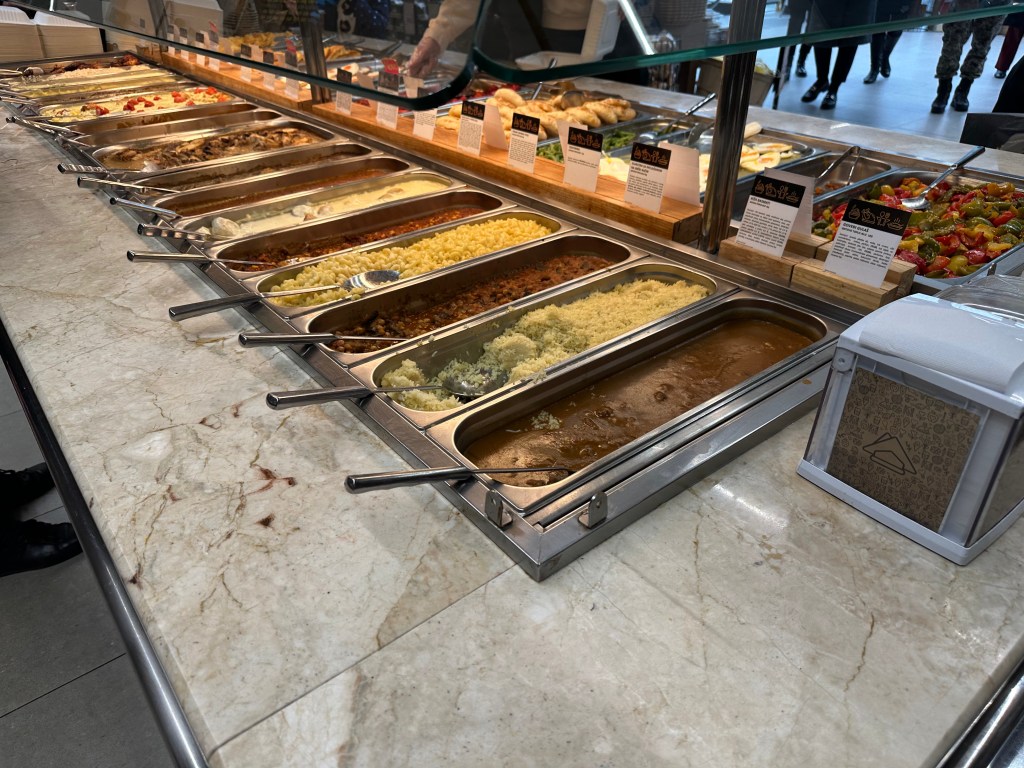
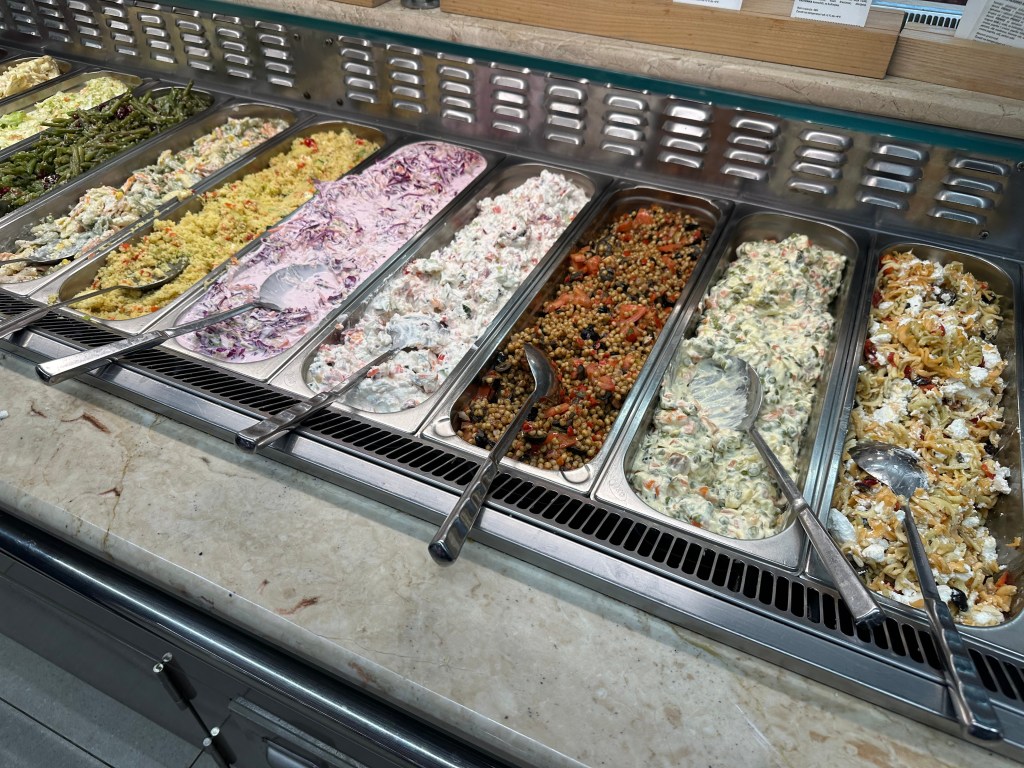
The next morning, we walked down the street to an enormous food hall that we’d spotted a few days earlier, the Cverna Jabuka Gastro Market. The idea here is amazing – there are two levels of store, where you can pick up any kind of foodstuff, from soups, salads, and burgers, to roast dinners, cheesecakes, and drinks. You then take your breakfast/lunch/dinner to the counters on the top floor, and then can take a seat at the rooftop and eat – yes, it sounds like any other DIY food court, but I must admit, the quality of food seemed amazing. Whilst happily munching away on my chicken burger, we watched as the fog over the city started, ever so slightly, to shift.


By early afternoon, we had made it to the airport, and were finally boarding our AirSerbia flight to Belgrade – the turboprop we had flown in on had been replaced by a much larger jet, which turned the journey into a 19 minute one! Sarajevo was an absolutely fascinating experience, one that combined Ottoman and Austro-Hungarian influences, with the history of a city that has somehow found itself, time and time again, the centre of global attention. Our time in Bosnia, however, was up – next stop, the Albanian capital, Tirana!
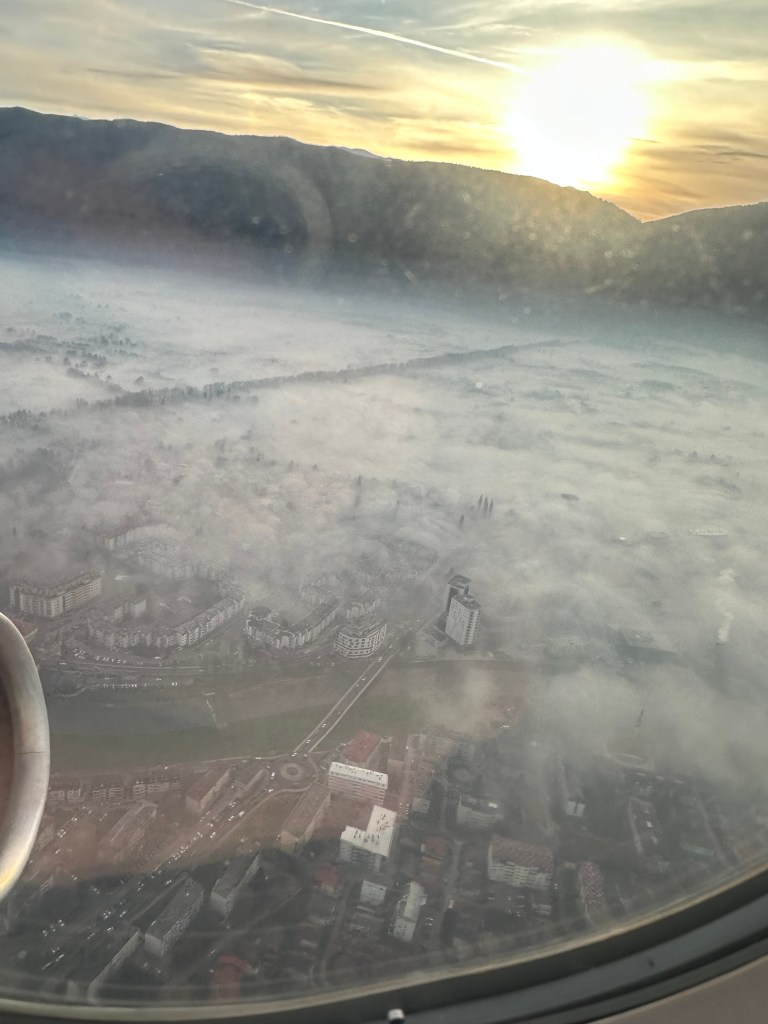
View of the fog over the city – from the window of our plane!


 Global Wanderer
Leave a reply to globalwanderer Cancel reply