

2/10/25 – 3/10/25
Following a lovely few days in Matsuyama, it was time to head back over the water to Honshu island, this time to visit the city of Hiroshima. We took a local train (and short bus ride) down to the port, and collected our ferry tickets. The trip across the Seto inland sea took just over an hour on the high-speed ferry, and the water was relatively calm, which made for a pleasant trip.
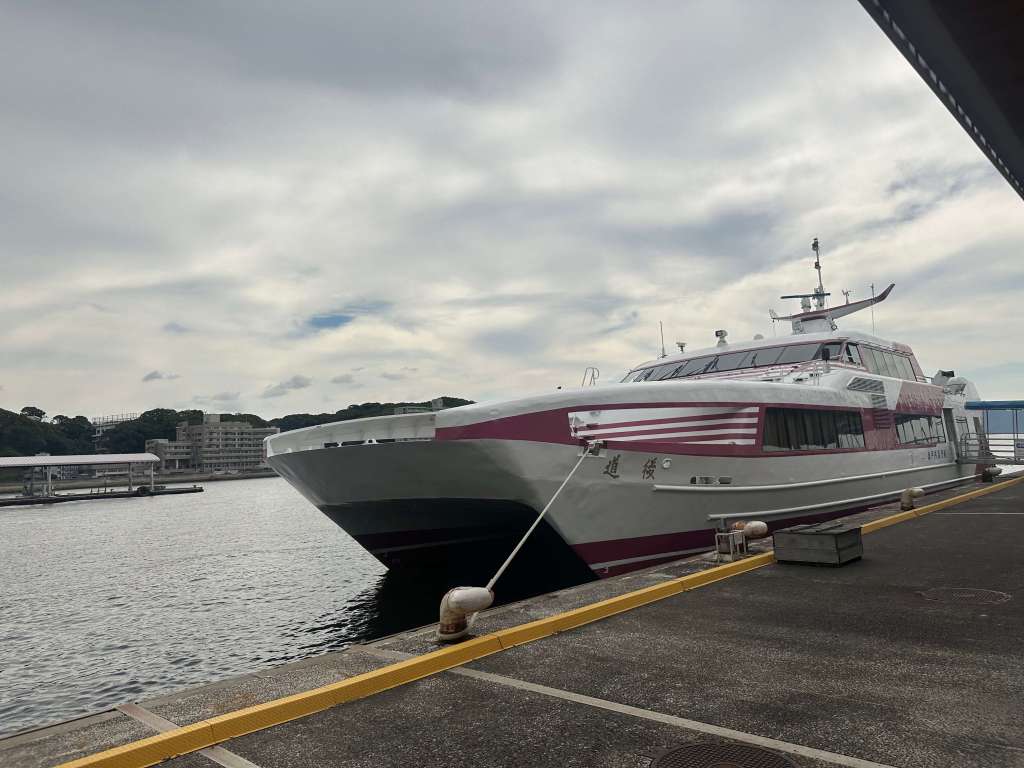
The high-speed ferry between Matsuyama Kanko port and Hiroshima
Upon arrival at Hiroshima’s port, we hopped on one of the trams that circulate around the city, made our way to our accommodation for that night, and dropped off our bags. We’d decided to stay just the one night in Hiroshima, before heading back north, and so had to make the most of the day!
Hiroshima has existed for many centuries, starting life as a small fishing village before becoming a major urban hub in the 19th and 20th centuries. Everything changed, however, on the 6th of August 1945, when the United States dropped Little Boy, the first nuclear weapon to ever be used in warfare. 70% of the city’s buildings were destroyed, and 70,000 people were killed, whilst another 20,000-70,000 died afterwards from the effects of the radiation.
We made our way over to the Peace Memorial Park, designed as a memorial to those who died in the atomic bombing. It is home to the Peace Memorial Museum, a collection of displays showing the destruction the bombing caused, and the impacts on everyday people. It was a harrowing experience, in particular the artefacts which had been collected from people who had perished, and the individual stories written by survivors of the blast. I won’t go into too many details, but I definitely thought it was something everyone should see and understand (much like Auschwitz or Tuol Sleng).
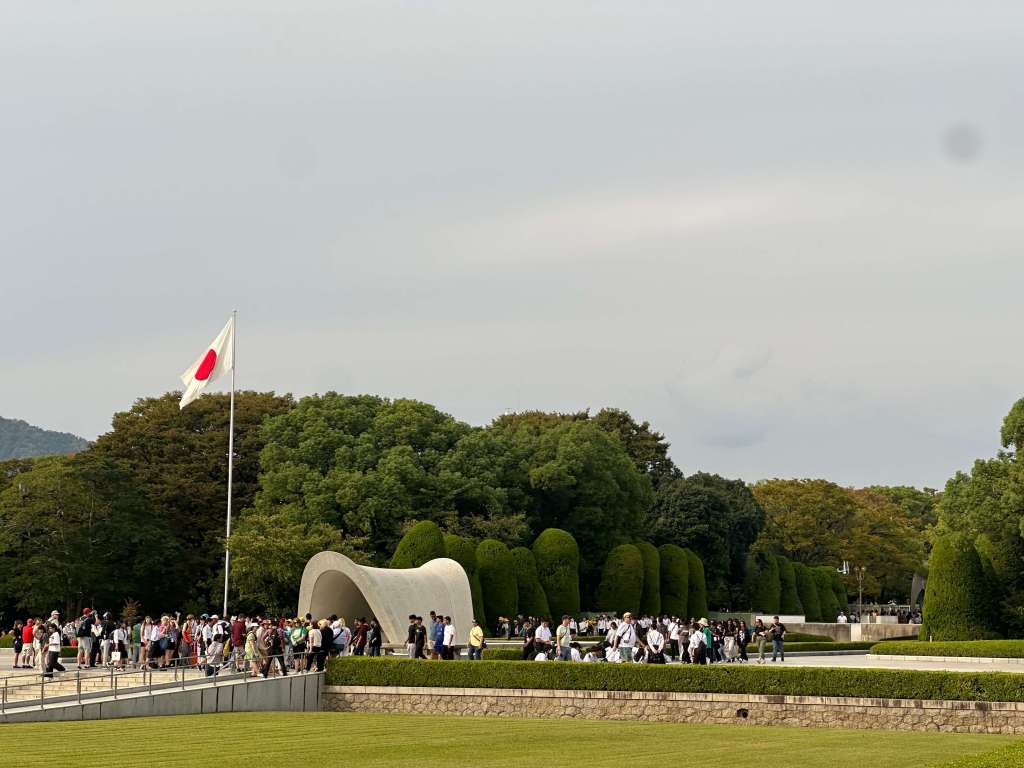
The memorial at the Peace Park
Located nearby to the museum is the infamous A-Bomb Dome, the ruins of the Hiroshima Prefectural Industrial Promotion Hall. The bomb exploded almost directly above this building, which meant it was one of the only ones that survived the blast (the downward pressure from the explosion above was resisted by the vertical columns of the building). By the 1960s, the government had decided to preserve the building as a reminder of the bombing, and so it still stands today almost identical to how it did moments after the blast in 1945.

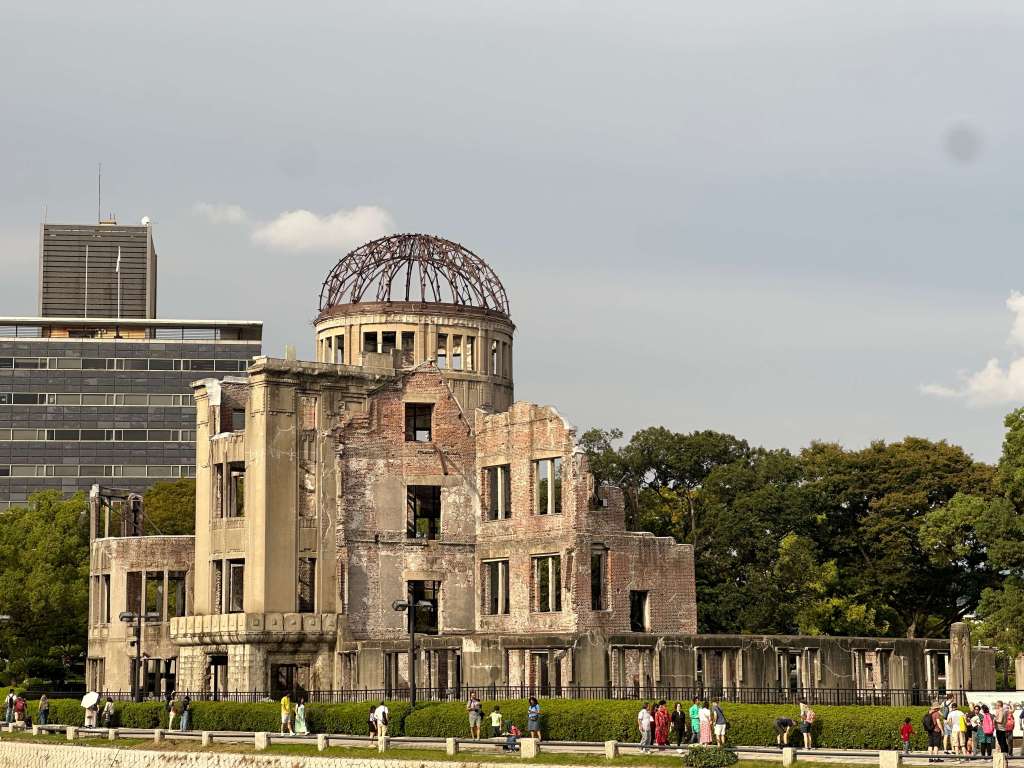
The A-Bomb Dome, one of the only buildings that survived the atomic bombing in 1945
We spent the afternoon walking through modern Hiroshima’s streets (stopping into a department store briefly, where Google Translate informed me that the plate of food I was looking at was ‘Raw Cancer Heaven’… I really wish I knew what it was!).
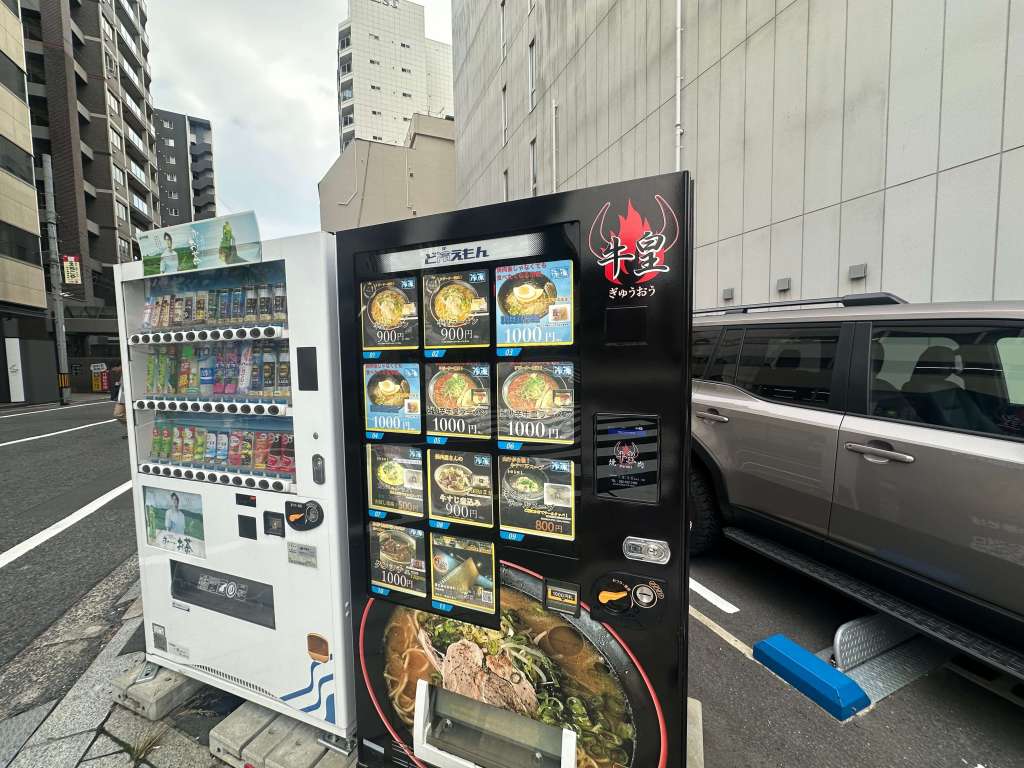
One of the more interesting vending machines I came across in Japan, this one serving up hot bowls of noodles
That evening, we made our way to Kinchaiya, a tiny restaurant (I’m talking six seats), for some Hiroshima-style okonomiyaki. Okonomiyaki is a Japanese pancake cooked with a variety of ingredients including cabbage, noodles, fried egg, and pork, on a teppanyaki grill. In Hiroshima, all of the ingredients are layered on top of each other – watching this process on the teppan in front of our seats was a real treat! The guy and his wife who ran the place were absolutely lovely, and through Google Translate we managed a great conversation about life in Australia compared to Japan, amongst other things. Honestly, this was a fantastic experience – if you’re ever in Hiroshima, definitely hit up Kinchaiya!
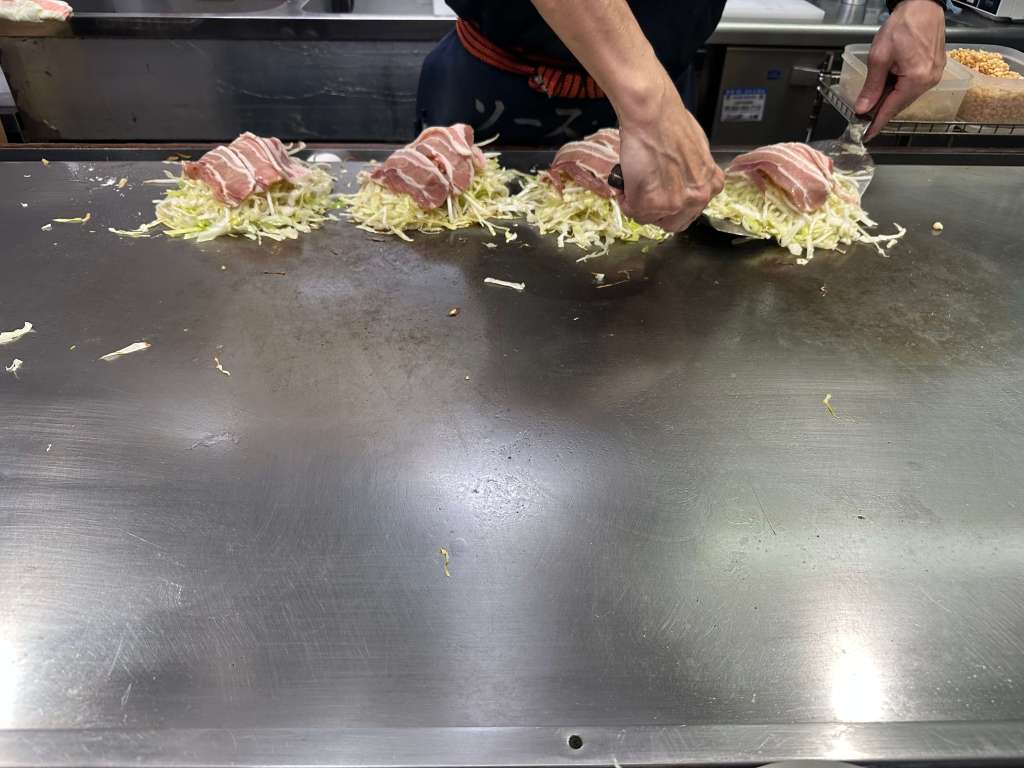
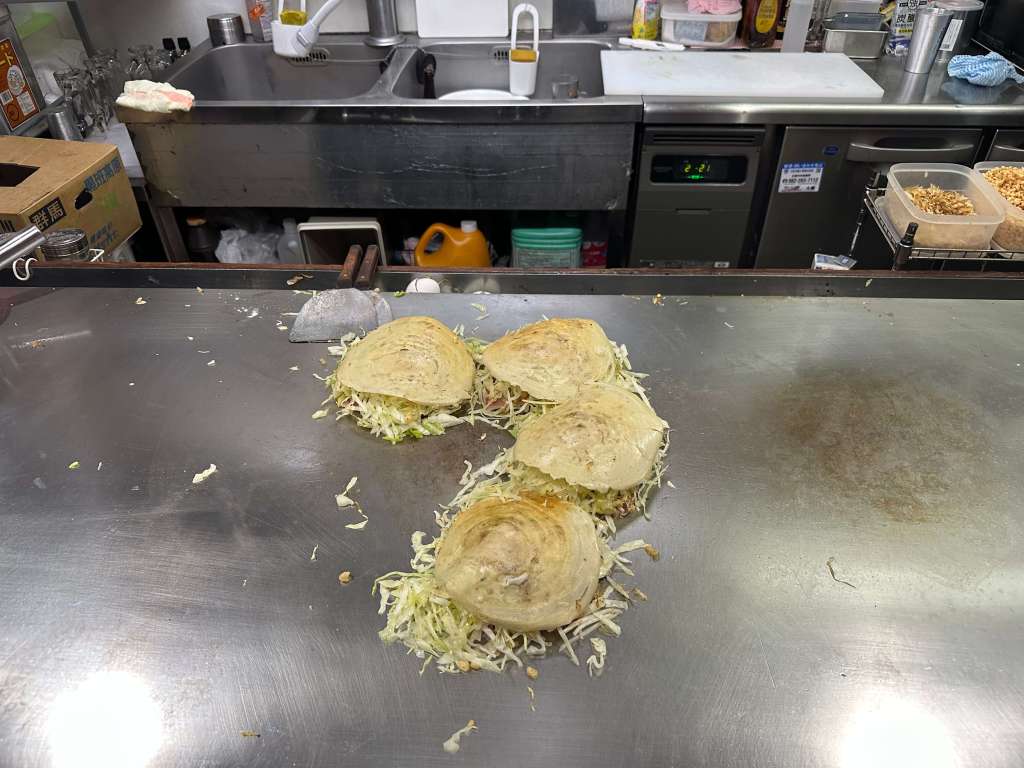
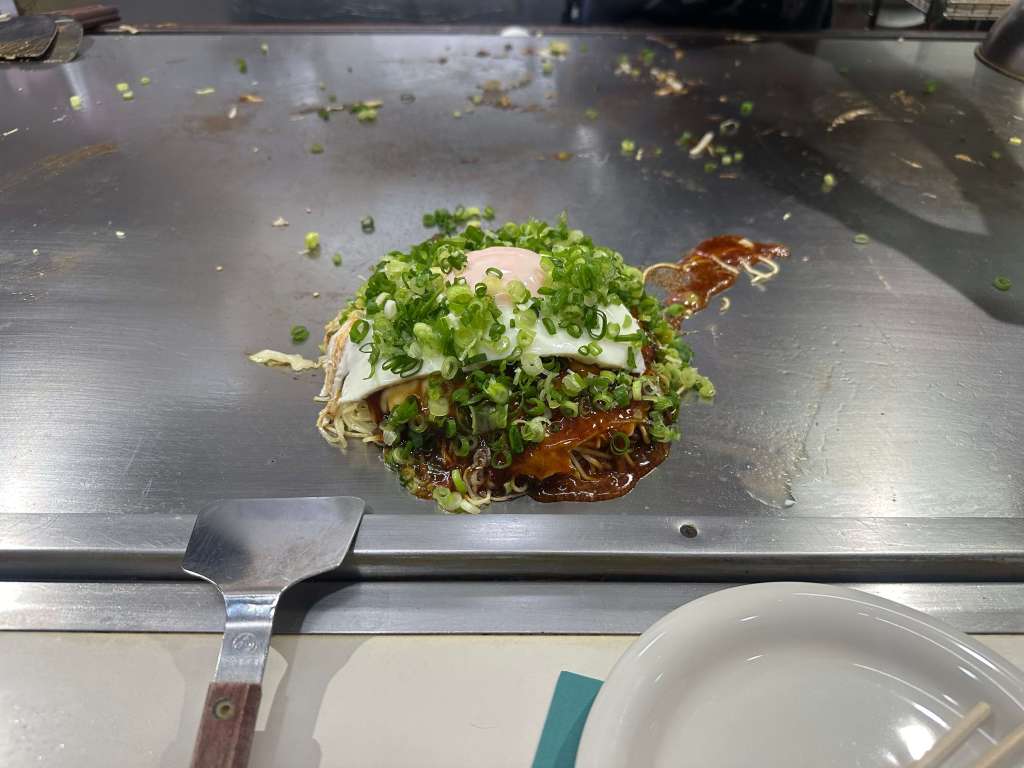
Hands down one of my favourite foodie experiences in Japan. I could have eaten 10 of these if I had the stomach space!
With the moon high in the sky, we set out to take a look at Hiroshima castle, a reconstruction of the original that once stood overlooking the city. It was very pretty, all lit up at night, and totally silent – unlike the hustle and bustle of the city centre! We also revisited the A-Bomb Dome, this time lit up against the darkness.
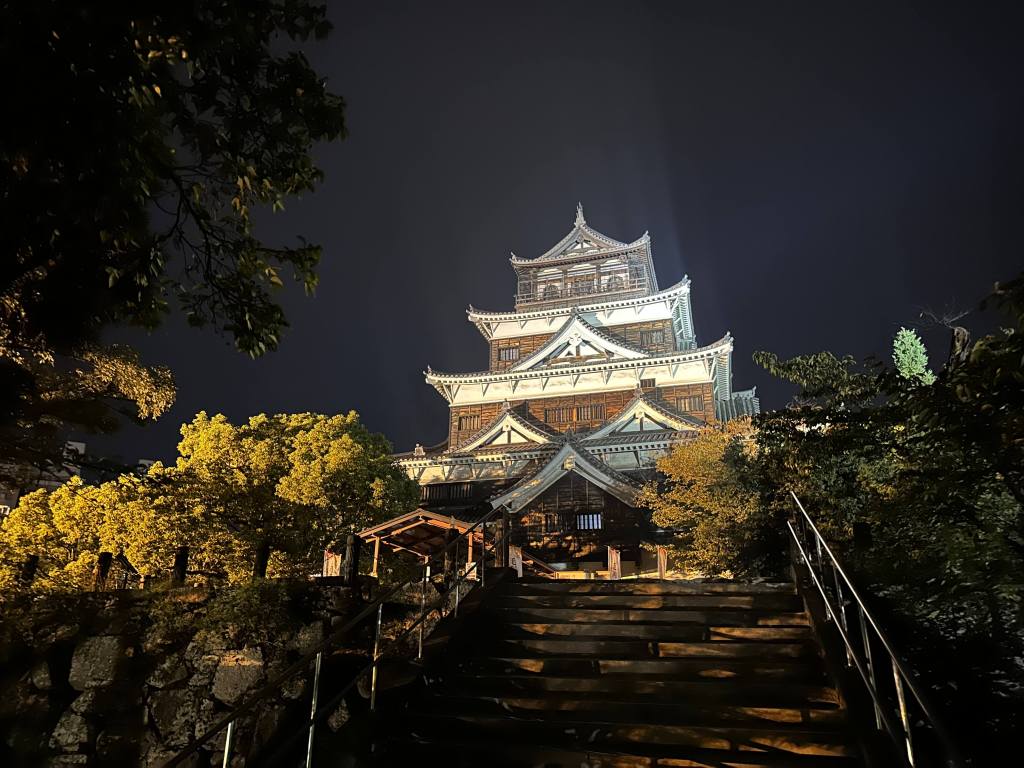
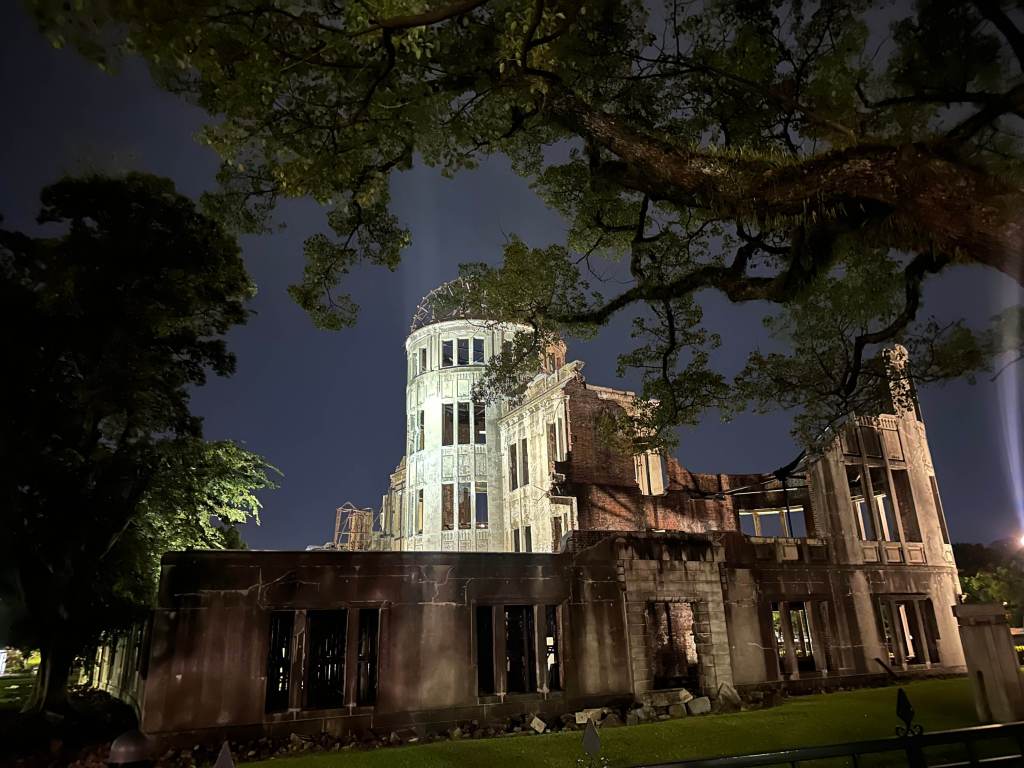
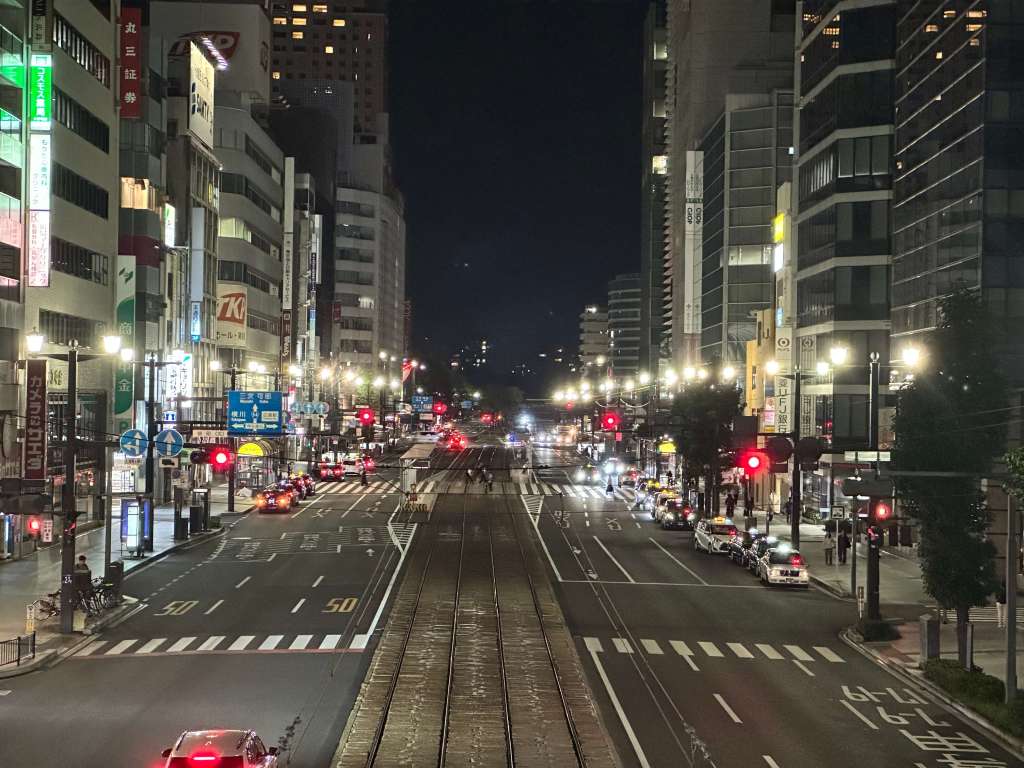
Hiroshima by night
The next morning, we made our way towards Hiroshima’s railway station for our shinkansen ride to Kyoto, stopping along the way to take a look at some of the historic trams still running through the city. Amazingly, I’d discovered that the trams in Hiroshima had been put back into service just 3 days after the atomic bombing, and not only that, but a handful of trams that were operating at the time of the blast were still in operation today – incredible.

An elderly tram plying its trade along the streets of Hiroshima
 Global Wanderer
Leave a comment