


21/4/25
We woke up early, ready to tackle the challenge of the day – exiting Afghanistan at the Hairatan border crossing, with Uzbekistan. It began simply enough, with a cab ride to the shared taxi station, and a quickly-negotiated seat in a shared taxi headed for the border. It didn’t take long to reach Hairatan, Afghanistan’s frontier town on this side of the border – a small place, but filled with trucks, cars, and pedestrians making their way between the two neighbouring countries.
Afghanistan and Uzbekistan haven’t always seen eye to eye, however in recent years, relations have eased, as Afghans are now allowed to enter into the border region on the Uzbek side, to visit a market and utilise the shops, visa free. We walked up towards the border crossing area, where we were stopped to have our passports checked and our bags scanned, where we were asked about the amount of USD we had (I believe you are limited to 500USD when departing through Afghanistan’s land borders). Following that, we were led outside to a queue leading to a small building containing a bag X-ray and a body scanner (the final checkpoint). Outside were young Afghan money changers with fresh Uzbek som – they all offered a fair rate, and so I parted with the last of my Afghanis and filled my wallet with the Uzbek currency.
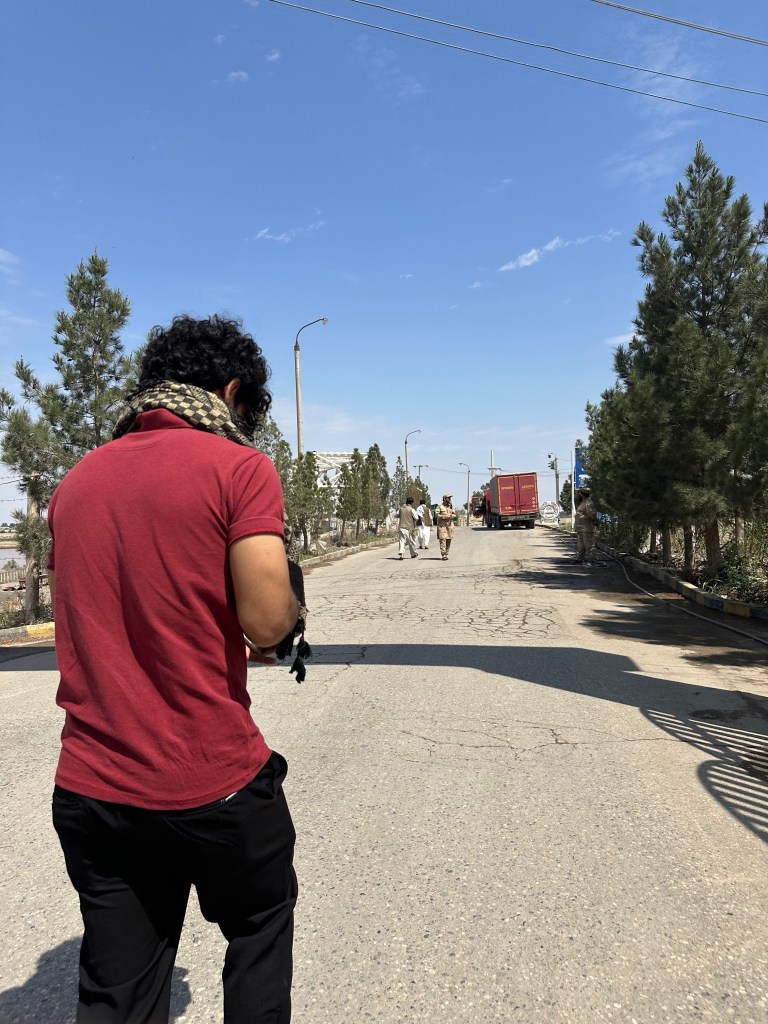
Entering the border zone
After being pushed to near the front of the queue (locals indicated to us that they would spend a lot longer searching the Afghans, so it was better to just move the foreigners through as they wouldn’t take as long with us), we had our bags briefly searched, our wallets more thoroughly searched (they weren’t too phased by my som, though), and finally, were pushed through into the border area.
The border between the two countries is a natural one – the Amu Darya river. In the 1980s, during the Soviet invasion of Afghanistan, the USSR built a permanent bridge over the river to ensure a more secure supply line – there are actually some very cool photos of the last Soviet tanks in Afghanistan crossing back across the river into the Soviet Union in 1989 at the end of the conflict – and since the collapse of the Soviet Union, the bridge has functioned as the only crossing between Afghanistan and Uzbekistan. Once we had made it through Afghanistan’s exit controls, we were finally on our way to Uzbekistan across the Hairatan border bridge between Afghanistan and the southern Uzbek city of Termez.
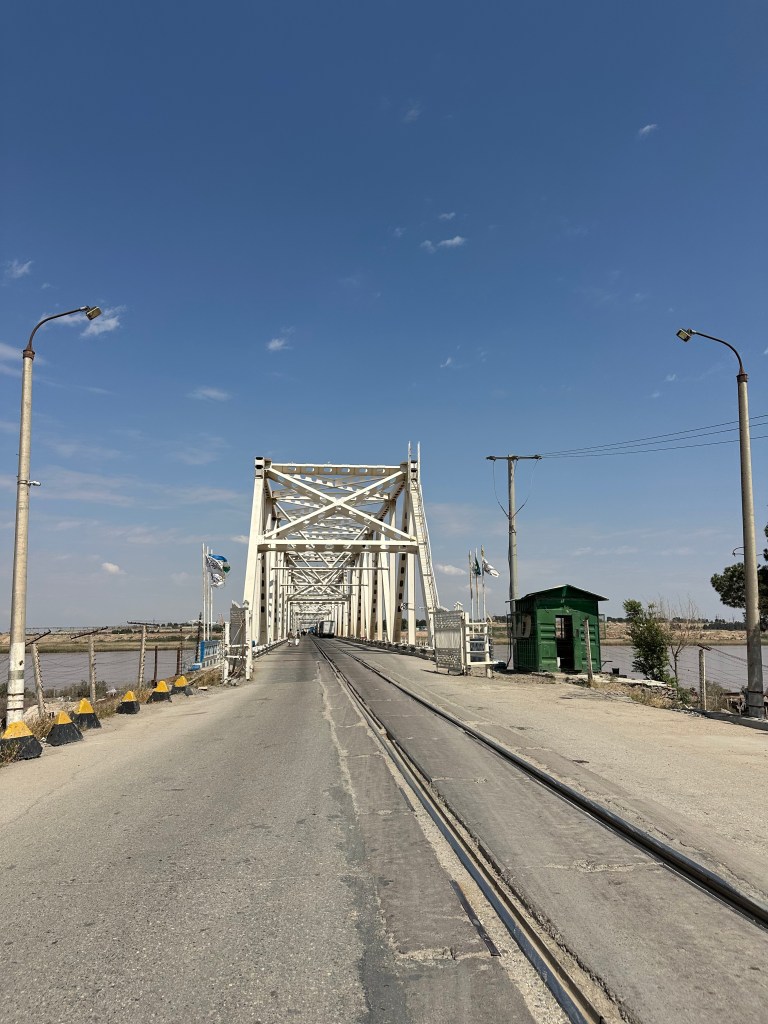
The bridge that separates Afghanistan and Uzbekistan
An Afghan guy who spoke a few words of English and was crossing the Hairatan border with us gave us a hand with figuring things out – basically, you walk to the halfway point of the bridge (no issues with photos or filming on the Afghan side, there is literally nobody there). At the halfway point, you are corralled into a line, where you undergo a bag search by the Uzbek border guards. It is really easy to tell that you’re crossing over – the Uzbek side is lined with armed border guards, there is a razor wire fence that is pulled across the road when trucks/trains are not coming through, and there is no tolerance for photography (I was yelled at). Once you’re through the bag search, you’re loaded onto a marshrutka which drives you across the other half of the bridge (5,000 som, a real rort given they won’t let you walk on the Uzbek side!).
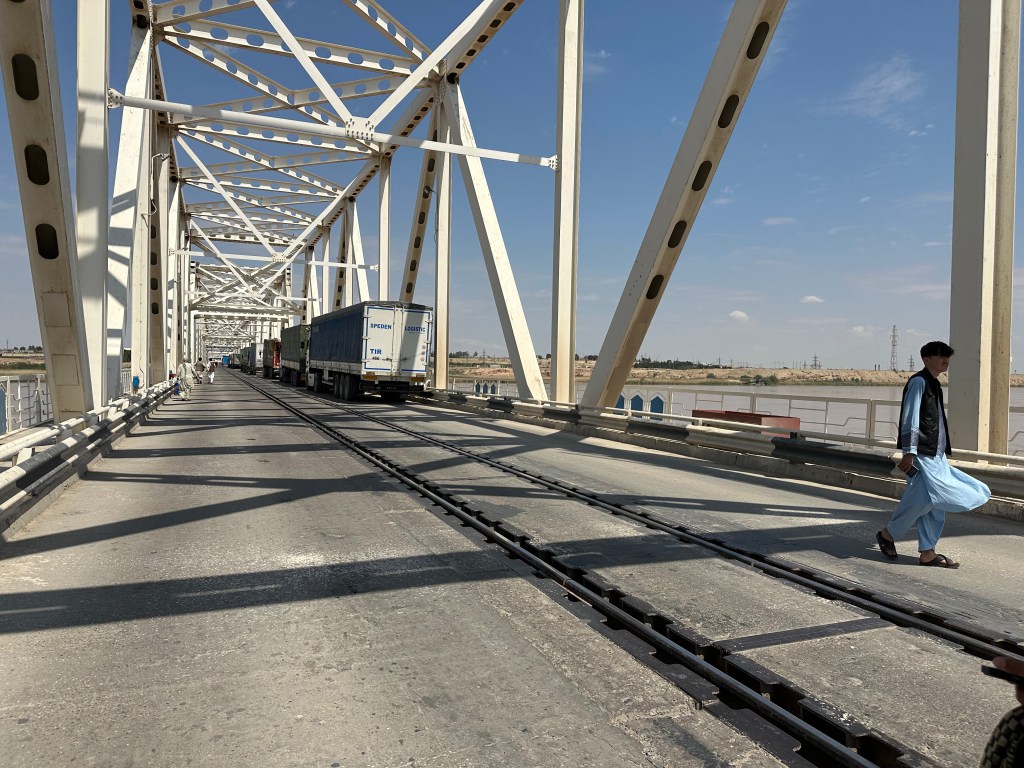
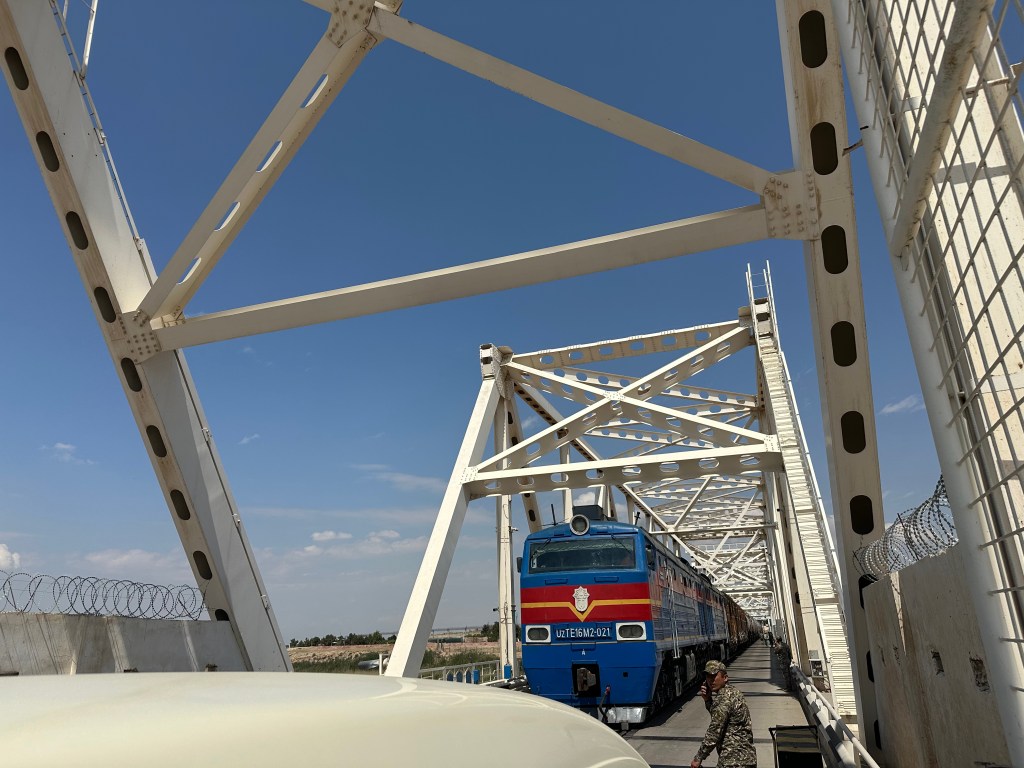
Walking across the Hairatan border bridge
At the Uzbek end of the bridge was where our trouble began. We followed the Afghans into the border control area, but when it became clear we were tourists wanting to ENTER Uzbekistan, and not just visit the border market, we were moved to a separate immigration area (much quieter). Our passports were collected by the immigration agent, and we expected straightforward stamping into Uzbekistan (like the three other times I’ve entered the country!). Unfortunately, there seemed to be a problem – and so our passports were taken into a back room, and we were told to sit down and wait. And wait. And wait a little longer. Any time I asked a question, I was asked ‘who gave you this passport?’, and any time I asked how long it would be, I was told ‘just a few more minutes.’ This tense situation lasted almost 3 hours – by which point I had made a call to Consular Assistance as it felt like an increasingly grim situation. Amazingly, a few moments after I put down the phone, the border guard wandered back into the booth, gestured us over, and stamped our passports. Zero explanation, but at that point I was just over the moon that they’d actually let us in (we couldn’t really have gone back to Afghanistan either, given we’d only held single-entry visas!).
After quite an extensive bag and personal search, we headed out into the Uzbek sunshine, free to go! We decided to get Uzbek SIMs sorted first, and so began the process of negotiating a taxi fare to the city from the border. The driver began talking to me in Russian, and it felt like a veil had been lifted from over my eyes – whilst I don’t speak it very well, I can understand enough to roughly translate and put together a few sentences, which was so much easier than trying to comprehend Dari and Pashto during our time in Afghanistan.
At the UCell store in Termez’s centre, we came across an almost confusing array of European travellers – Termez isn’t exactly on most travellers’ Uzbekistan itineraries! We got talking to them, and discovered that there were several groups who were all travelling overland from Europe to Asia – one was an Italian family with 2 young kids, another was an older Belgian couple who were travelling the world to celebrate their retirement (the Belgian lady actually had a friend who she would be visiting in Australia, who lives just a few kilometres from me, what a small world!). They had all been stuck at the Afghan/Uzbek border overnight, waiting in their vehicles for them to be processed – apparently this is a long procedure, as the cars/vans/campervans all get processed with other vehicular traffic, such as large trucks, which obviously take considerable time to pass through customs checks.
After some friendly chit-chat, and best wishes exchanged, we headed back out into Termez, armed with internet and more importantly, the Yandex app. A few weeks earlier, I had messaged a traveller I had seen online, who was making his way overland from the UK to Australia, and who had been on the road for almost 9 months already. I had guessed that his route would take him the same way we had gone through Afghanistan, but in reverse, and it turned out that he was planning to cross through Termez around the same time we were. The day earlier, I had spoken to him, and organised to meet up in Termez – we met at a small pub on the outskirts of town, and had a great time – it was great to hear his travel stories, and also useful for us to pass on the information we had gleaned about Afghanistan and Pakistan during our trip there.
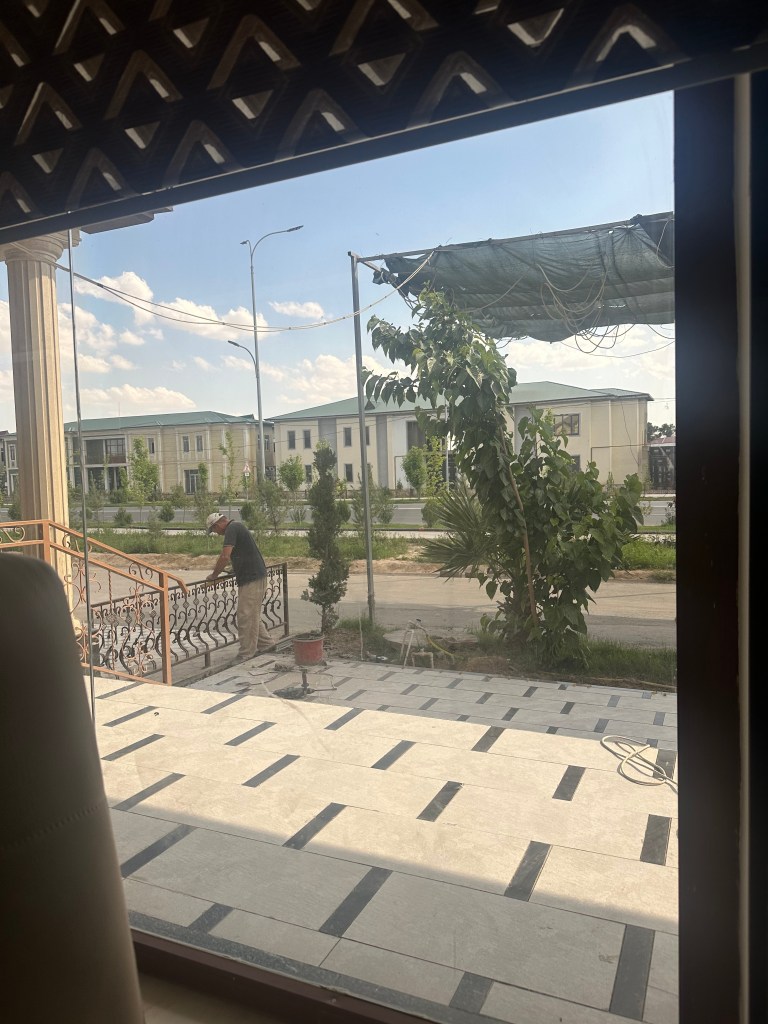
Quick pitstop in the southern Uzbek city of Termez – a world away from its nearby neighbour in Afghanistan
Unfortunately, our time in Termez was pretty limited, given the delay we had faced at the border – I had booked tickets on the sleeper train heading north to Samarkand that evening – and so we eventually had to say our goodbyes, and made our way to the train station.
Due to our late booking (literally the day before), we ended up in different parts of the train – Dale in a 4-berth compartment, and myself in the slightly more expensive 2-berth sleeper. Uzbek sleeper trains, old Soviet carriages, are pretty comfortable – my cabin was shared with me by a young Russian data scientist who was holidaying in Uzbekistan. I set up my bed, pulled up the sheets, and promptly fell asleep – it had been a long, stressful day, but we were finally trundling across the Uzbek desert, en route to Samarkand. What more could you ask for!
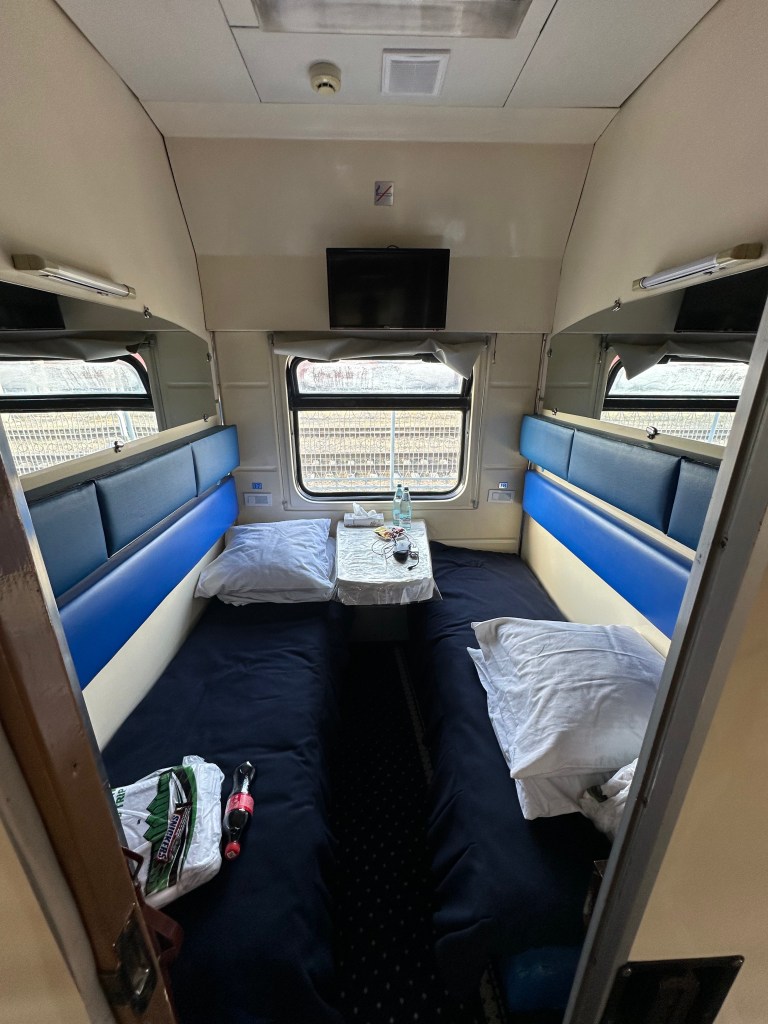
My berth for the overnight journey to Samarkand
 Global Wanderer
Leave a comment