


18/12/24 – 20/12/24
By the time we landed in Tirana, after our long travel day, it was already close to midnight! Luckily, we were off the plane quickly, and Albania’s e-Gate system made for fast passage through passport control – our next step was to find the Luna bus, which operates between the airport and the city. Thankfully for us, this was located right outside the airport entrance, and so within minutes, we were on our way to Tirana’s city centre.
Tirana is the capital of Albania, a country that has had one of the most fascinating recent histories of any European nation, in my opinion. Once part of the Ottoman Empire’s far reaches, Albania gained its independence in 1912, which lasted until 1939, when Italy’s Fascists invaded (the two nations were, prior to this, on VERY good terms). For five years, Albania was a puppet state of the Fascist regime, propped up by Nazi Germany too, whilst communist partisans conducted guerrilla operations against the government – successfully liberating Tirana in late 1944. Capitalising on their successes, the communists took power, with their leader, Enver Hoxha, becoming the nation’s leader.
Hoxha gradually cut ties with other communist nations, embarking on a policy of isolationism, which saw Albania cut off from the rest of the world. After his death in 1985, the nation began to open up slowly, and the country has now embarked on a campaign to boost tourist numbers – particularly along its Adriatic coastline. Tirana, located in the centre of the country, often gets overlooked – but in my opinion, the strange remnants of the communist era, combined with the modern attractions of a capital city, make this place well worth visiting.
We woke up early the next morning, to make the most of our time in the city. The owner of the hotel we were staying at, Denis, cooked us some fresh eggs for breakfast, which definitely set us up well!
Our first stop of the day was Tirana’s enormous Skanderbeg Square. Apparently one of the largest pedestrianised zones in the Balkan region, Skanderbeg Square was currently inhabited by an enormous Christmas market – an interesting contrast with the Ethem Bey Mosque. The square has existed in various forms since the 1920s – once home to statues of Joseph Stalin and Enver Hoxha, the square is now watched over by a statue of Skanderbeg, a national hero in Albania known for his resistance against the Ottomans in the 1400s.
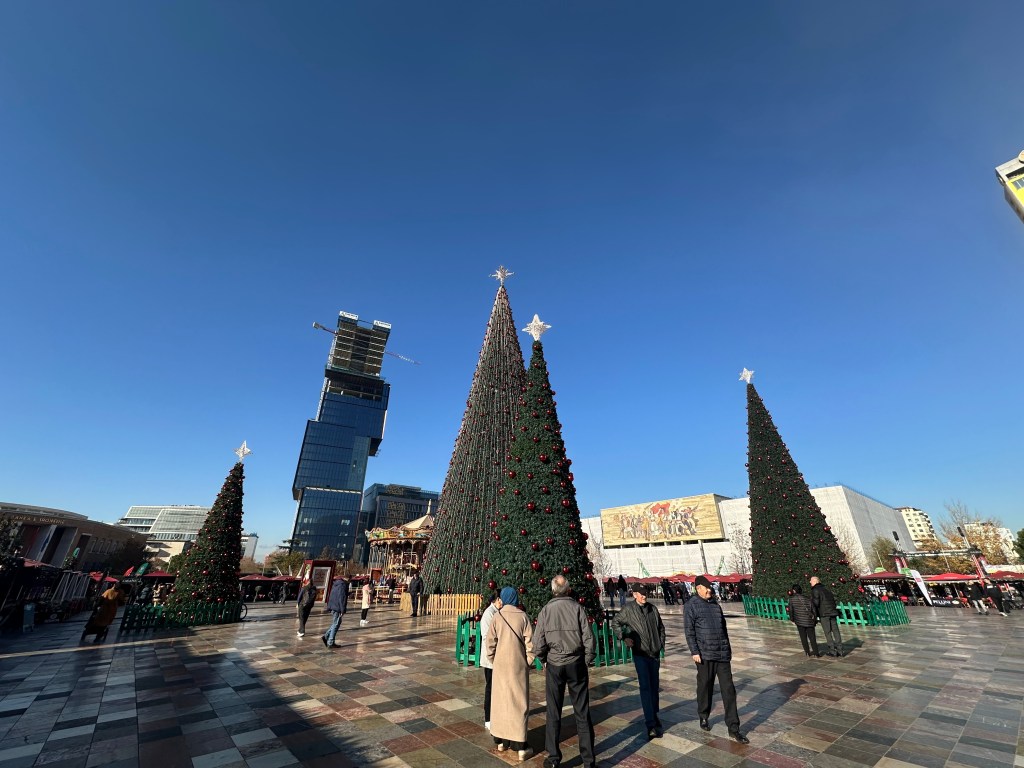
Skanderbeg Square – at the heart of Tirana
Skanderbeg Square is also home to the National Historical Museum, the facade of which contains an impressive Socialist-era mosaic mural, featuring characters from Albania’s various historical eras – definitely an imposing sight!

The impressive Socialist mural that adorns the National Historical Museum
Located near to the square is a little bridge, which you might actually overlook if you weren’t searching for it. The Tanners’ Bridge was built in the 1700s, during the Ottoman era, crossing a stream into the butchery and leather-making district. Apparently, the stream was diverted to a different route in the early 1900s, putting the bridge out of use, but it was eventually restored by the city in the 1990s after the fall of the Hoxha regime. Absolutely worth coming and checking out!
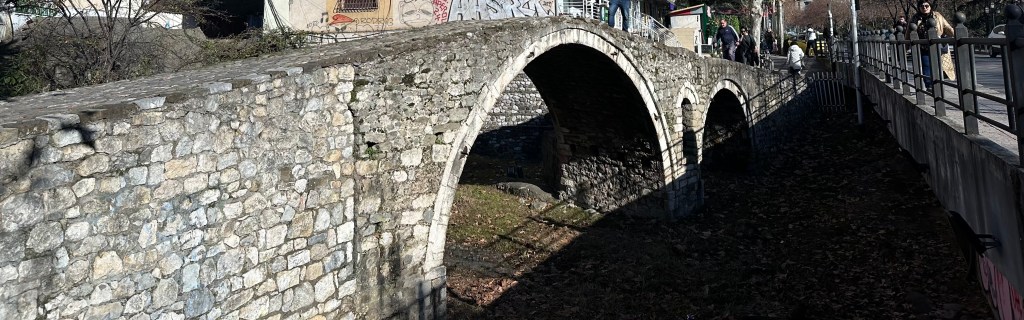
Ottoman-era Tanners’ Bridge
Interestingly enough, just 2 months before we arrived in Albania, a big ceremony had been held to officially open the new Great Mosque of Tirana, a building which looks remarkably similar to Istanbul’s Blue Mosque. With a capacity of 8000, it is by far the largest mosque in the Balkans – and yet amazingly, when we went inside, we were the only people there!

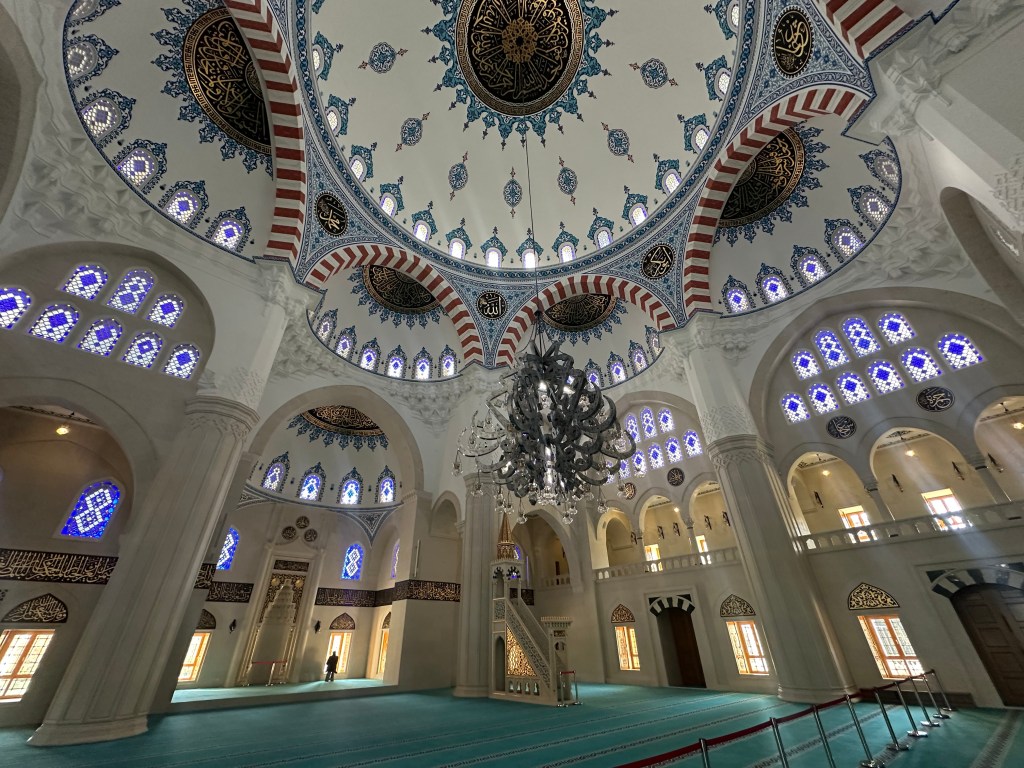


The largest mosque in the Balkan’s, the Grand Mosque of Tirana’s official opening was only two months before our visit!
Mosques aren’t the only important religious buildings in Tirana though – we also came across the St Paul Cathedral, a modern building featuring a statue of one of Albania’s most well-known nationals, Mother Teresa.
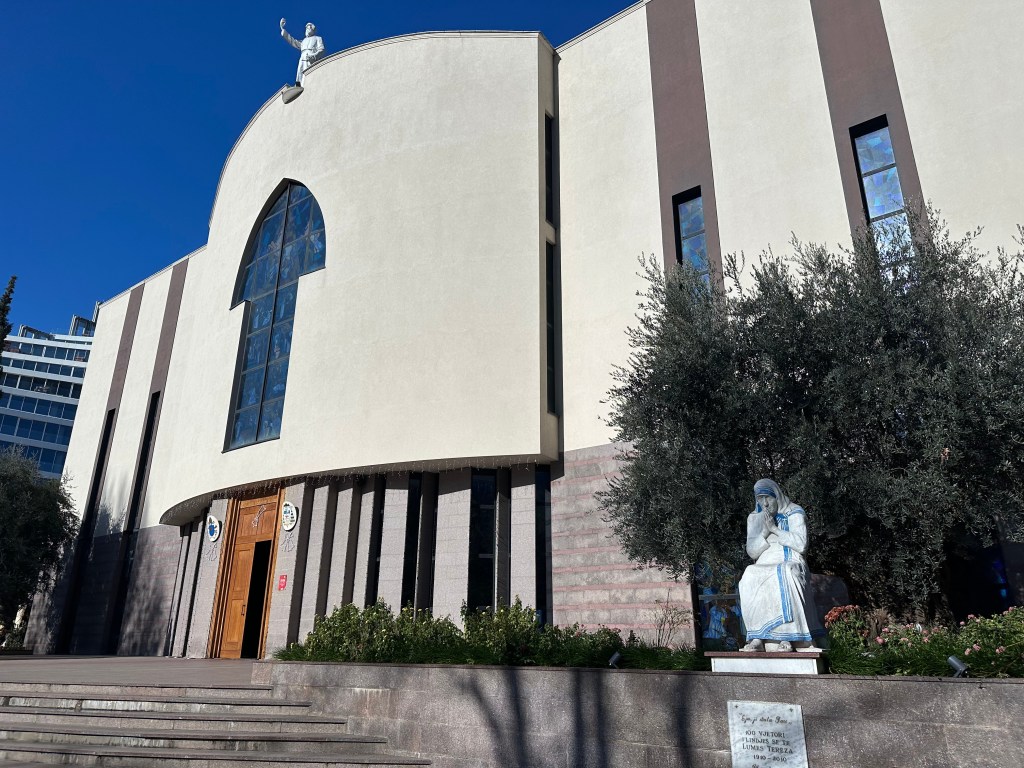
St Paul’s Church – featuring the statue of Mother Teresa
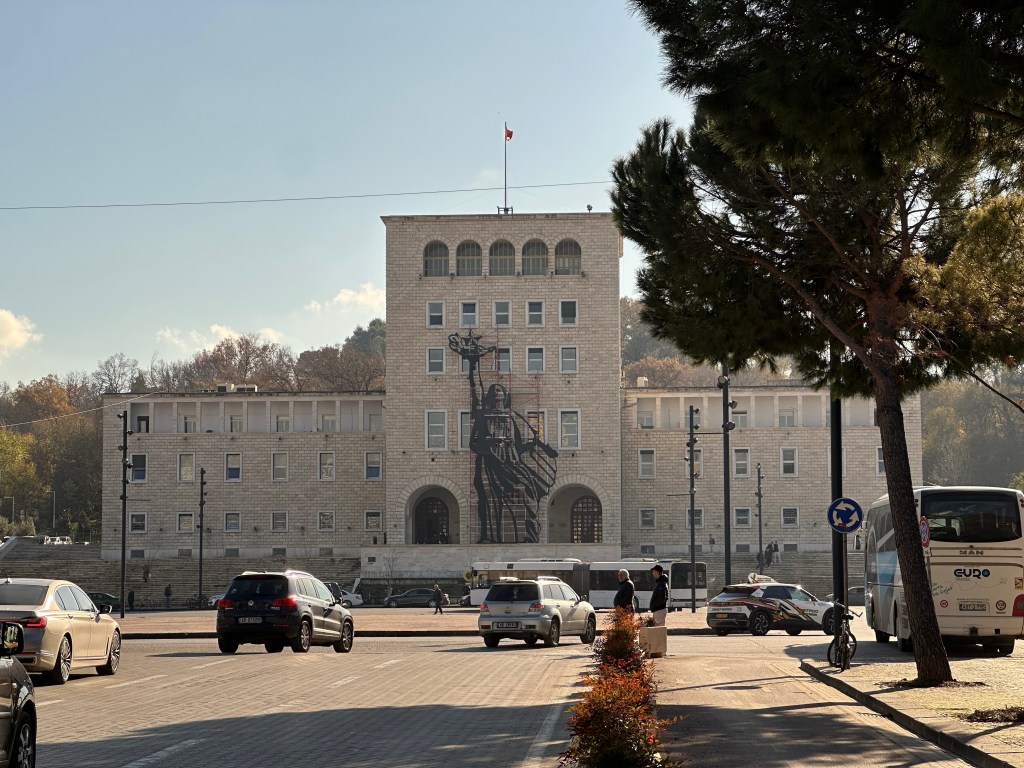
Tirana is full of weird and wonderful pieces of architecture, from strange-looking tower blocks, to the Tirana Pyramid, a wacky building that was constructed initially to house a museum dedicated to dictator Enver Hoxha, and is now home to a youth IT centre (where a conference was being held during our visit). You can actually climb up to the top of the pyramid, where you get some fantastic views out over the city!
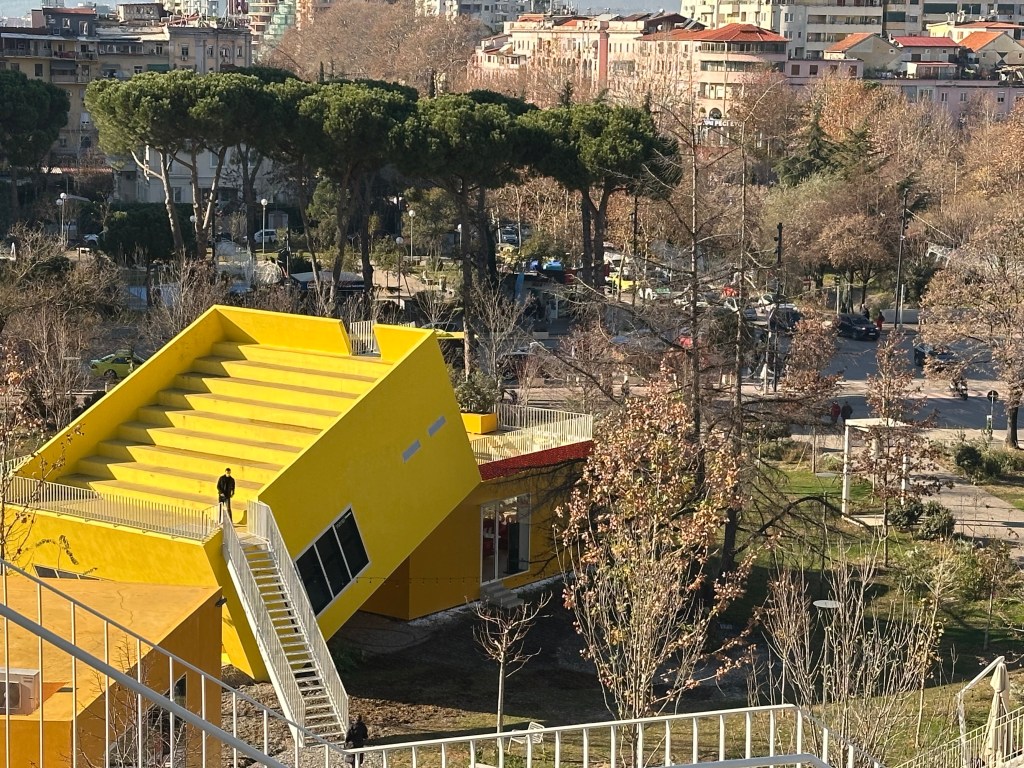
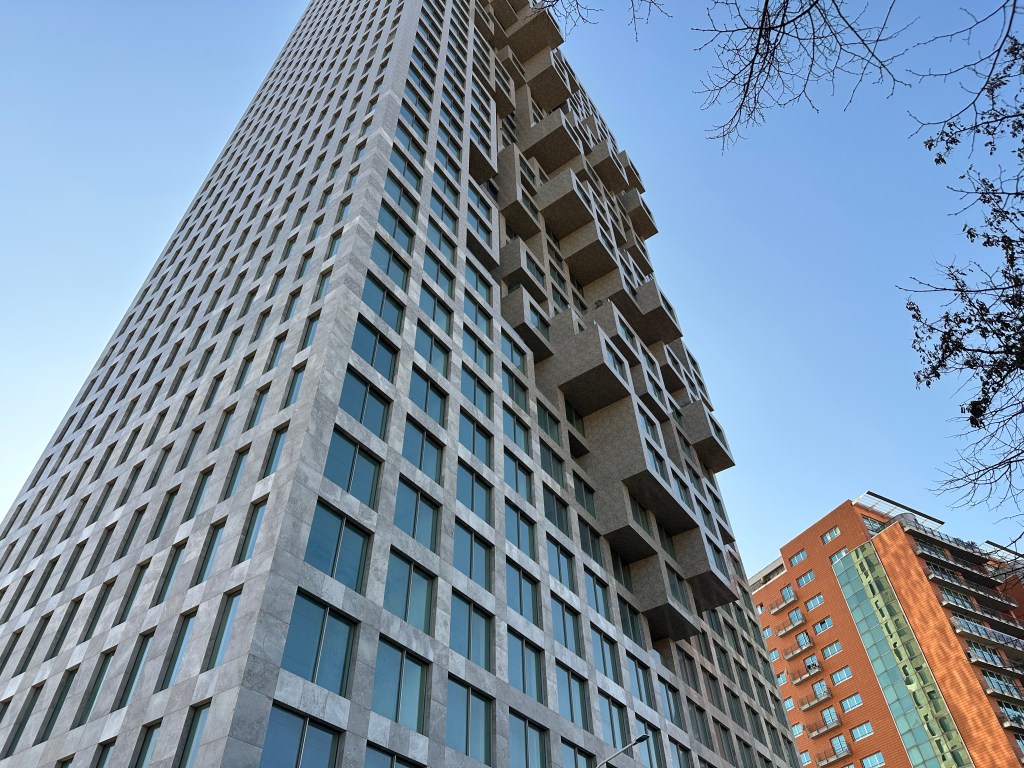


Some of Tirana’s interesting architecture, including the famous Pyramid
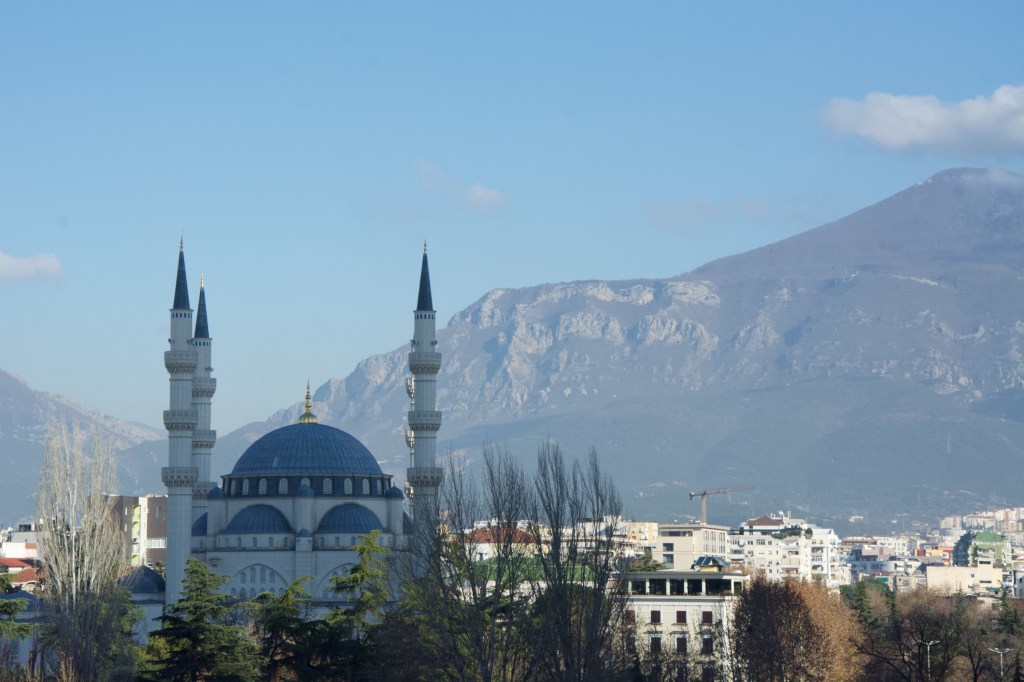
Incredible views of the city from the top of the Pyramid
Once restricted to high-ranking members of Albania’s ruling party, Tirana’s Blloku district has become a trendy urban space filled with shops, cafes and restaurants – and people! We walked here from the Pyramid, in search of Enver Hoxha’s former home. Unlike the palatial complexes of other dictators that I’ve visited, Hoxha’s Blloku home is rather modest – yes, it is a lot bigger than any other city home in Tirana, but it is certainly no palace! The fact it is located on a regular street, now surrounded by coffeeshops, young people, and street art, is testament to how much this place has changed since the fall of the regime in the early 90s.
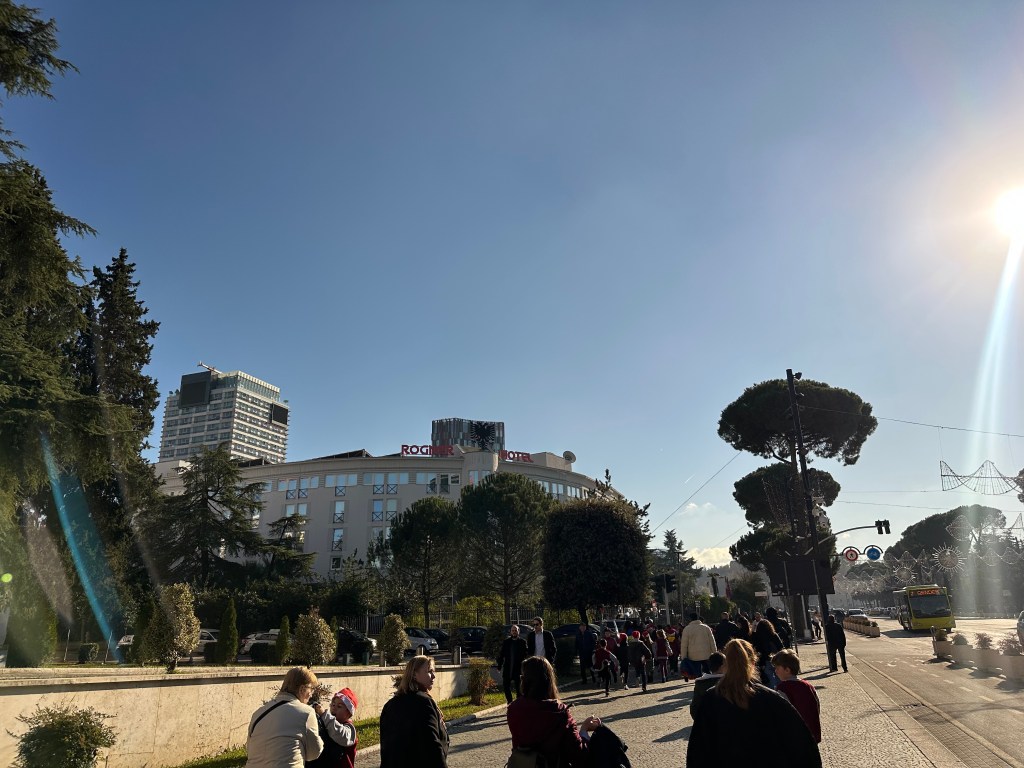
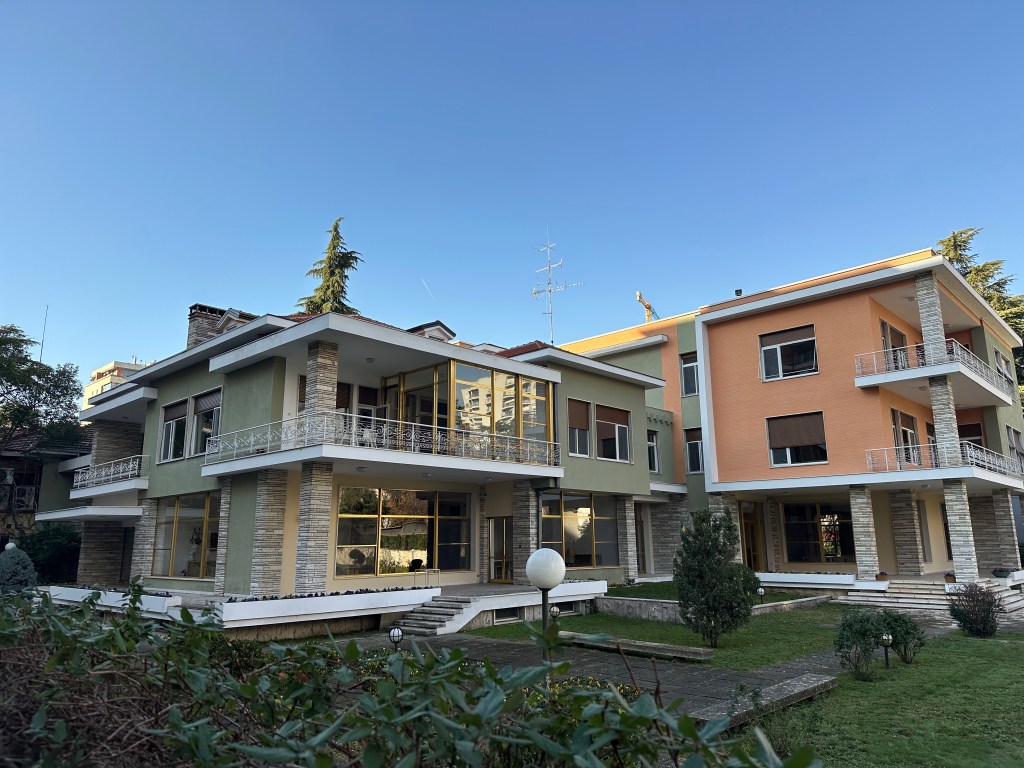
Some sights from our walk, and Enver Hoxha’s home in the Blloku district of the city
We continued walking through the streets, searching for one in particular. Free Ukraine Street, renamed after the Russian invasion of Ukraine in 2022, was actually home to the Russian Embassy in Tirana – the city authorities changed the street name, and painted the pavement in the yellow and blue colours of the Ukrainian flag as an act of protest. It meant that all mail being sent to the Embassy would have the words ‘Free Ukraine’ written on the envelopes! Unsurprisingly, the Russians opted to move their embassy to a new location in the city – but the authorities decided to keep the name of the street, and maintain the painted pavements! Interestingly, Free Ukraine street is also home to some other consular buildings – the Embassy of Serbia and the Embassy of Kosovo sit right next door to each other. I wonder if there are any tense moments at the coffeeshop across the road?

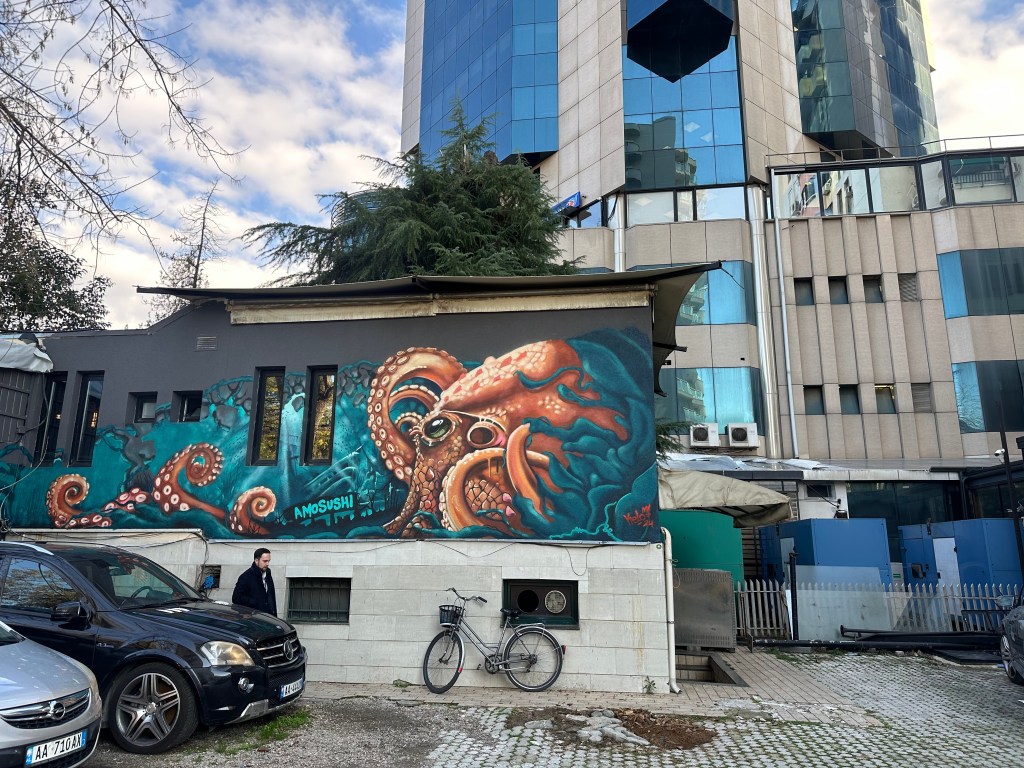

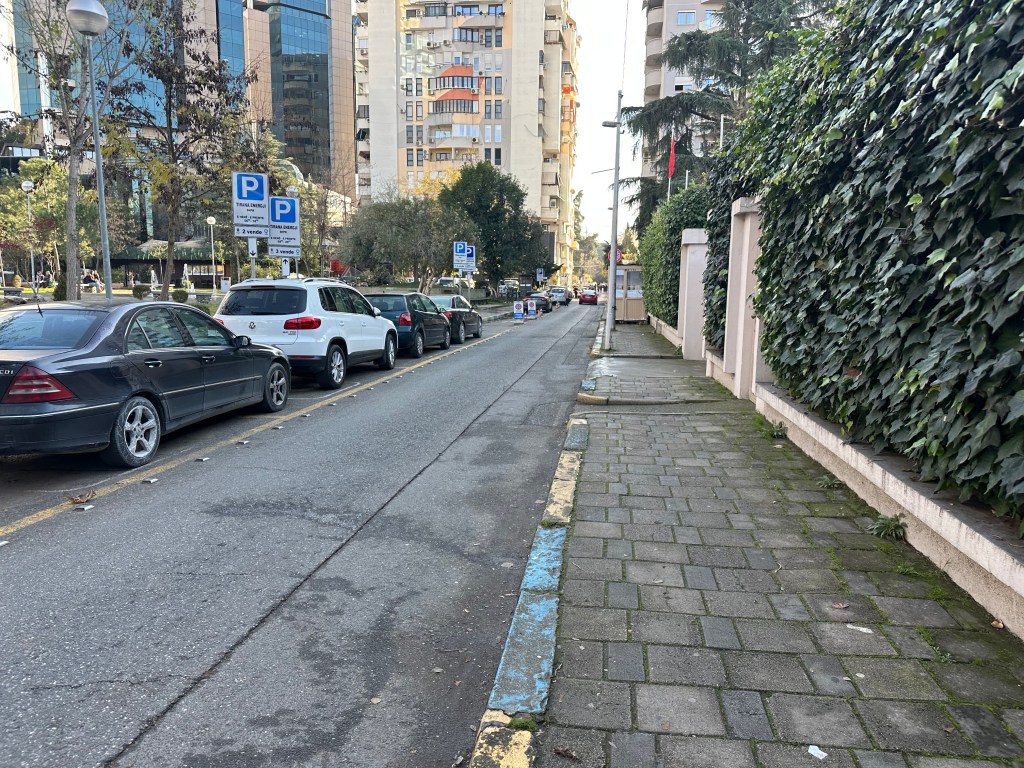
Some street art in Blloku, and Free Ukraine Street
Following our walk around Blloku, and finding the Free Ukraine street, we headed back towards Skanderbeg Square to check out one of Tirana’s older buildings. The Ethem Bey mosque, constructed in the early 19th century, in an impressive example of Ottoman architecture in Albania – and it was actually, until the opening of the Grand Mosque we visited earlier in the day, Tirana’s principal place of worship for the city’s Sunni Muslims.
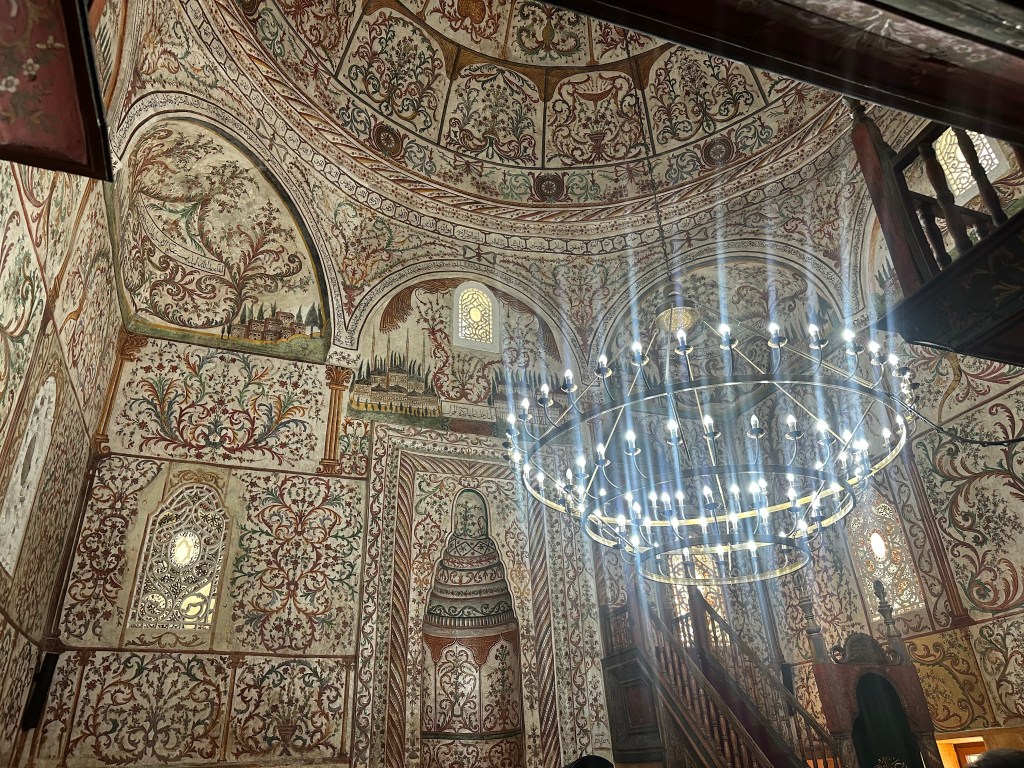
The impressive interior of the Ethem Bey mosque
We decided to take advantage of the good weather, and made the long walk up to the base of Dajti mountain, located on the eastern side of the city. There is actually a cable car, the Dajti Express, which takes you to the top of the mountain – there are some incredible views to be had, not just from the lookout points, but actually on the cable car, as it passes over traditional housing, small farms, and even an apiary!
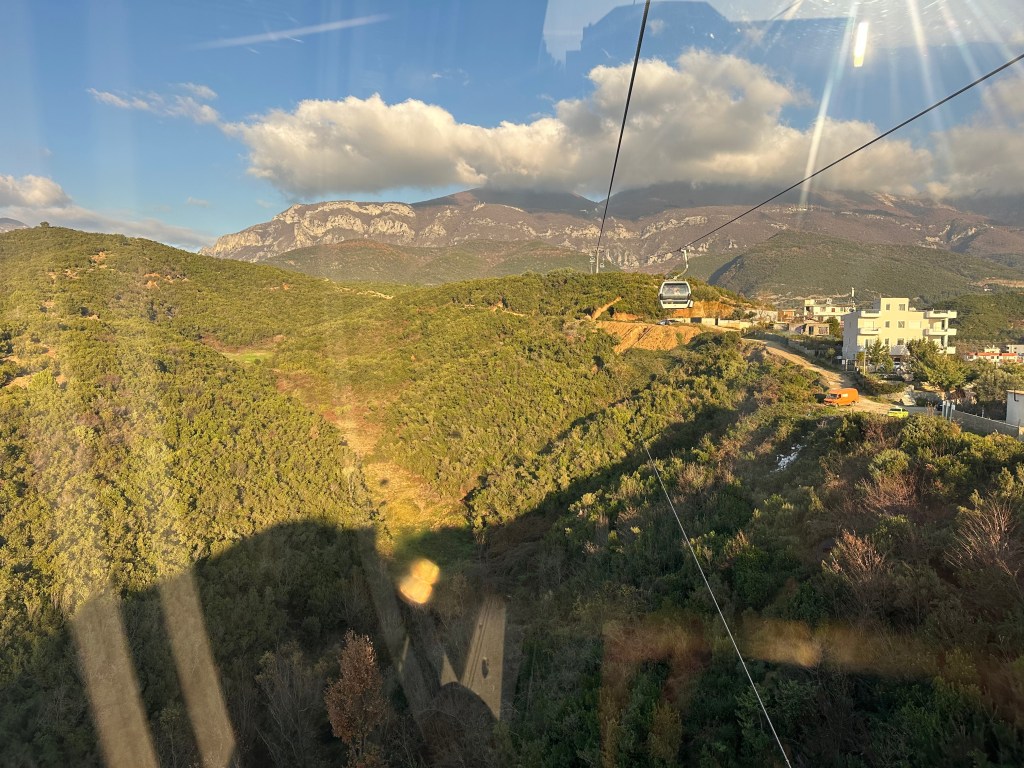
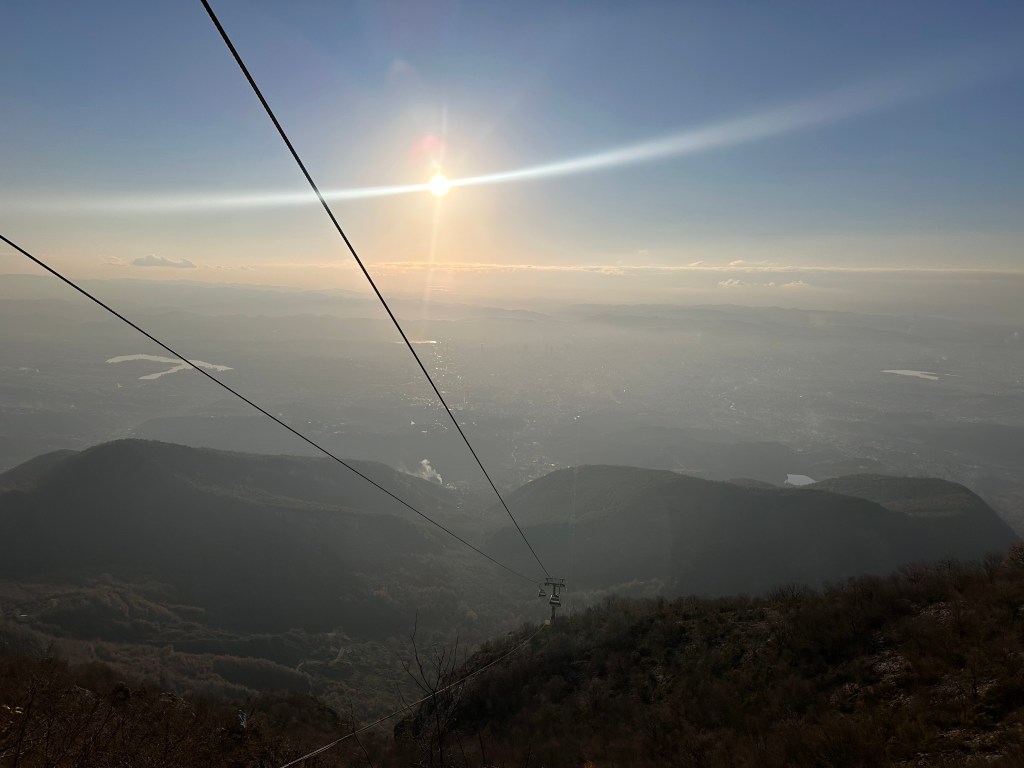


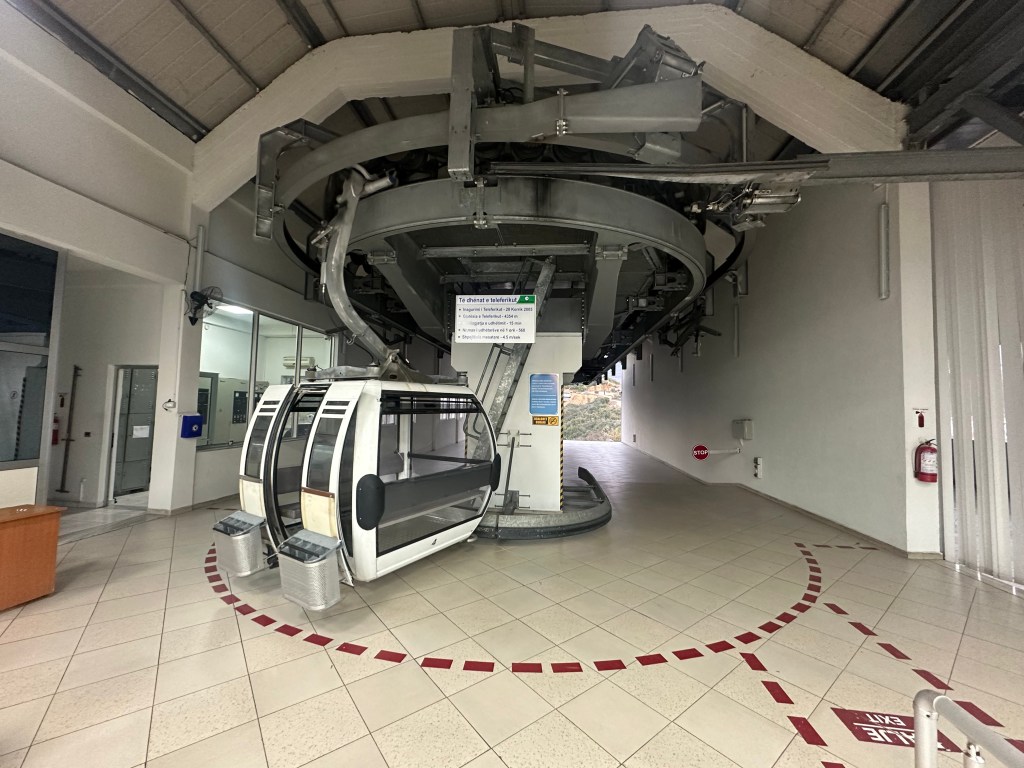
The Dajti Express cable car, up the side of the Dajti Mountain, provides you with some great views out over the city and countryside below!
By the time we made the return journey down the mountainside, it was getting dark, and so we headed back into Skanderbeg Square, where the Christmas markets were now in full swing. Restaurants had set up outdoor terrace areas in the square, there were carnival rides and attractions, and most importantly, there were masses of people! It was really entertaining, and pretty cool to see everything lit up!


Skanderbeg Square and surrounds – illuminated beautifully!
That evening, we decided to check out a restaurant called Tymi – it serves Albanian food in a neon-lit pop culture-themed dining space which is INCREDIBLY cool! We actually had to wait outside for a table, as this place is heaving, but it was definitely worth it. We ordered a tonne of food, including a fantastic bowl of beans and tomatoes and a very tasty cabbage salad!
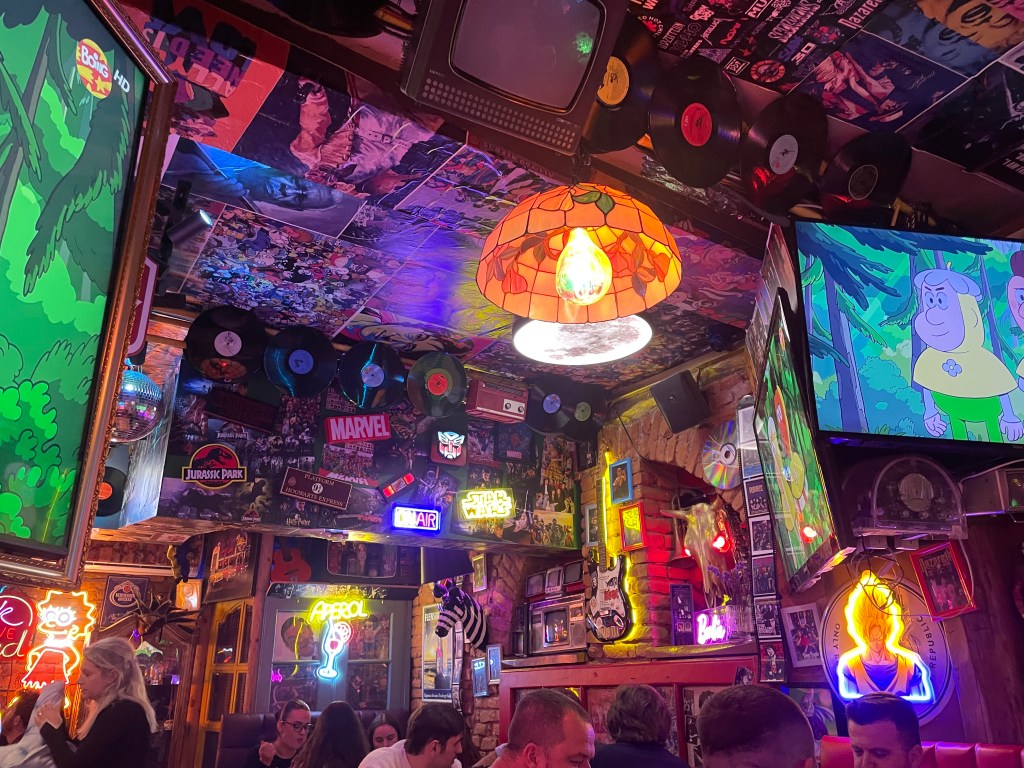

The incredible Tymi restaurant – definitely worth a visit if you’re ever in Tirana!
My Dad was heading home in the early hours of the following morning, but I still had a full day left in Tirana before my onward journey – so obviously, I was off to see one of the city’s star attractions, the BunkArt 1 museum. There are two BunkArts now, with the second one in Skanderbeg Square, but I wanted to go and check out the much larger original site, not far from the Dajti Express cable car, in fact! I took a local bus up the hillside, to save on time – this was very straightforward.
Albania is famous for its bunkers – partially or completely underground shelters to be used by locals the hide out and conduct defensive activities in case Albania was invaded. At one stage, there were apparently 750,000 bunkers – Hoxha was absolutely convinced that everybody, from Tito’s Yugoslavia to NATO, to the Soviet Union, wanted to invade Albania. The policy of ‘bunkerisation’ was ended with the fall of Hoxha’s regime, but a large number of the bunkers can still be found, scattered around the country.
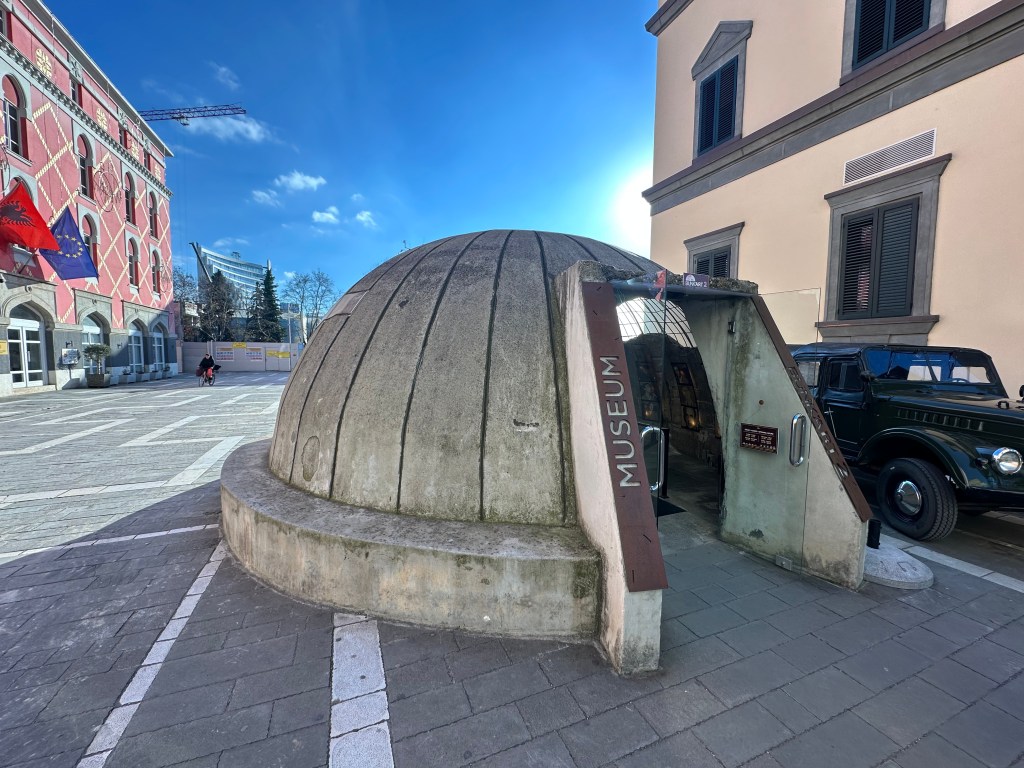
BunkArt 2 – located in the city centre, next to Skanderbeg Square
In 2014, the largest of all Albania’s bunkers, located on the outskirts of Tirana, and built specifically for Enver Hoxha and his close allies in the event of a nuclear war, was refurbished, and opened to the public as a museum, known as BunkArt 1. Another museum, BunkArt 2, located in a bunker next to Skanderbeg Square, opened up later (pictured above).
BunkArt 1 is a work of art – you enter by walking through a long tunnel that connects the entrance to the street (I was accompanied by a local dog that decided it wanted a friend for a few minutes!). After buying your ticket at a small booth, you continue walking until you get to the unassuming entrance to the secret lair.
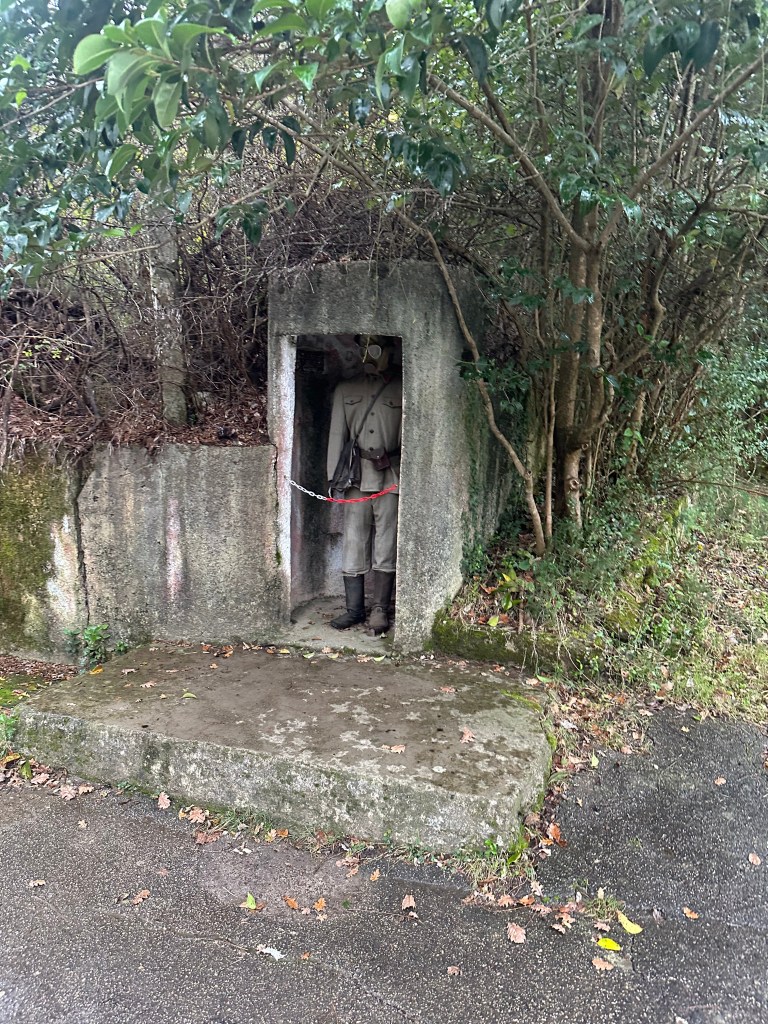

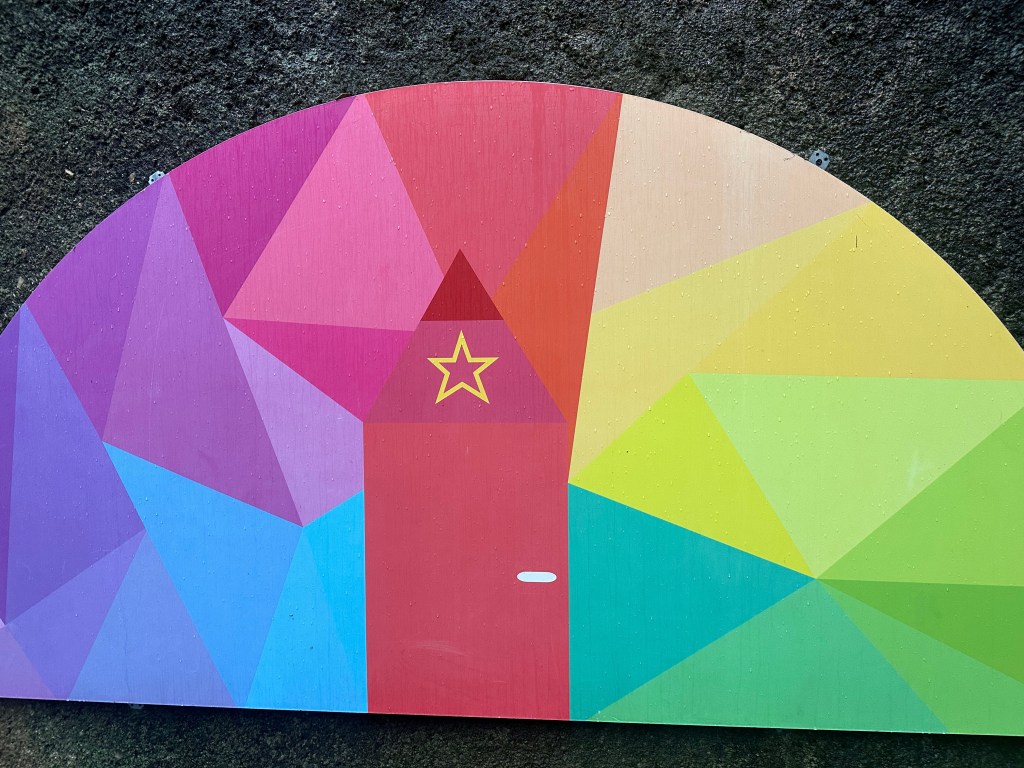
The entrance to BunkArt 1
There are multiple concrete doorways to pass through before you’re fully inside the bunker, as it was designed to withstand nuclear blasts – there are plenty of signs inside explaining what everything was used for, which is handy!
The bunker includes rooms dedicated to a variety of exhibits, focusing on life during the Communist regime, the Fascist takeover of the country during WWII, and significant events that occurred during that time – Enver Hoxha’s own personal rooms are also open for public viewing! I was in the bunker for a good few hours – they are 5 storeys, many corridors, walkways, and rooms to explore – and I can absolutely say that this is one of the best things you can possibly do in Tirana – you get to physically experience the history of the Hoxha era.


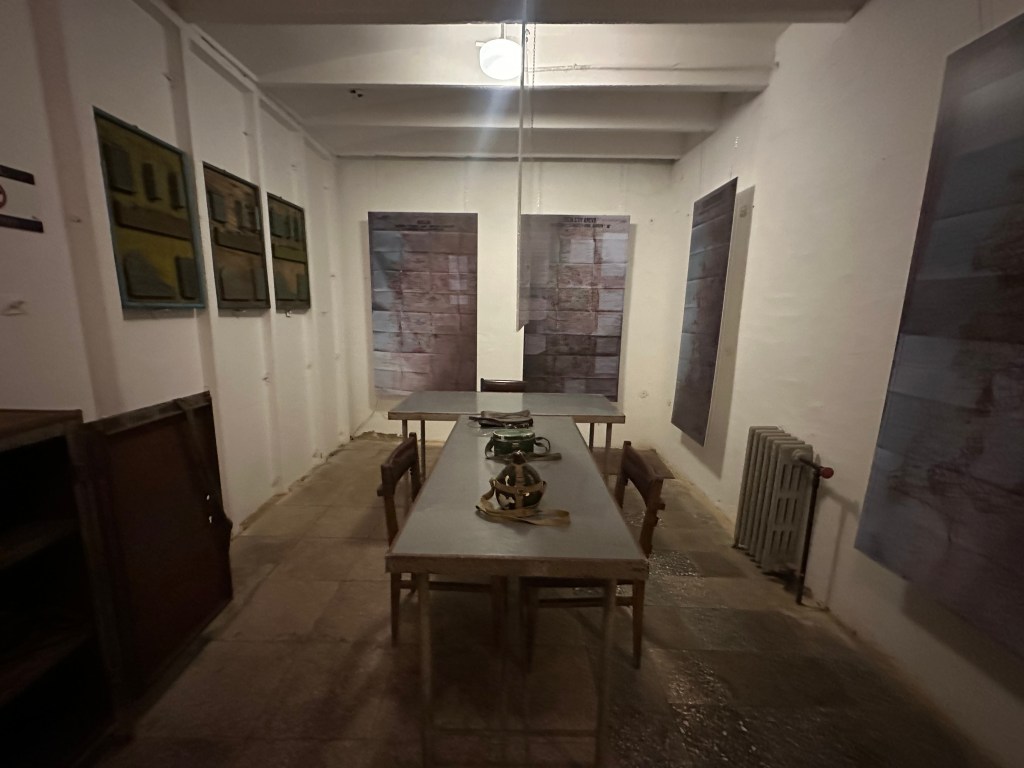


Some pictures from inside the bunker!
After wrapping up my stay in BunkArt 1, I headed back towards Tirana’s city centre, stopping at a barbershop for a beard trim, all the while getting absolutely soaked, as the heavens had chosen this afternoon to completely open up. Unfortunately, my time in Tirana was coming to an end, and pretty soon I found myself collecting my bag from Denis at Ramel, and boarding the Luna bus to the airport.

The tunnel from the street to BunkArt 1’s entrance!
In spite of the rain, and the horrifying traffic leading up to the airport (I ended up getting out of the bus and walking the final 2 kilometres as we had moved 10 metres in 15 minutes!), I made it to the airport in time for my flight. Tirana was definitely worth visiting – Albania is certainly making a name for itself on the tourist map (and not just from the beach resorts!)
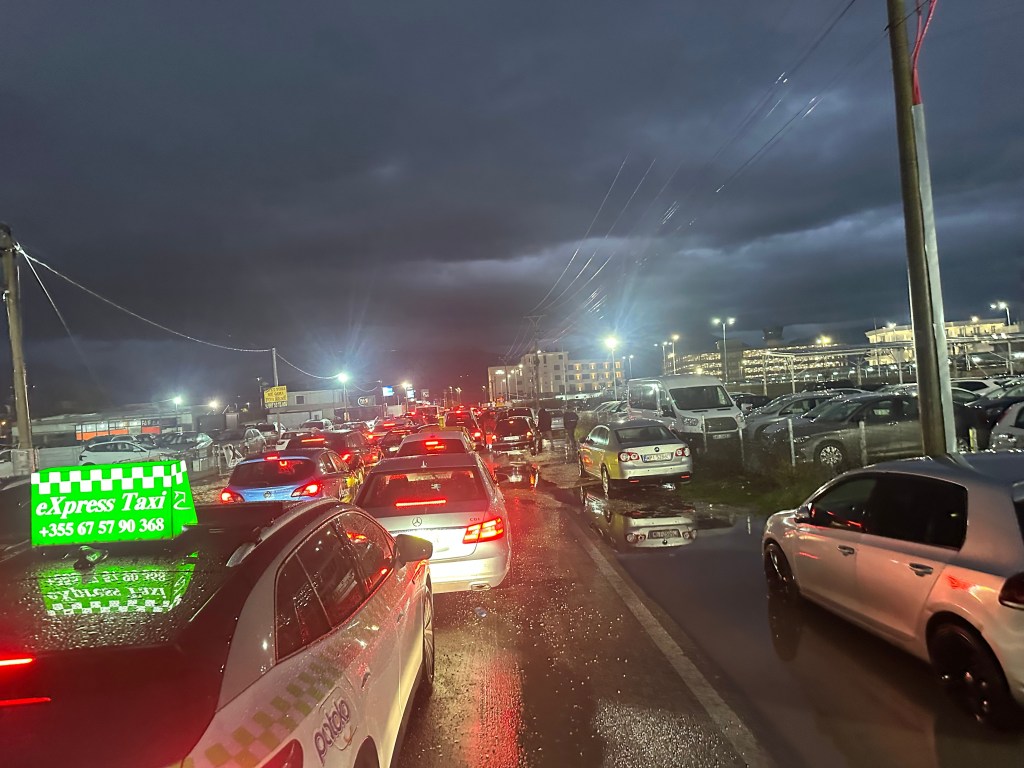
The crazy traffic on the way to Tirana Airport
 Global Wanderer
Leave a comment