

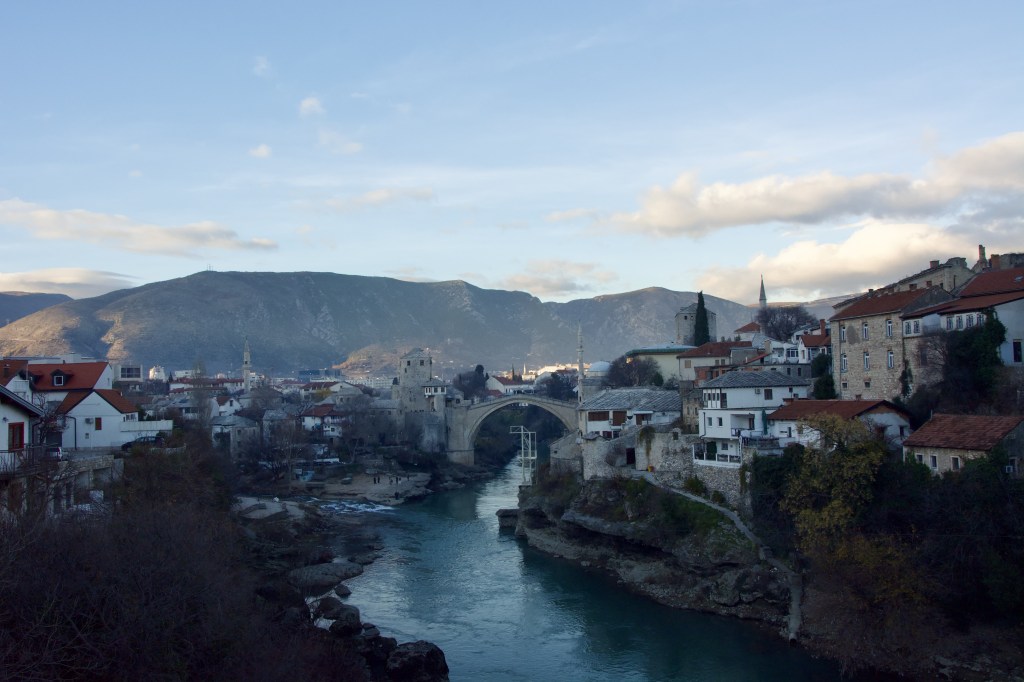
17/12/24
Whilst we had originally intended to catch the train from Sarajevo to Mostar, some awful flooding a month earlier put paid to that – we made our way instead to the bus station next door!
Balkan buses are the region’s primary mode of intercity transportation – they have some quirks, however, which one has to be aware of. One of those quirks is the ‘platform fee’ – even if you’ve already paid for your ticket, you’ll be required to pay a small fee (in Sarajevo, this was 2KM each), to access the platform to board your bus. This is actually enforced – they even have somebody get on the bus and check your receipt to show that you paid the station entry fee.
The bus ride wasn’t too bad – and you get some seriously impressive views of the Bosnian countryside throughout the journey.

There were some great views to be had from the window of the bus!
Mostar is situated halfway between Sarajevo and the Croatian city of Dubrovnik, and so it is apparently quite popular with day-trippers from Croatian coast. It also has some interesting demographics, having the highest population of Croats of any city in Bosnia (48% of the city’s population). During the Bosnian War, the Croats and Bosniaks split along ethnic lines, and began fighting each other in Mostar, with the Bosniaks based in the old city, and the Croats based on the western side of the city – in addition to this, the city was being attacked by the Bosnian Serb forces.
We arrived at the bus station in Mostar, and began walking towards the town centre. It is a small town, with some beautiful Islamic architecture, set on the banks of the Neretva river – and would be worth a visit even without its star attraction, the Stari Most.


Mostar’s iconic bridge!
The Stari Most, or Mostar Bridge, was a 16th century Ottoman-era bridge which spanned the Neretva river at an impressive height. The bridge linked both sides of the city, which made it an incredibly important piece of architecture from a logistics perspective! In 1993, however, during the height of the Bosnian War, the bridge was shelled by the Croat forces, who were targeting the Bosniak Army, which used the bridge as a critical supply line.
The collapse of the bridge was broadcast around the world, and the destruction of the Stari Most became emblematic of the senseless violence of war. At the conclusion of the conflict, a plan to rebuild the bridge was put into motion – eventually, in 2004, it was finally reopened, 11 years after its original structure crashed into the river below. There are actually still remnants of the old bridge, scattered along the river bank underneath the bridge!

The view from the base of the bridge
Mostar’s old town is incredibly picturesque, full of beautifully-restored Ottoman-era buildings, cobbled streets, and of course, views of that impressive bridge.


Mostar’s Ottoman-era old town, and another view of the bridge
We spent some time wandering around, before heading off to a park that apparently featured a statue of Bruce Lee. The statue had long-since disappeared, but the plinth remained – cue the hilarious poses!
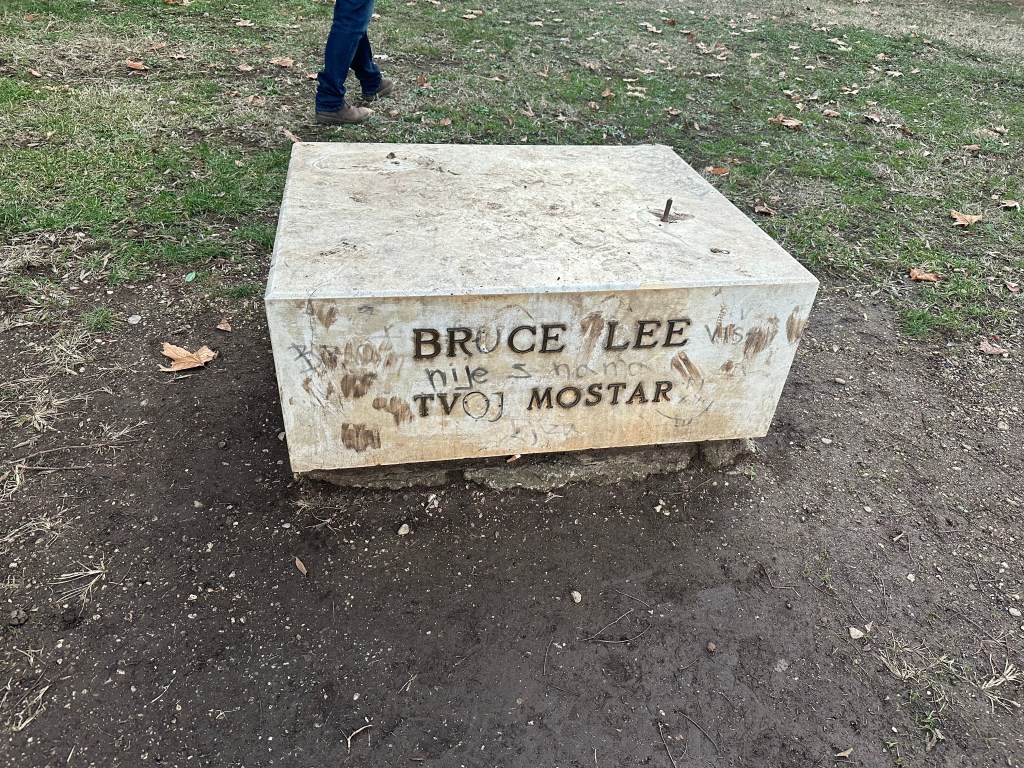
The Bruce Lee statue plinth – missing a statue, at the moment!
As the sun began to set, we walked back through the old town to see the bridge again – now lit up against the night sky. It seems a bit out-of-the-way to visit, but the iconic sight of the Stari Most makes it seriously worth it!


Stari Most at night, and a bombed-out building – the scars of war are still well and truly visible in Mostar
We stocked up on some baked goods at a nearby bakery (burek for the win!), and made our way back to the bus station for our return journey to the capital. Another day to be had in Sarajevo, before the adventure continues in Albania!


 Global Wanderer
Leave a comment