

20/11/24 – 23/11/24
We’d gotten back to Valga Station with some time to spare, which we spent walking over the pedestrian bridge across the railway, checking out some of the old locomotives that had been left there (some of them certainly looked abandoned!).
Finally, our train arrived, and we were able to get on board and out of the cold! The Latvian Railways train was a lot older than the modern Estonian one we’d taken that morning – this was a Soviet-era model that had been refurbished (and like so many other places in this part of the world, had free wifi access on board!). As the train departed the station, and crossed the border into Latvia, we bought our tickets from the conductor, and settled in for the journey.
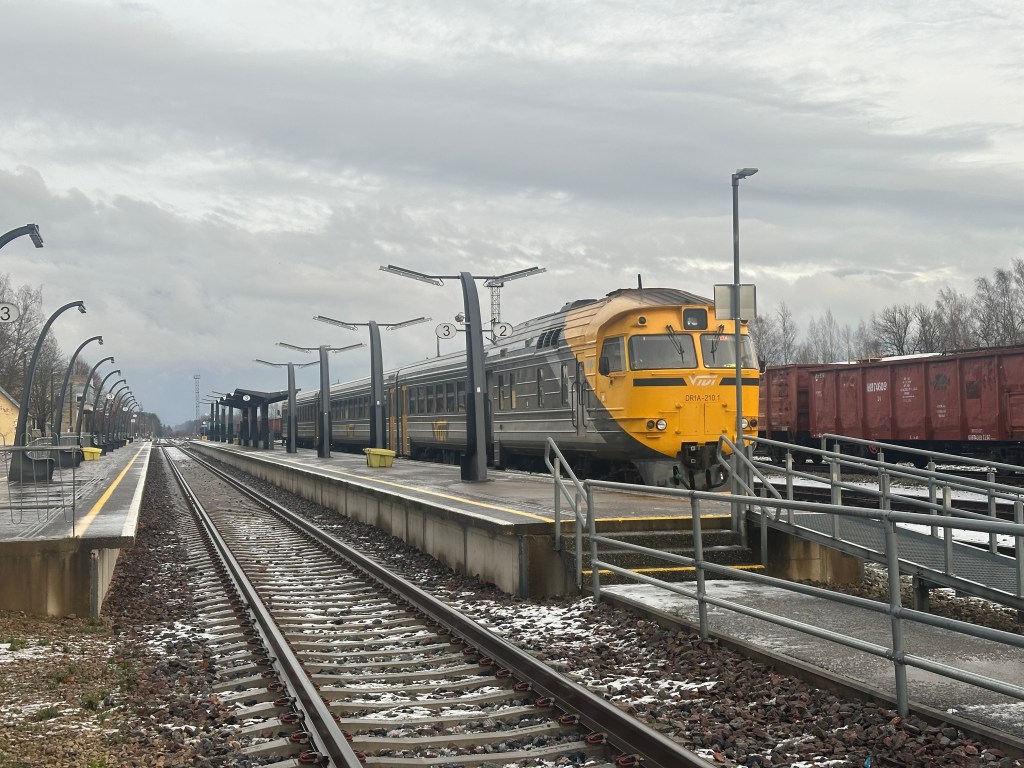
The Latvian Railways’ train to Riga at Valga Station
It was dark by the time we arrived into Riga’s central station – 5:45pm in the Baltics during winter being long past sunset! Walking out into the city, towards our accommodation, we were struck by the size of Riga – it’s actually the largest city in the Baltic region, and was on an entirely bigger scale to its northern neighbour, Tallinn. Finding our hotel from across the city would prove to be a breeze over the next few days, as it turned out we were located right next to the towering Stalinist icon, the Latvian Academy of Science – you couldn’t miss it from a mile off!
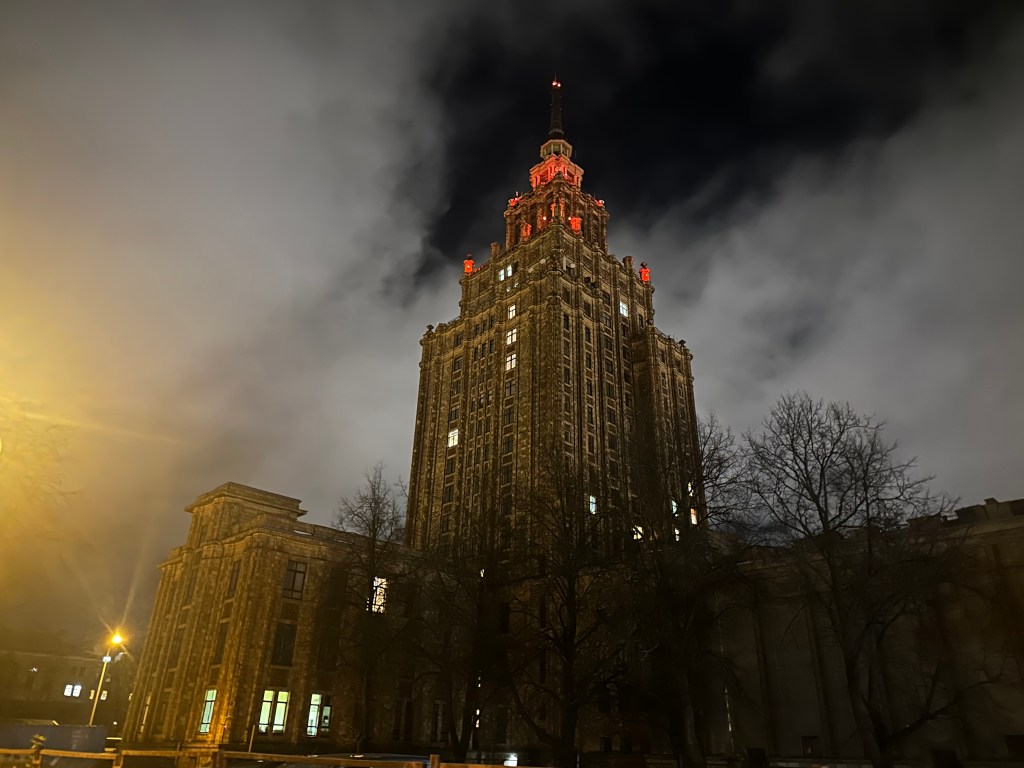
The Latvian Academy of Science (you might recognise its ‘Big Brother’, the Palace of Culture and Science in Warsaw!)
Given it was late, we dropped our bags off in our room, and headed straight out into town for something to eat. Like in the other Baltic countries, food after 8pm is incredibly hard to find, as everything that isn’t a bar or club seems to shut around then! Luckily, we stumbled across a burger bar, Late Night Munchies which, true to name, was open until late in the evening, and served up great burgers and beer – just what we needed after a long travel day!
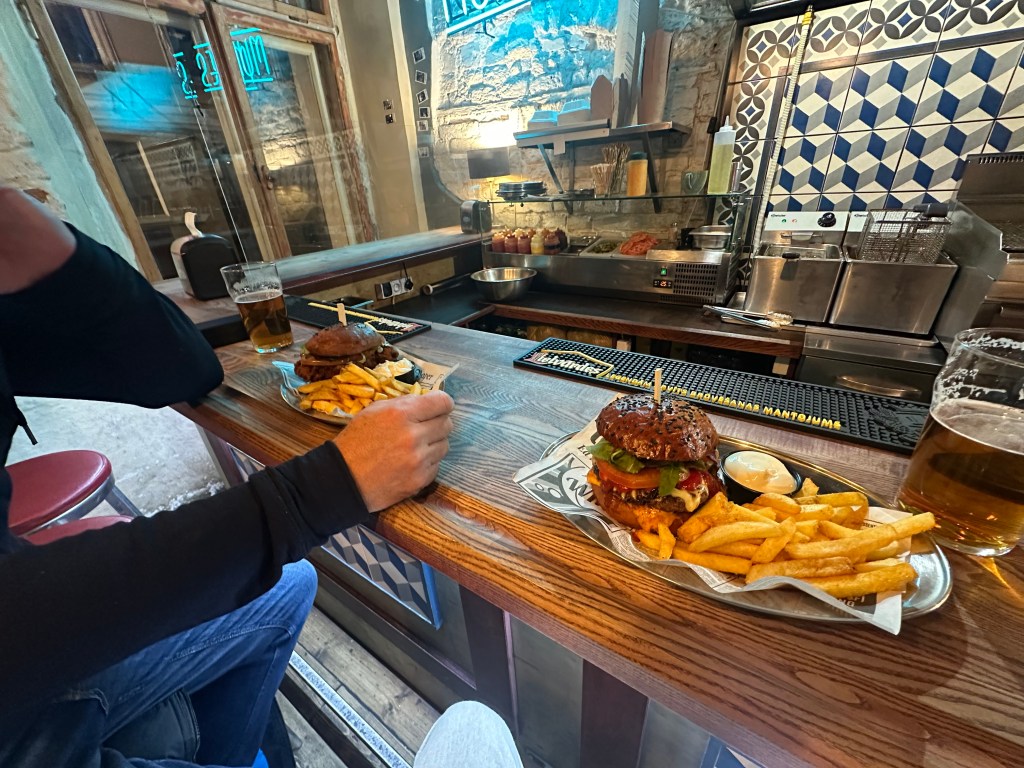
After a full day of travel, sometimes you just need comfort food
We spent the rest of the evening walking around some of Riga’s picturesque Old Town, staking out some places to return to in the daytime, as well as getting a feel for the city (albeit in the dark!). Oh, and we also stumbled across the Belarusian Embassy, located right next to our hotel!
The next morning, we headed off out to some of the points of interest in our near neighbourhood: the Jewish Museum/Ghetto complex; and the utterly enormous Riga Central Markets. The Jewish Museum was located on the site of the former Tallinn Ghetto, which was established when the Nazis took control of Latvia and the other Baltic nations. It gave some very interesting insights into the history of Jewish people in Latvia, as well as some somber memorials to the Latvian victims of the Holocaust. There were around 100,000 Latvian Jews prior to the onset of WW2 – by the end, there were almost none.
After leaving the Jewish Museum, we walked towards Riga’s Central Markets. This complex is actually the largest market in Europe – would you believe that! – and it is housed in a series of old Zepplin hangars. The markets are immense, although not all of the stalls are currently being used – apparently the rise of shopping centres in Riga is having an effect on trade. Spread across five different hangars, the markets have places for fresh fruit and vegetables, meat, fish, and one labelled as the ‘Gastronomy Pavilion’, which housed a large number of food stands – the smells here were fantastic!
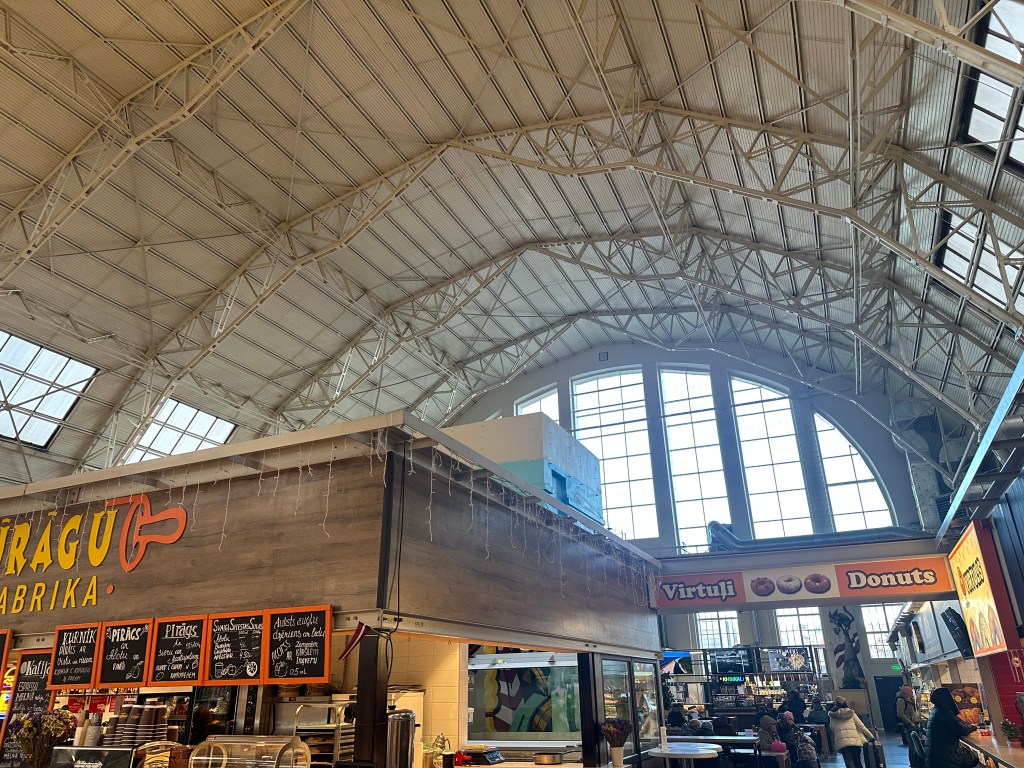
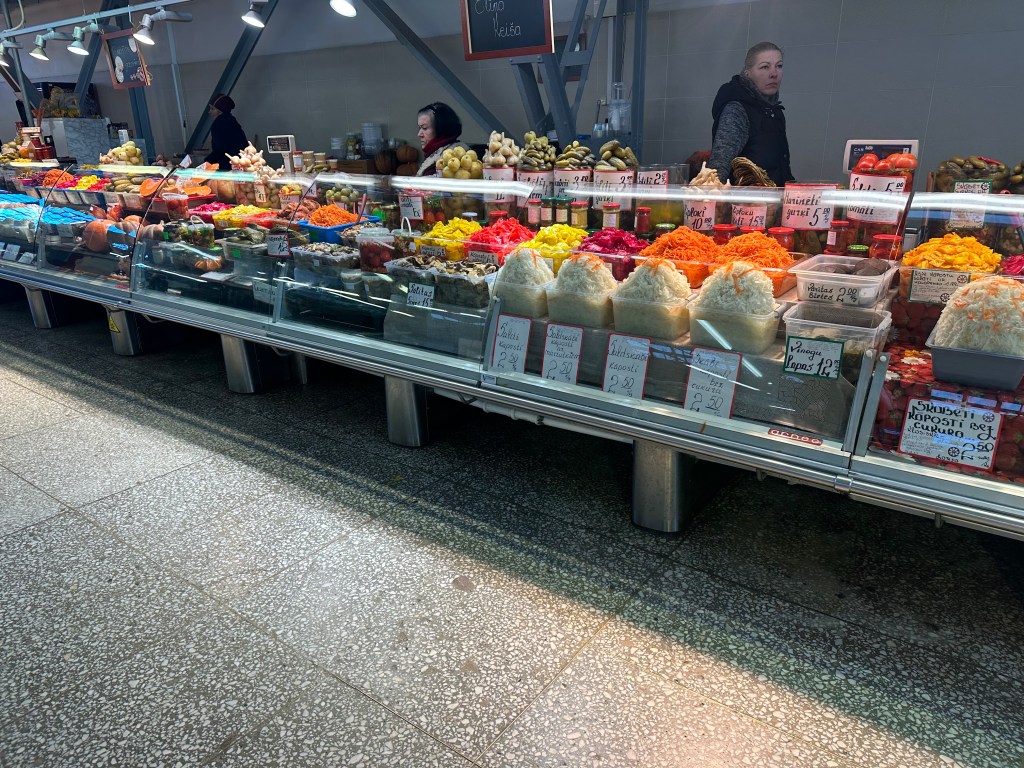
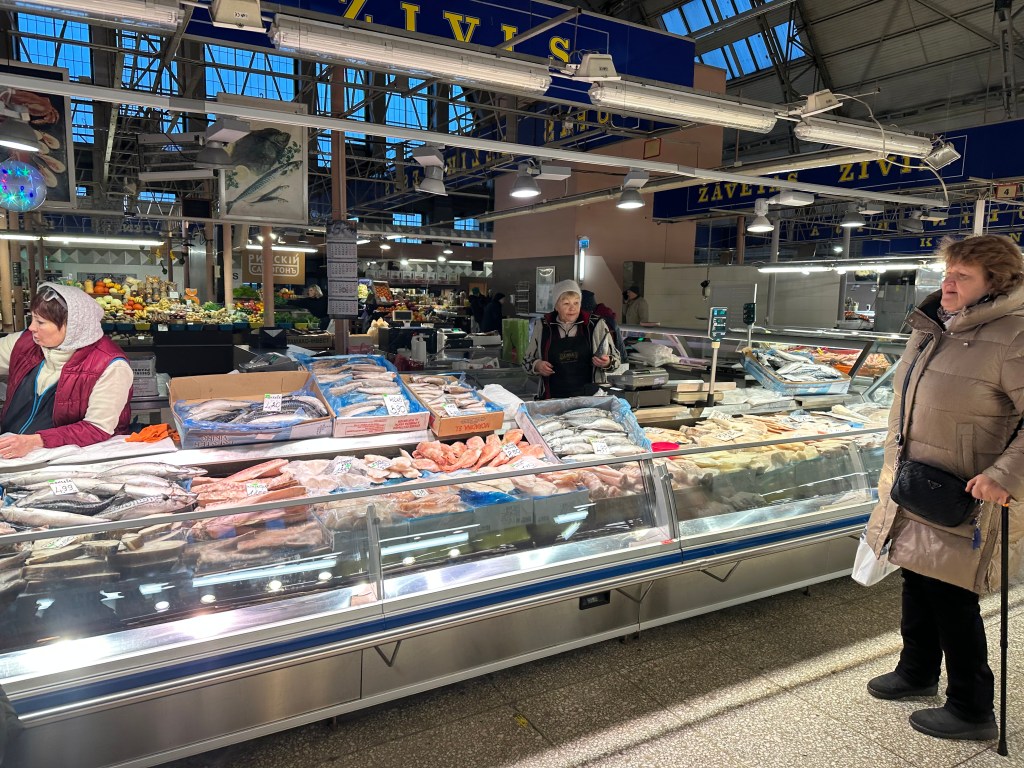
The roof of the Central Market’s Gastronomy Pavilion, a stall selling pickled varieties of every foodstuff you could possibly imagine, and some fresh fish for sale (the animated older lady behind the counter went to great pains to explain to me in Russian that it was Norwegian mackerel)
After the bustling crowds at the Central Markets, we headed off to the much more relaxed Centrs neighbourhood, located in the northern part of the city. This district is famous for its Art Nouveau architecture, and did not disappoint in that respect – there were some streets on which you could quickly convince yourself that you were in Paris! The giveaways were the width of the streets, and the general cleanliness – Riga, along with its Baltic neighbours, was incredibly tidy and well-kept.
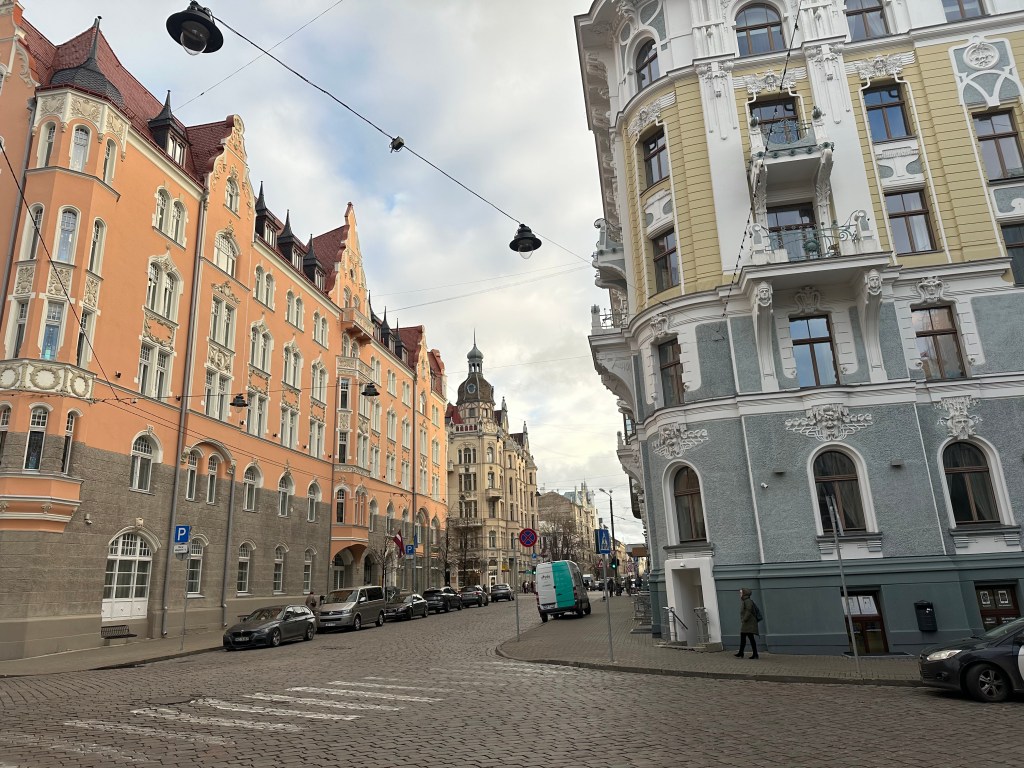
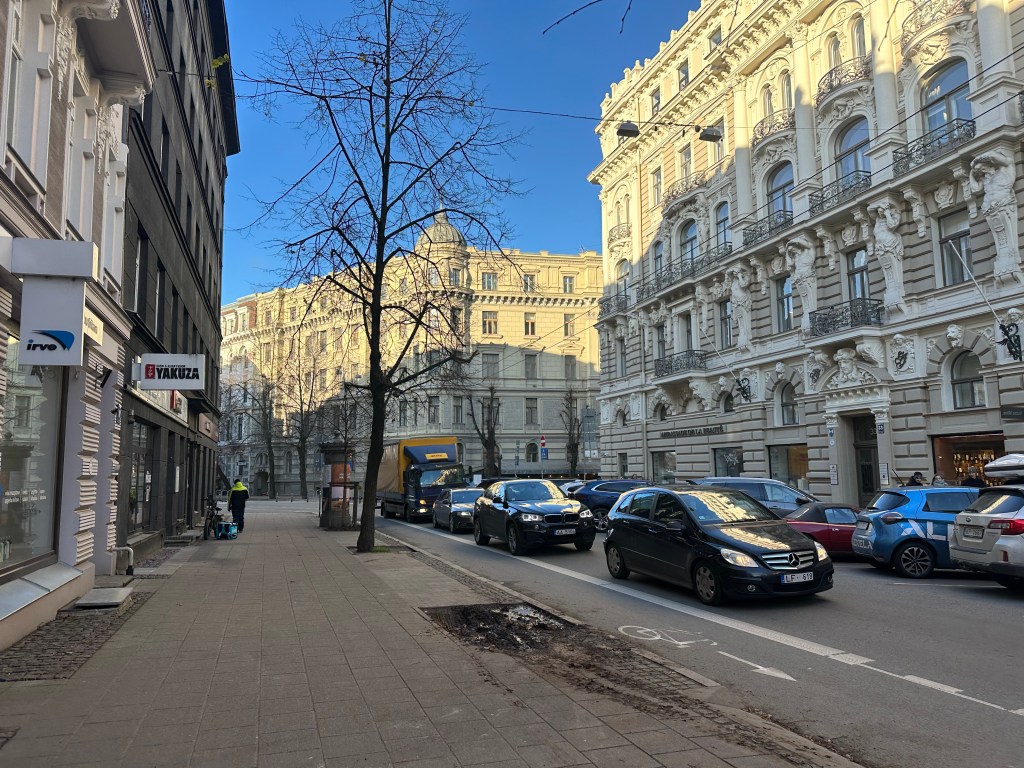
The Centrs District of Riga is home to some incredible architecture!
As we walked back towards Riga’s Old Town, we spotted several monuments in quick succession – the first was Latvia’s Freedom Monument, guarded by two Latvian soldiers who we were convinced were statues (they didn’t even BLINK!), and the other being the iconic Laima Clock, first built in 1924, representing the Latvian chocolate company. It was hard to say which monument was attracting more photographers! The Freedom Monument was actually constructed prior to the Second World War, in commemoration of the Latvians who died during the country’s fight for independence. During the Soviet era, unlike other nationalist monuments, it was not torn down due to its significance, (but they did claim it was built after WW2, and tried to suggest it was ‘Mother Russia’ holding up the stars).
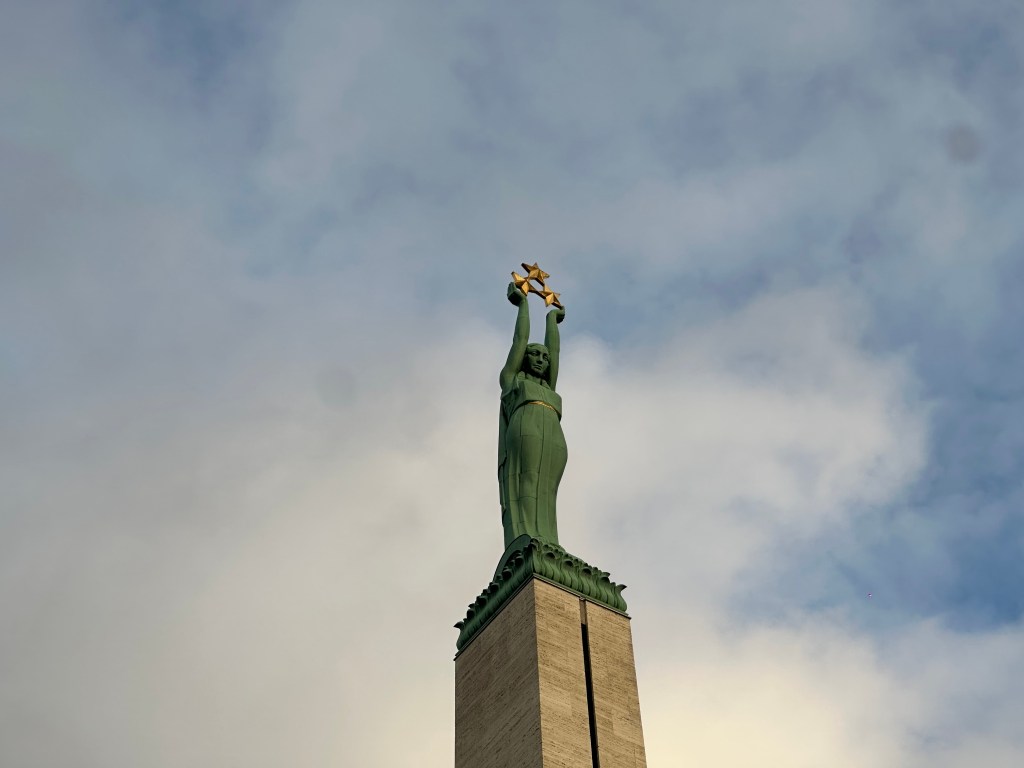
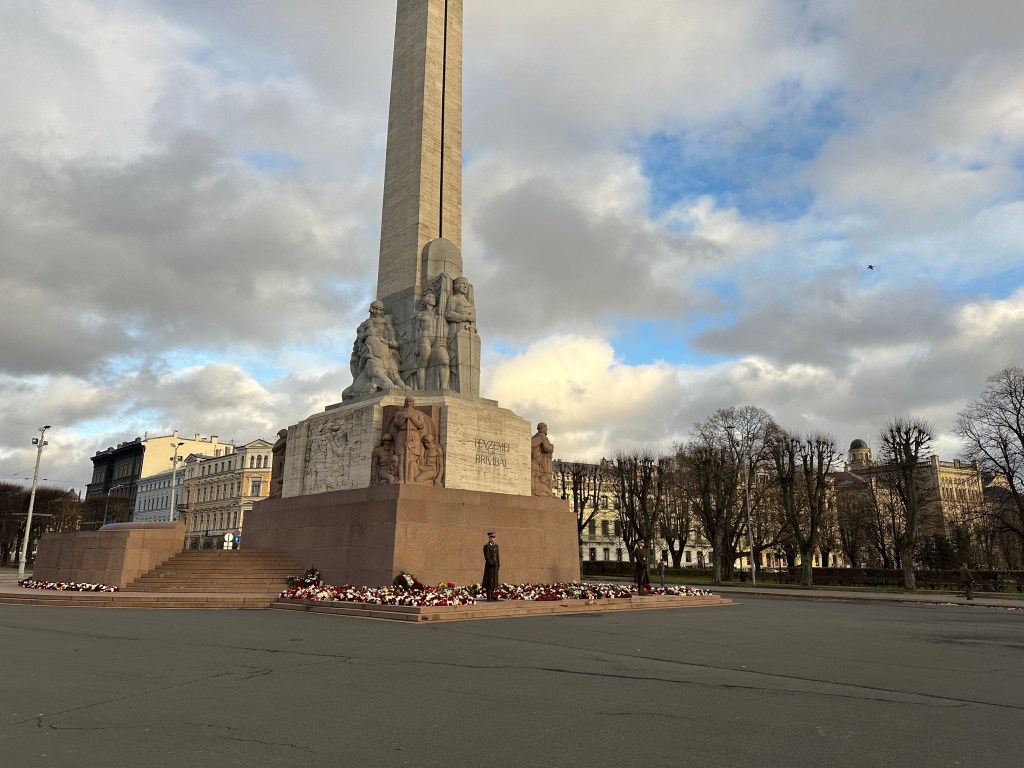
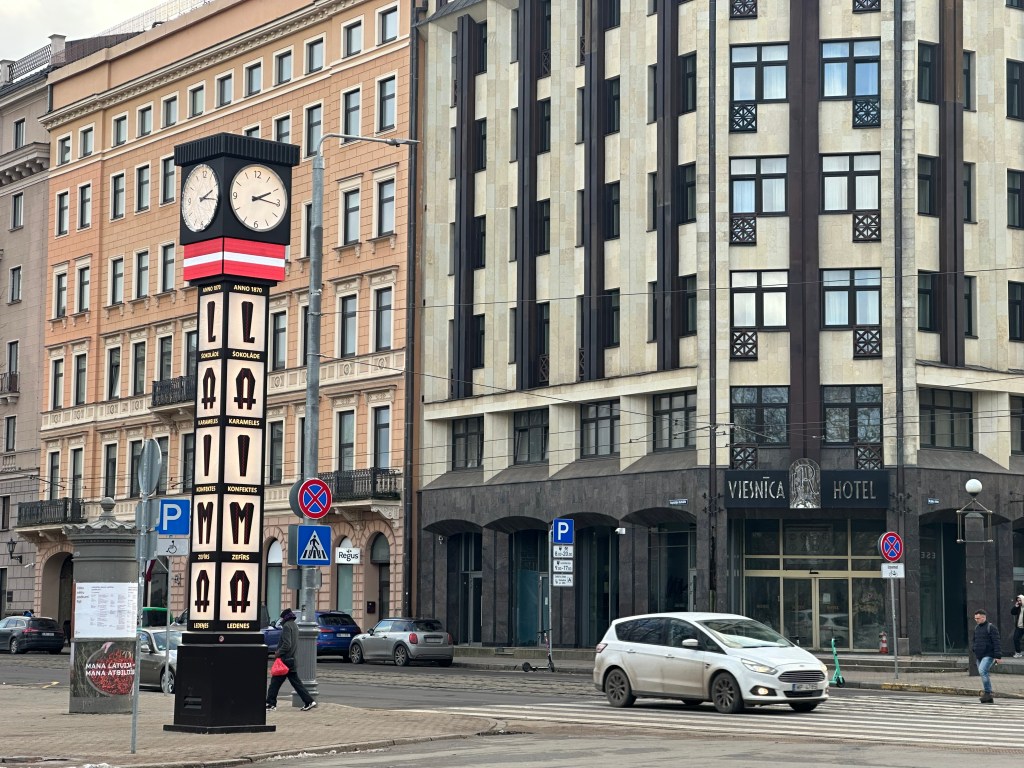
The Freedom Monument, and the Laima Clock
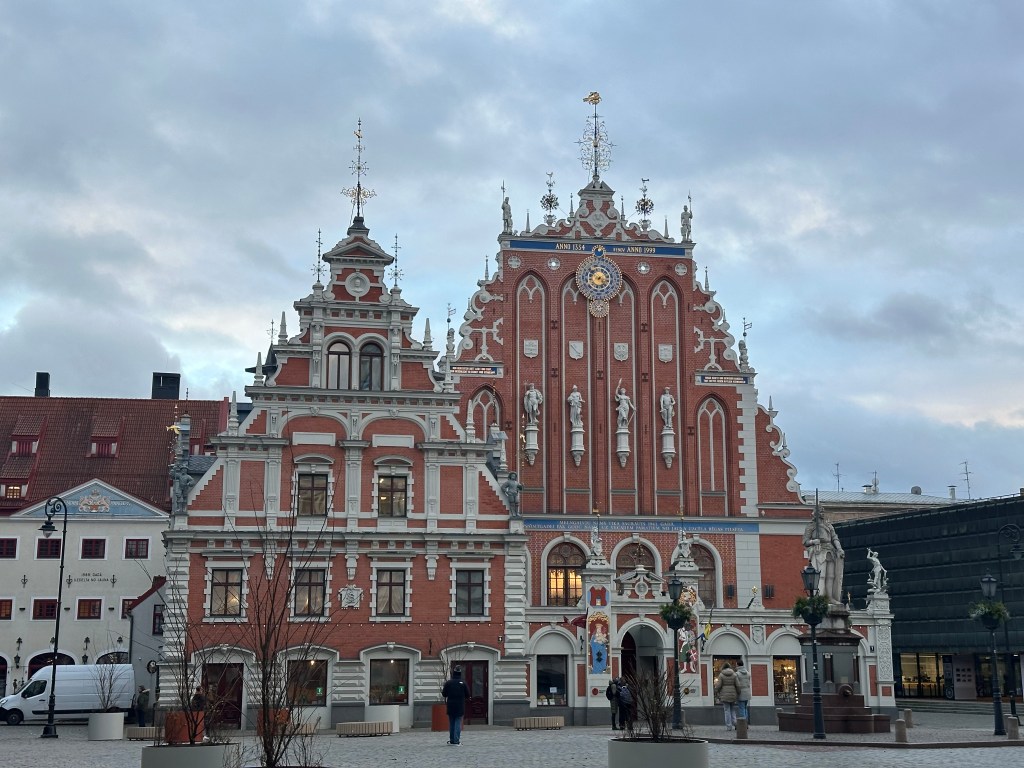
Having checked out some of Riga’s more modern history, we continued south into the historic Old Town, which had a markedly different atmosphere in the daylight! There are some wonderfully ornate buildings in the area, including the iconic Cat House (named for the statues of cats that adorn it’s roof), and the remarkable House of the Blackheads (not a pimple-popping studio). The Cat House has some interesting stories attached to it – apparently, the owner was not permitted to join the Great Guild, so had the cats turned so that their backsides were facing the House of the Great Guild. The other version of the story is that the cats were turned facing away from the town hall, after the owner had a dispute with the city council. Either way, I think it’s hilarious!
There are certainly some beautiful buildings in this part of Riga, but there was also a significant number of bars and clubs, highlighting the city’s popularity as a European pub-crawl destination – it does take some of the charm away. One sign on the door of a bar read ’50 shots for €25′ – probably tells you what kind of clientele they’re attracting!
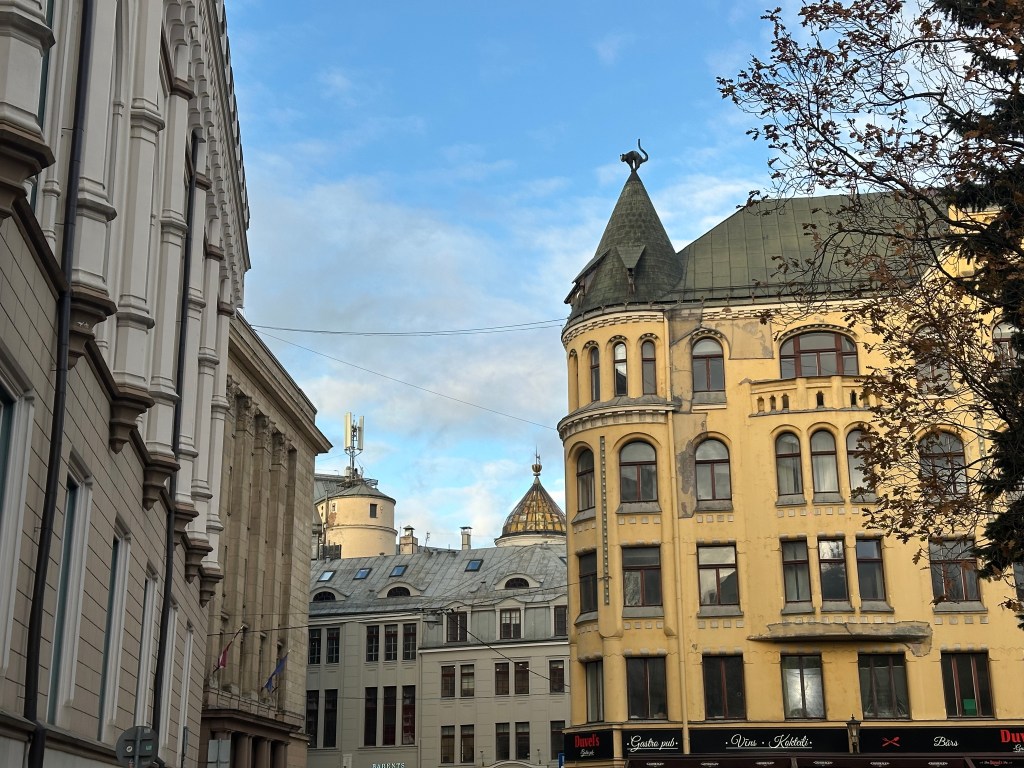
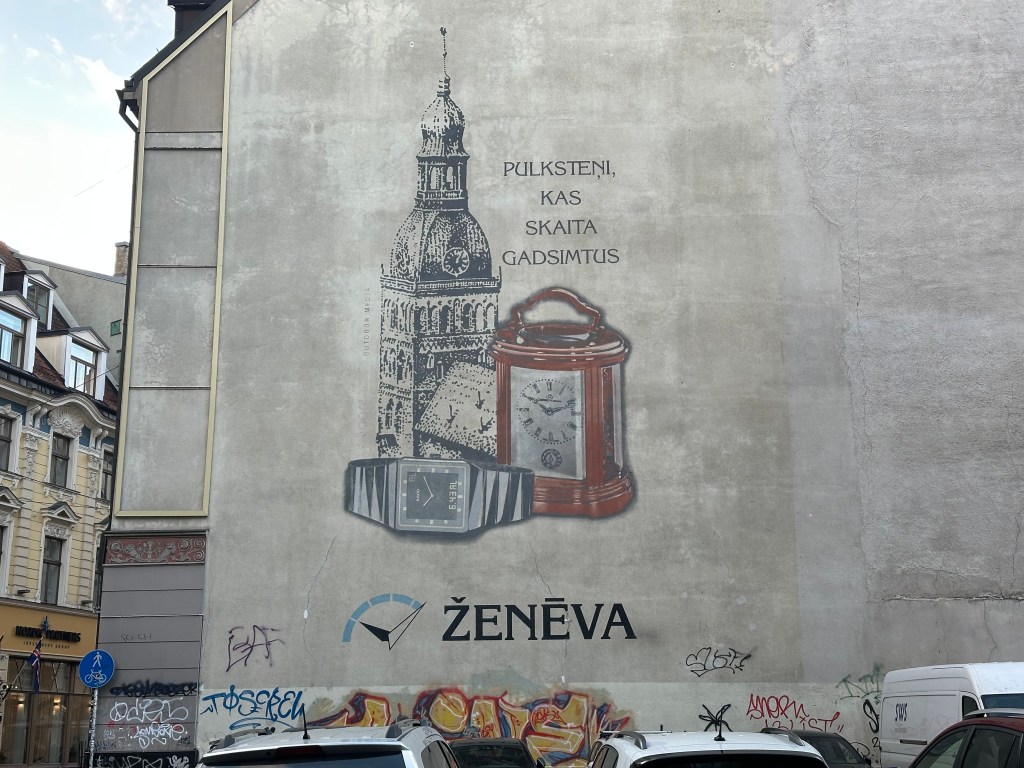
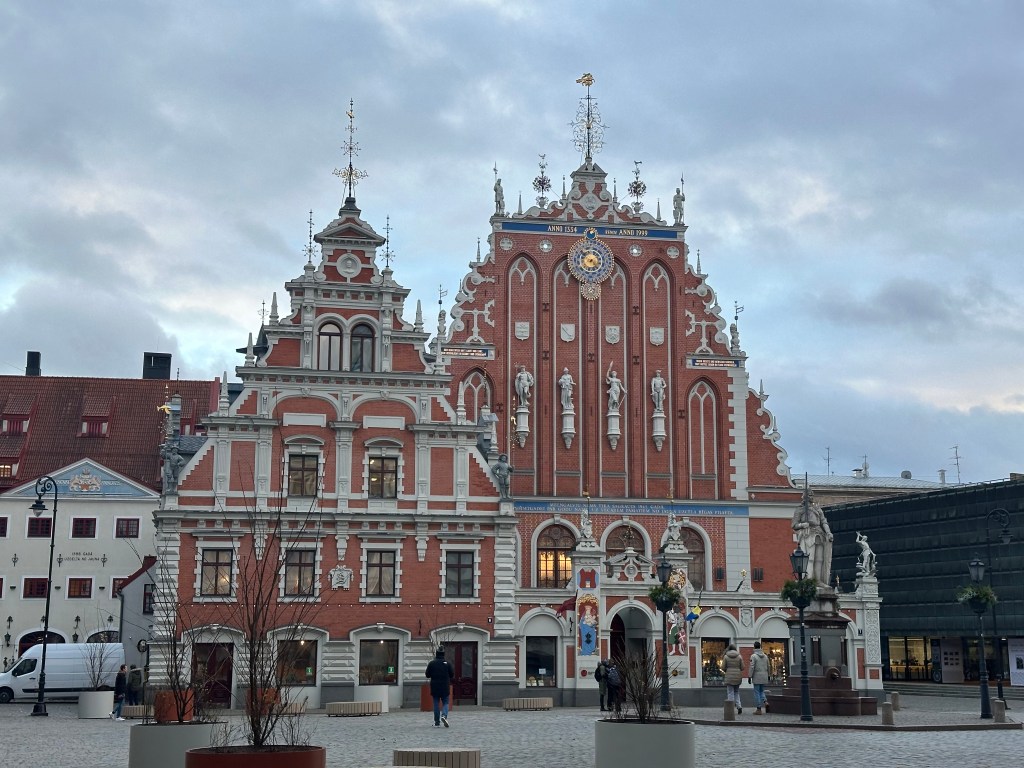
The Cat House (with backsides now facing the ‘acceptable’ direction!), some cool street art, and the House of the Blackheads
As the sun began to set, we stopped off at our hotel for a quick recharge, before settling on a location for dinner – a Lido restaurant! Lido is a chain of Latvian restaurants, started in 1989 whilst still under Soviet occupation. They’re cafeteria-style, churning out a hefty array of Latvian food all day, and are cheap and popular with locals. We walked out to the one near the Centrs neighbourhood, where we’d been earlier in the day, and spent a grand total of around $40 AUD on two trays of food that were completely packed to the gills, along with pints of beer and kvass. The restaurant was completely packed, and the people around us were all speaking Latvian – this was definitely a winner!
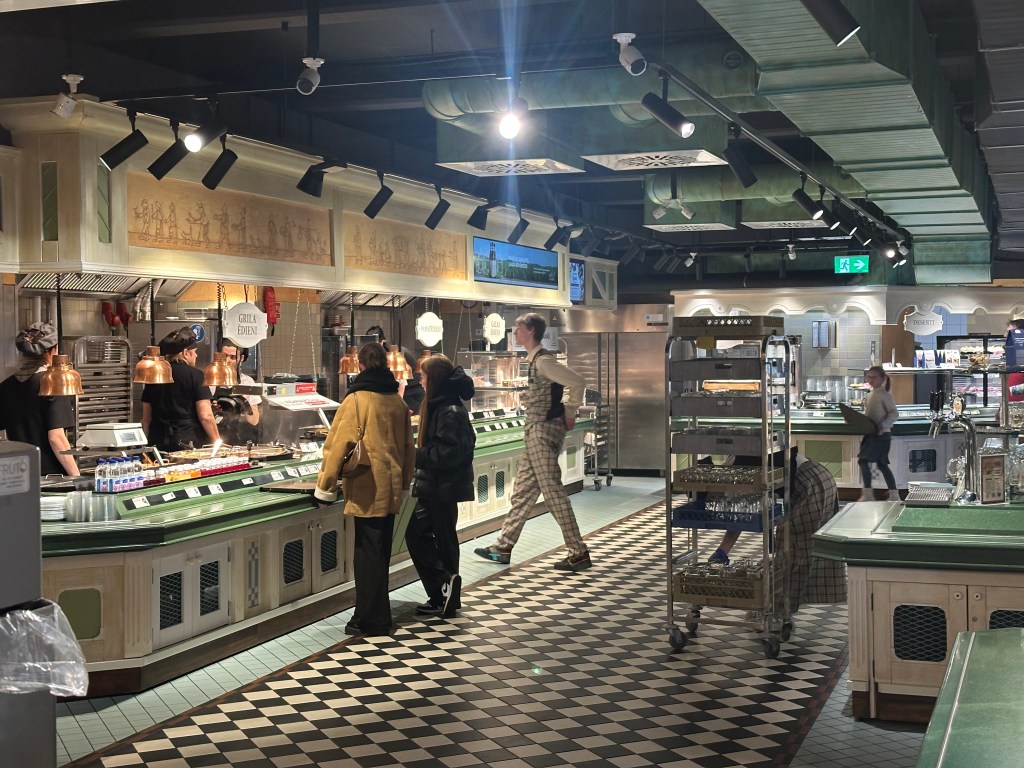
Slide your tray along, and point out to the chefs what you want on your plate!
We’d decided to spend our next day in Riga primarily on the other side of the river, to get a feel for the neighbourhoods out that way. First, however, was a stop at the nearby Academy of Sciences, where we’d discovered an observation deck open to the public! It had snowed overnight, and the views from the top of the tower were incredible.
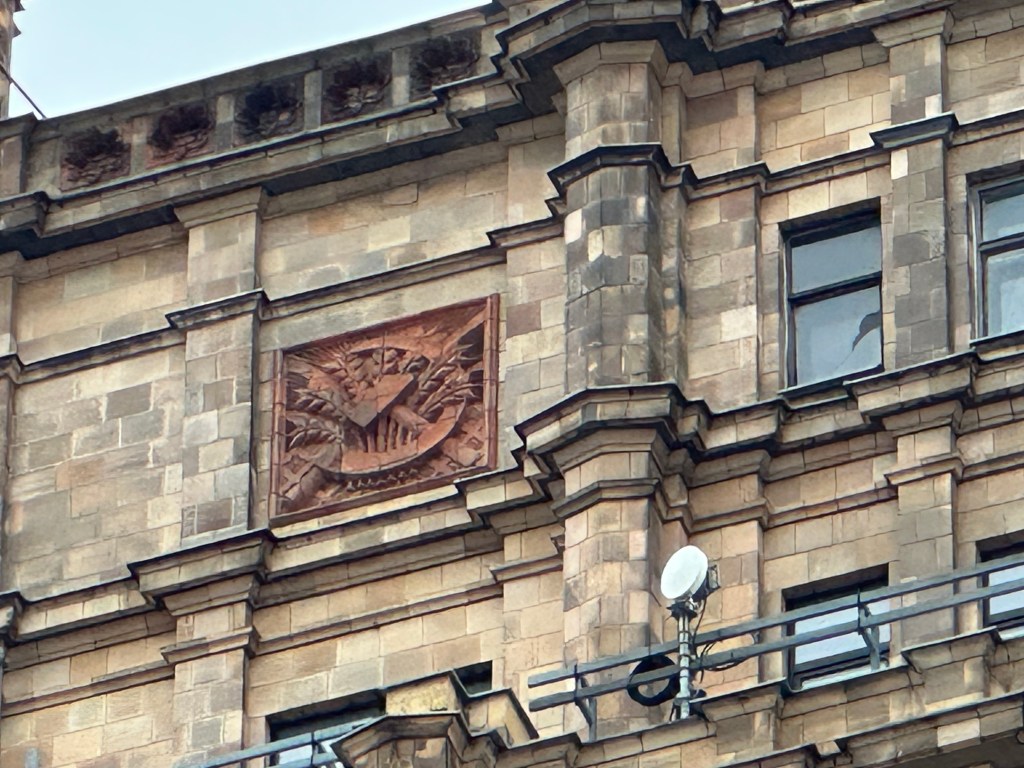
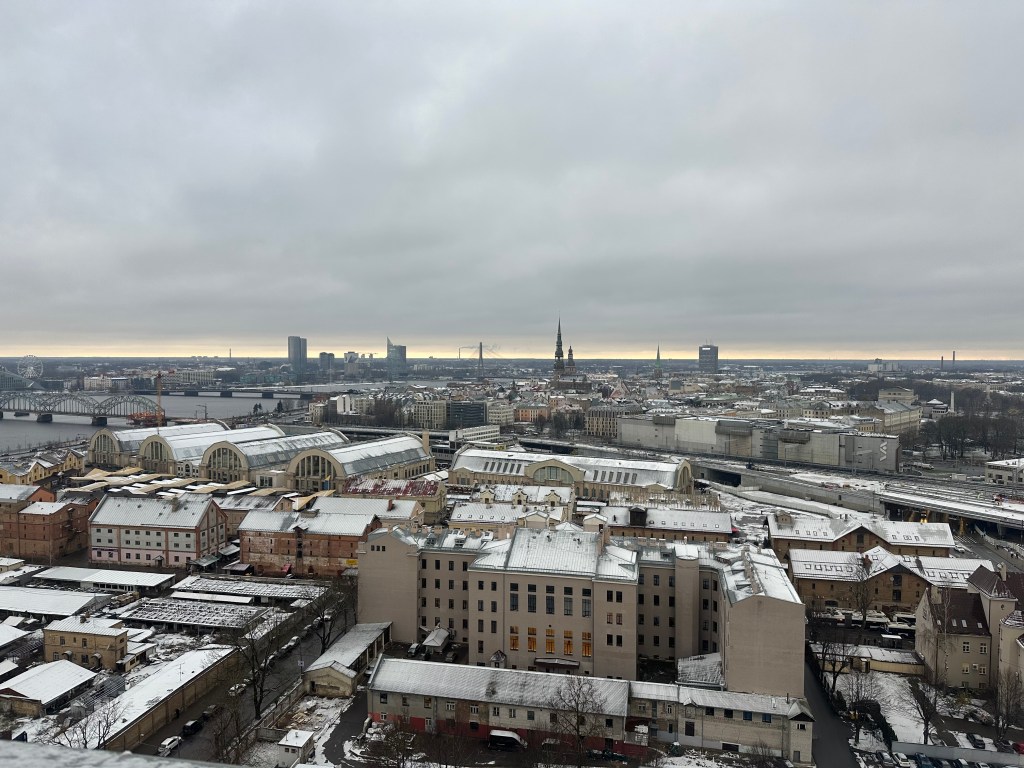
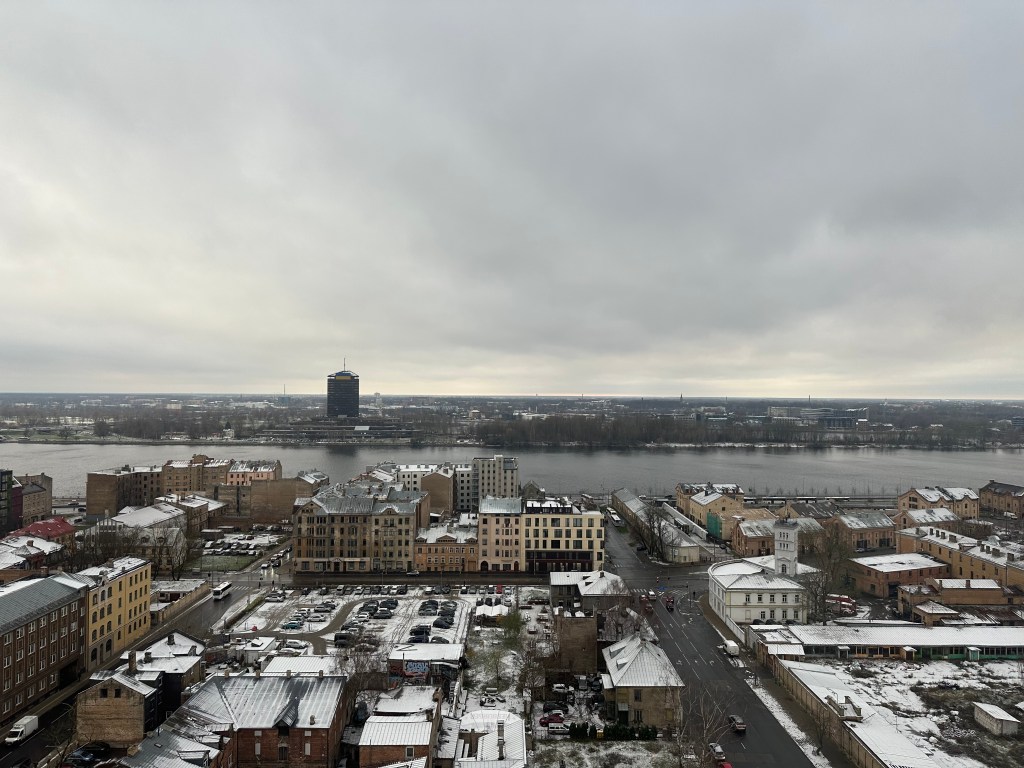
A hammer and sickle spotted in the building’s facade, a view of the Central Markets (spot the Zepplin hangars, they’re hard to miss!), and some of Riga’s residential/light industrial districts
We then walked over the Stone Bridge (freezing slightly, with the wind chill coming off the river!), bound for Riga’s new National Library. Opened in 2014, the library has a fascinating exhibit of books donated by Latvians, ascending into the ceiling.
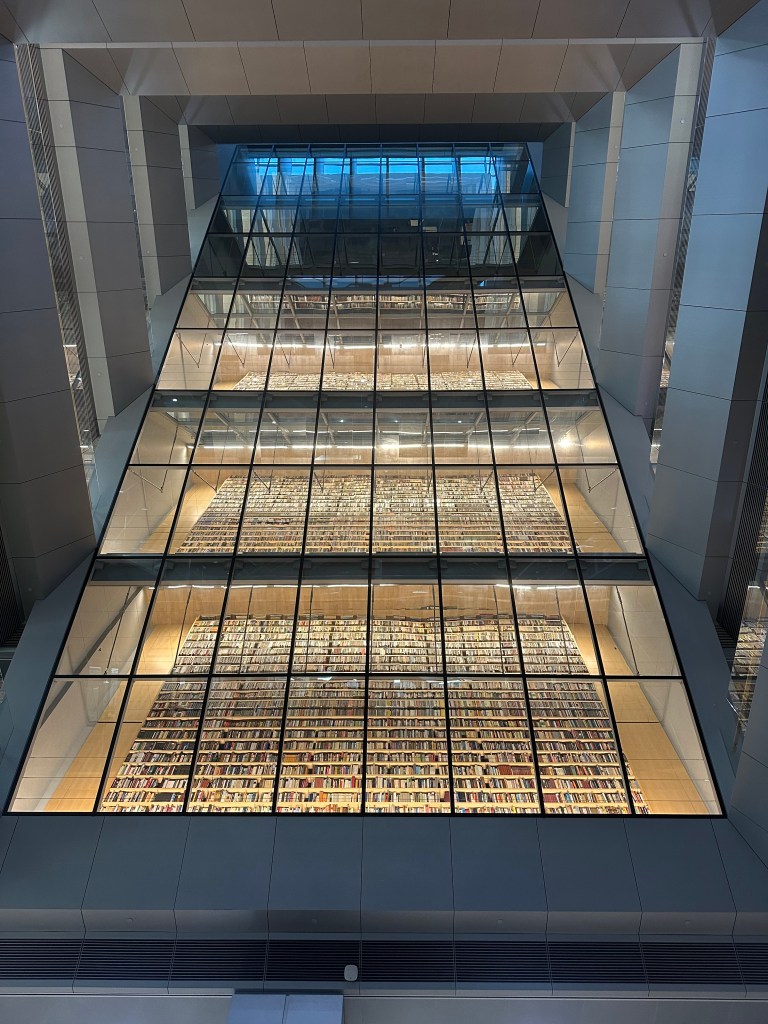
Hard to capture the enormity in one photograph!
Our next stop on the western side of the river was the Russian Orthodox Church. Latvia, like its neighbour Estonia, has a significant population of Russian speakers, who remained in the country after the fall of the Soviet Union. Around a third of residents in the country speak Russian, and a significant number choose to forgo Latvian citizenship (their ‘alien’ passports allow them visa-free entry to Russia, which simplifies the travel process when visiting relatives in Russia). There were actually quite a few ethnic Russians living in Latvia in 1990 who found themselves unable to claim Latvian citizenship and were rendered stateless – this was due to the Latvian law at the time restricting citizenship to those descended from ethnic Latvians, and limiting naturalisation to those who spoke Latvian. This sizeable community is predominantly Orthodox, hence the few Orthodox churches that you see around Riga, such as the Holy Trinity Church.
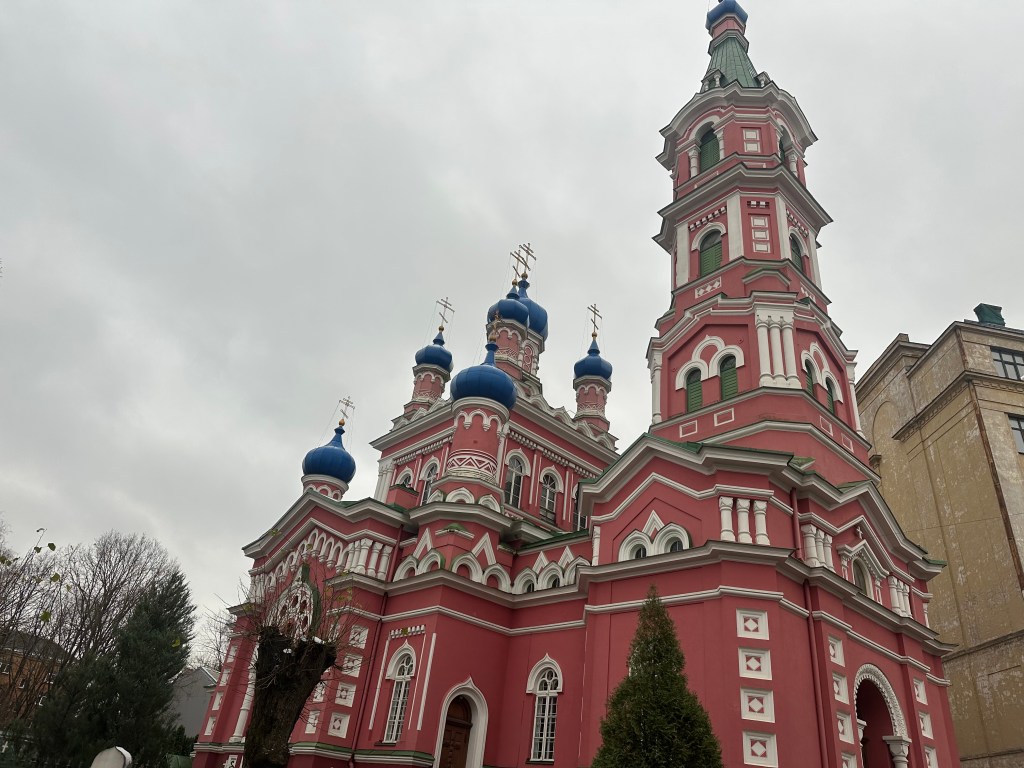
No photos allowed inside, but the Holy Trinity Church was wonderfully ornate
We finally crossed back over the river at around 2 in the afternoon, and walked towards the Latvian National Opera House, a beautiful example of Classical architecture, before heading over into the row of streets in every capital city that I call ‘Embassy Row’.
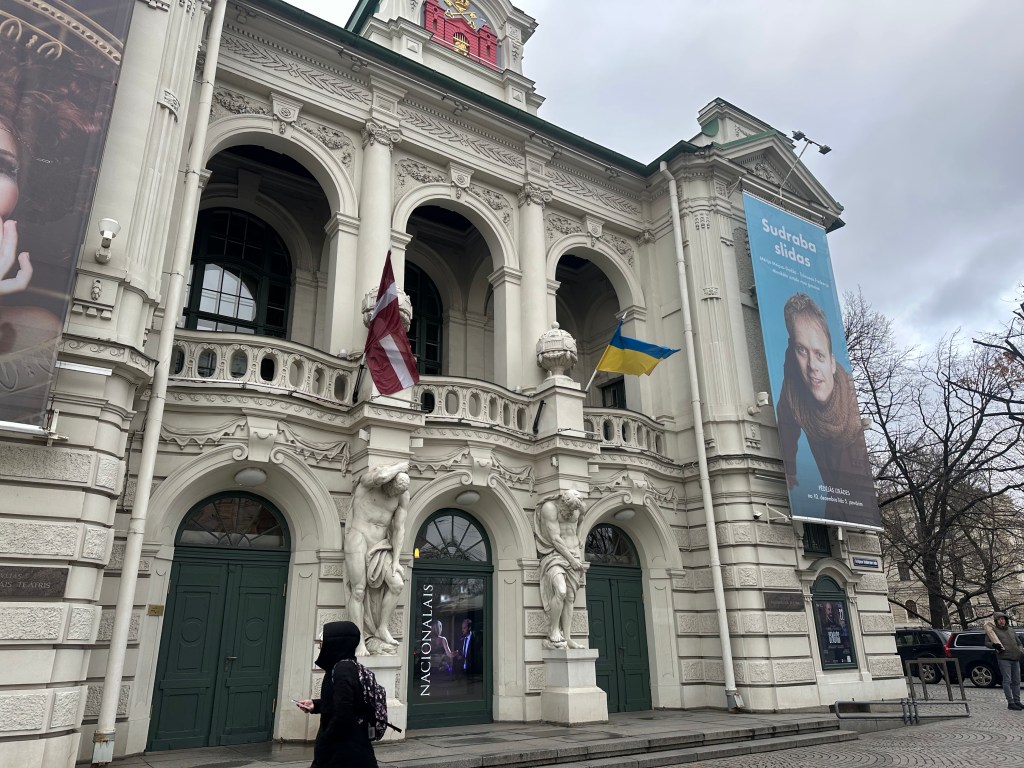
The Latvian National Opera House
I was curious to find the Russian Embassy here in Riga – the building in Tallinn had been almost completely surrounded by protest posters, and I wanted to know if Riga’s was the same. Whilst there was less protest activity going on outside the embassy, the building next-door had put up an poster directly facing the Russian Embassy building.
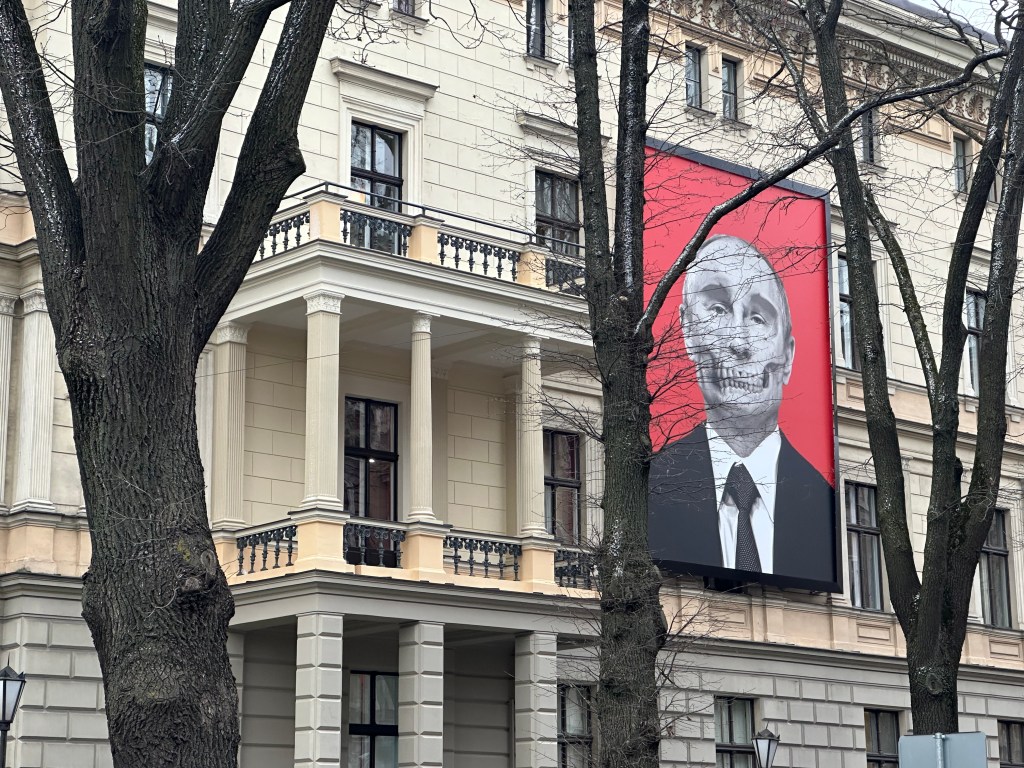
Rather chilling
We then headed back into the Centrs district, to check out a restaurant called Stock Pot, a very popular lunch spot that serves up fresh soups and curries at very reasonable prices. We waited a few minutes for a seat, then tucked into fresh bowl of Tom Yum soup (hot soup being the absolute best thing in the world when it is freezing cold outside!).
Our final destination for the day was the Latvian Museum of the Occupation. This museum documented Latvia’s struggle for independence – from the end of WW1, when it gained it’s freedom from the Russian Empire, through WW2, where the country was occupied first by the Germans, then by the Soviets (and where both sides recruited Latvians to fight against their countrypeople with the false promise of independence), and finally, their independence from the Soviet Union and the restoration of independence. This has to be one of the best museums I have visited lately, and is absolutely worth the visit if you are ever in Riga.
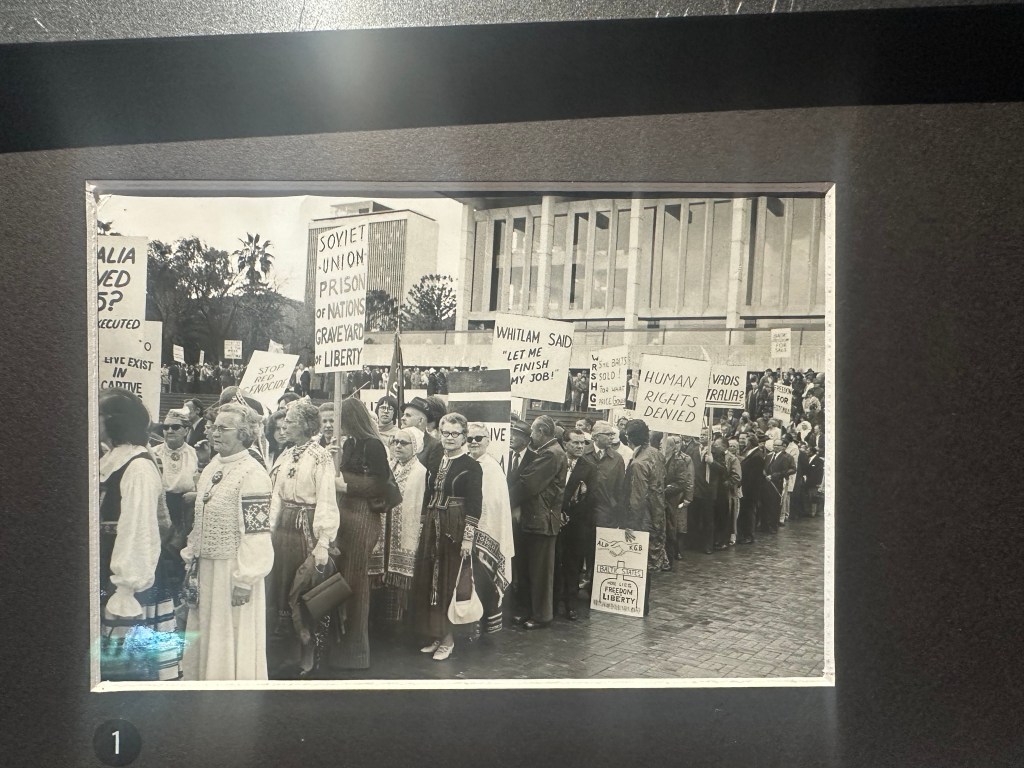
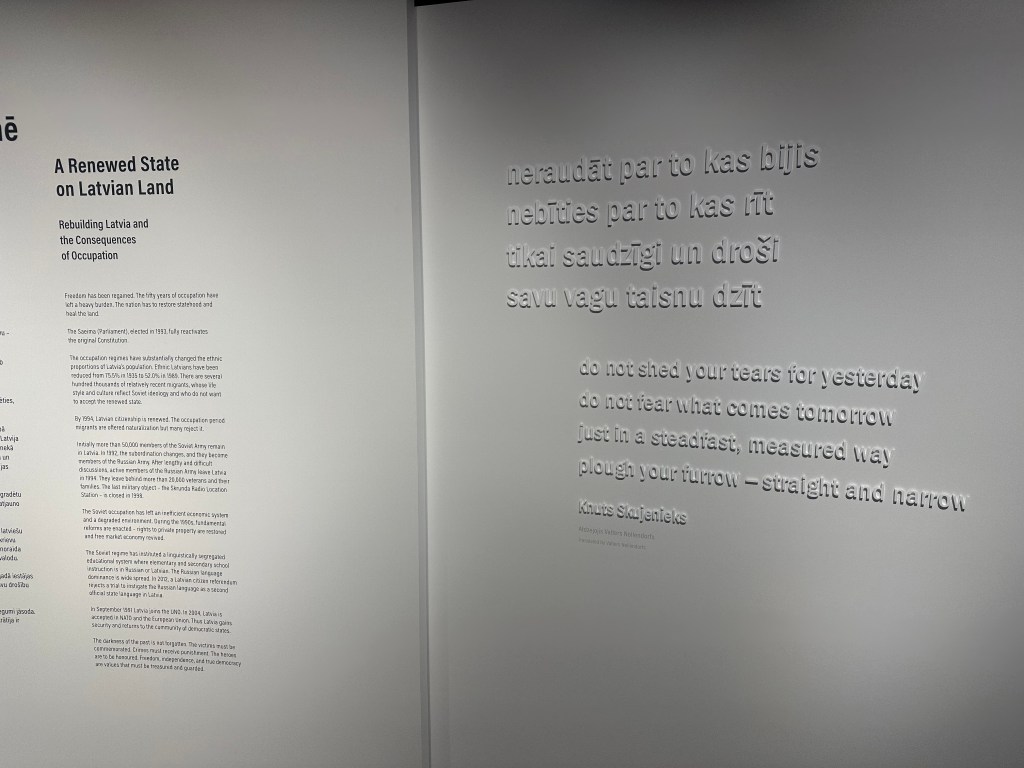
A photograph in the museum of a protest in Perth, in support of the Latvian people, and a quote from Knuts Skujenteks, a Latvian poet – the last exhibit in the museum
By the time we had finished in the museum (less finished, more so the museum was closing!), it was dark, cold, and getting late. We decided to head back to Late Night Munchies for another meal there – more comfort food in order!
With our train to Vilnius departing at 3:30 in the afternoon, we had time for one last outing in Riga – the Corner House. This building, standing inconspiculously on the corner of a busy Riga street, was the home of the KGB during the Soviet era. The Riga Police took over the building for a few years, before it was handed over to the Museum of the Occupation – the cells and rooms were left in very much the same condition as they were when the KGB used them, and the 60 minute tour of the complex provides a harrowing account of the treatment of political prisoners by the KGB.
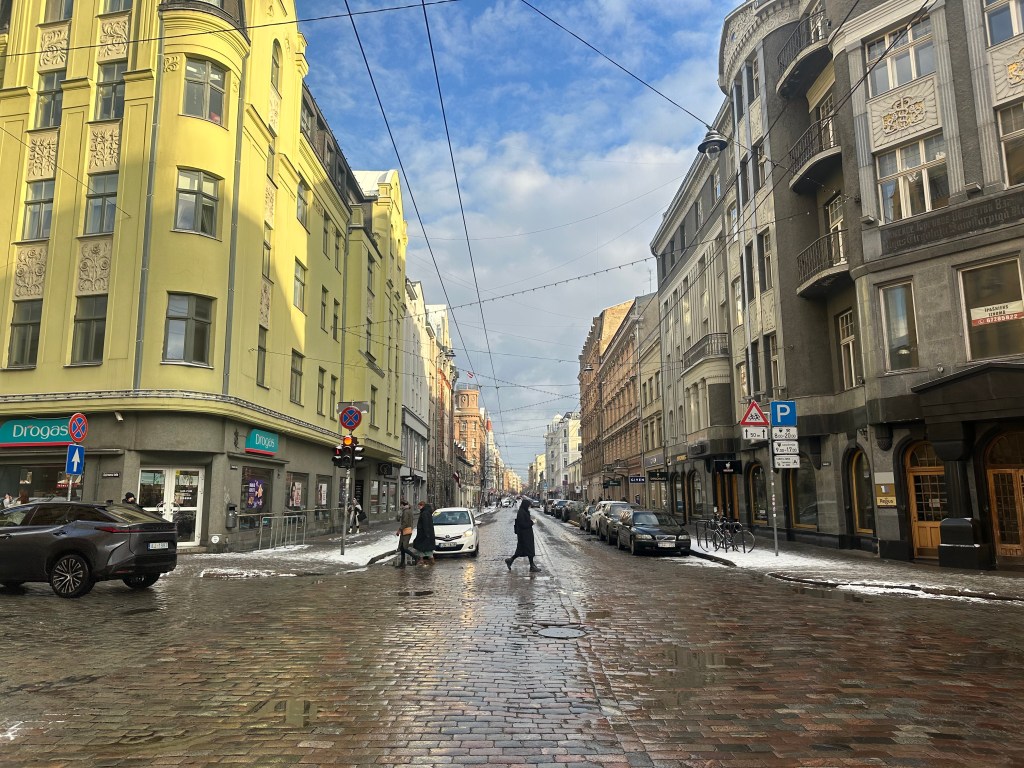
One of the streets by where the Corner House is located – you wouldn’t have had a clue from the outside that it was the KGB building
After picking up our bags from the hotel, we walked down to the railway station (stocking up on some food for the journey along the way). Riga was a certainly a fascinating place to visit – I’d certainly recommend it to anyone travelling in this part of the world!
 Global Wanderer
Leave a comment