

4/4/24 – 5/4/24
There are a variety of options for getting from Amman to Wadi Musa, the town located next to Petra, ranging from local minibuses to private drivers. I opted for the middle ground – the tourist-oriented JETT bus. This company runs coaches and small buses between various sites in Jordan – it appears as though they once had a network ranging far and wide (including a long overnight route to Cairo!), but since the pandemic they seem to be limited to connecting Amman with Petra, Wadi Rum, and Aqaba. Thankfully, these are the sites that most people are in Jordan to visit, and I had flights booked with Royal Jordanian to get me to Cairo later in the week (much quicker than the now out-of-commission bus!).
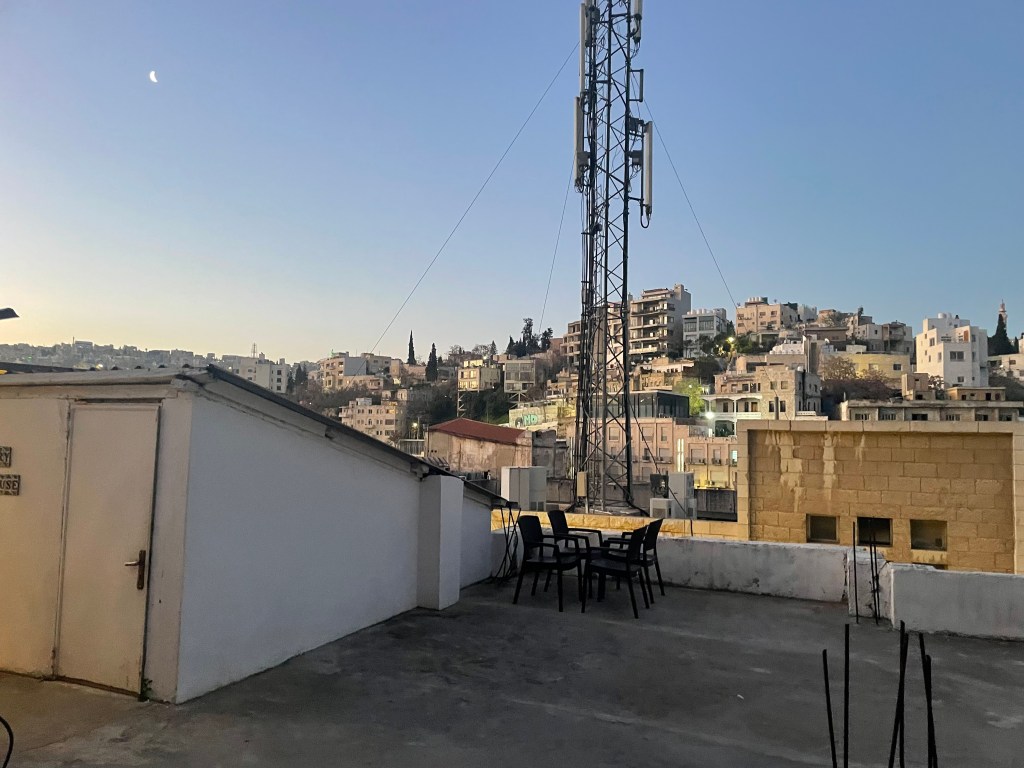
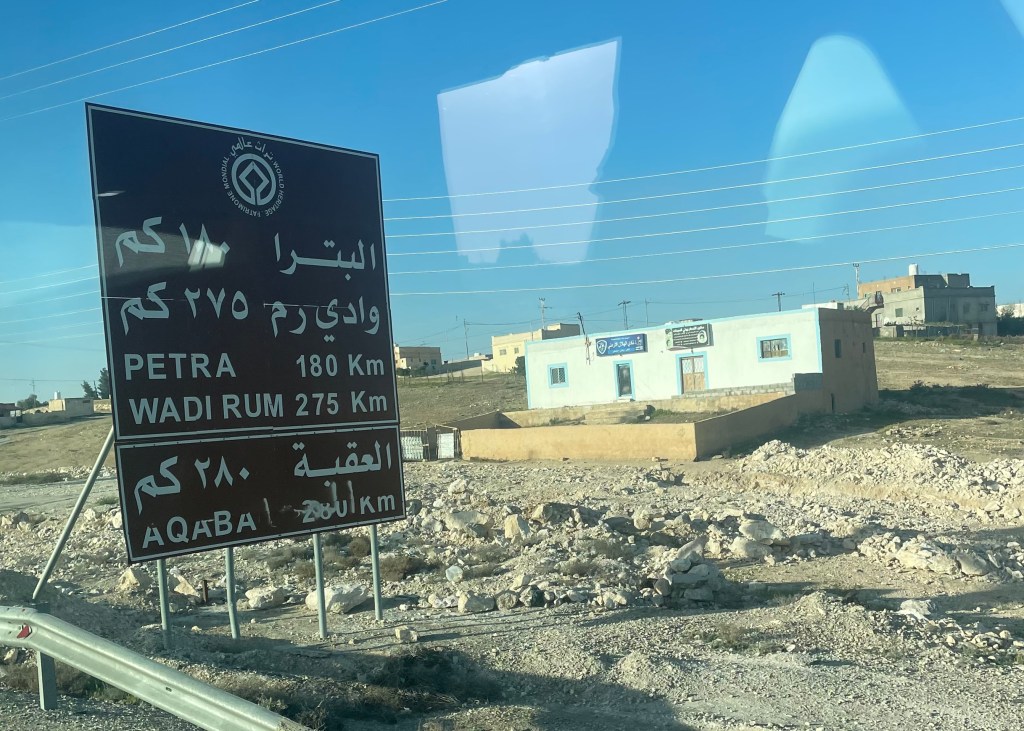
Mornings in Amman, and a road sign en-route to Petra.
The vehicle – a large coach – made the 3.5 hour journey relatively comfortable, which was a nice change from the cramped shared taxis of Iraq! I left from the Abdali bus station, and apart from picking up passengers from the 7th Circle bus station (also in Amman), and a short toilet stop halfway through the trip, we were smooth sailing all the way to Petra.
The JETT coach drops you off right in front of the Petra Visitor’s Centre, but luckily the town is quite small, and I only had a 20 minute walk to my accommodation tonight, the Sofsaf Hotel. Unfortunately, I hadn’t accounted for the hilliness of Wadi Musa – Petra is located at the lowest part of the town!
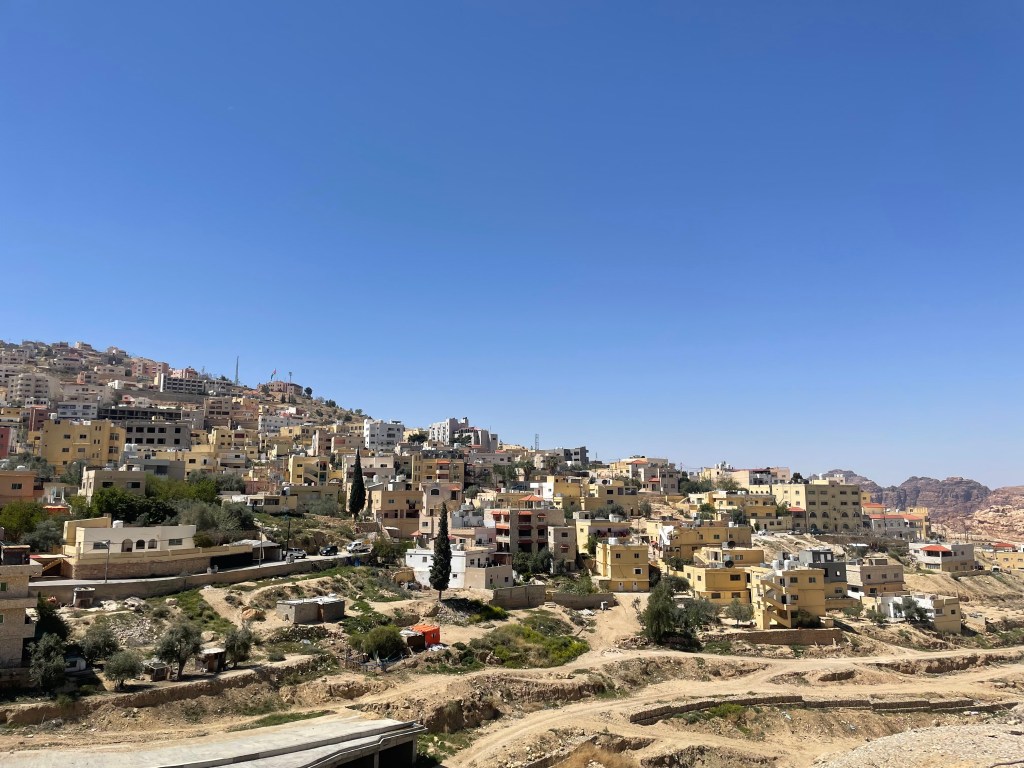
The Jordanian government, aware of the significant draw that sites such as Petra and Wadi rum have for tourists, operate a scheme known as the Jordan Pass. This ticket, linked to your passport, covers your visa fees, entrances to a variety of museums and historical sites across the country, and most importantly, entrance fees to Petra. When purchasing the pass, you’re given the option of choosing the number of days you’d like to spend in Petra (the most expensive component of the pass) – I had picked the 1-day option, as I would be leaving the next morning for Wadi Rum. I definitely recommend purchasing the Jordan Pass – unless you don’t intend to go to Petra, or you’re only staying in Aqaba (the visa fee is waived for arrivals in Aqaba thanks to the region’s Special Economic Zone status).
Jordan Pass in hand, I headed back down the hill to the Visitor’s Centre at the entrance to Petra. My pass was scanned, and I was given my ticket – no hiccups there!
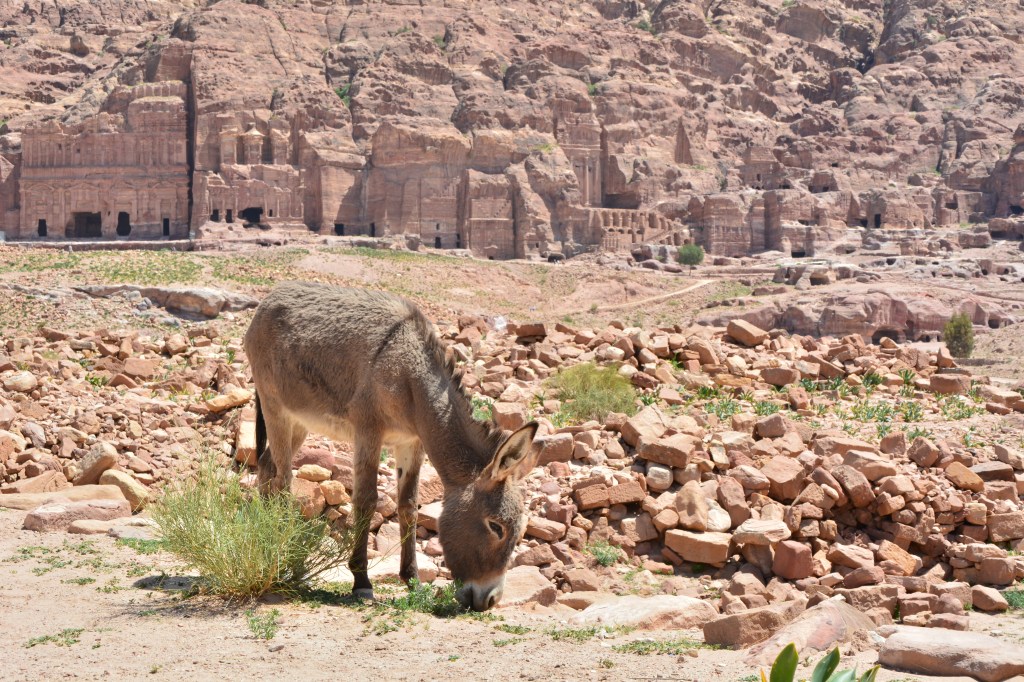
Once you leave the Visitor’s Centre, you are immediately on the road heading towards the Siq – a dry gorge which forms the entrance to the ancient city of Petra, and leads you straight to the famous Treasury building. Petra is an ancient Nabatean city, known initially as Raqmu, which is over 2000 years old – and I learned, in fact, at the nearby Petra museum, that the area has been inhabited since 7000 BCE (9000 years ago!). The Nabateans built the city, located on a major trading route, and ruled the area until its capture by the Roman Empire in the early 2nd century. Eventually, the trading routes shut down, and Petra’s last inhabitants were gone by 600/700 CE – leaving the city abandoned until its rediscovery in the 1800s. Nowadays, its Jordan’s biggest tourist attraction, and it is easy to see why – the pink-hued buildings built into the rock-face, with their intricate carvings, are something to behold – no wonder Petra was voted one of the world’s New 7 Wonders.
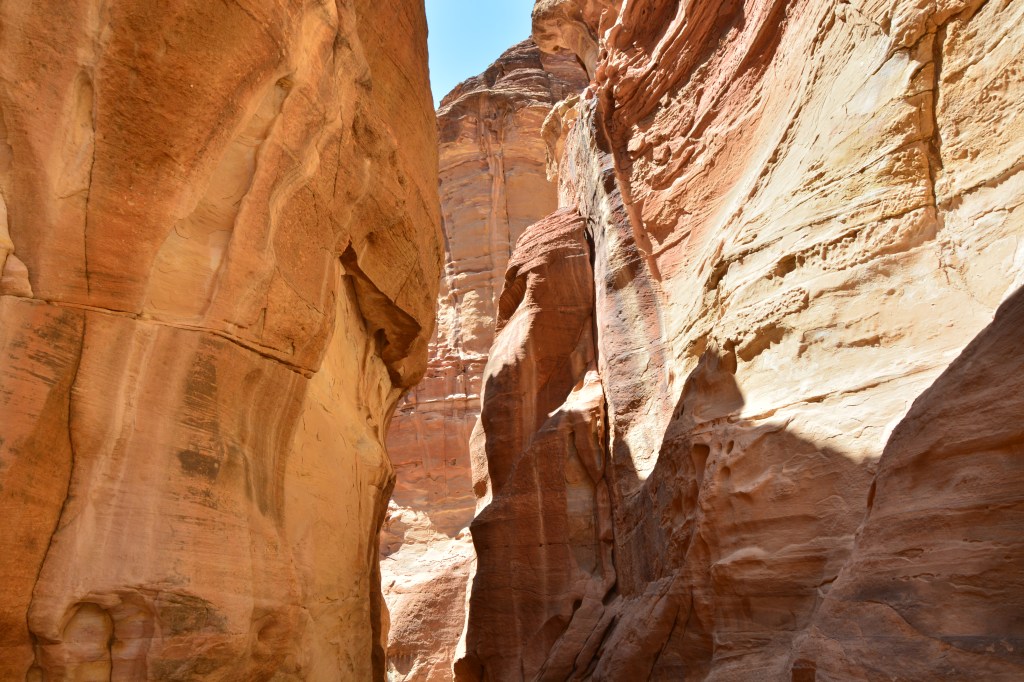


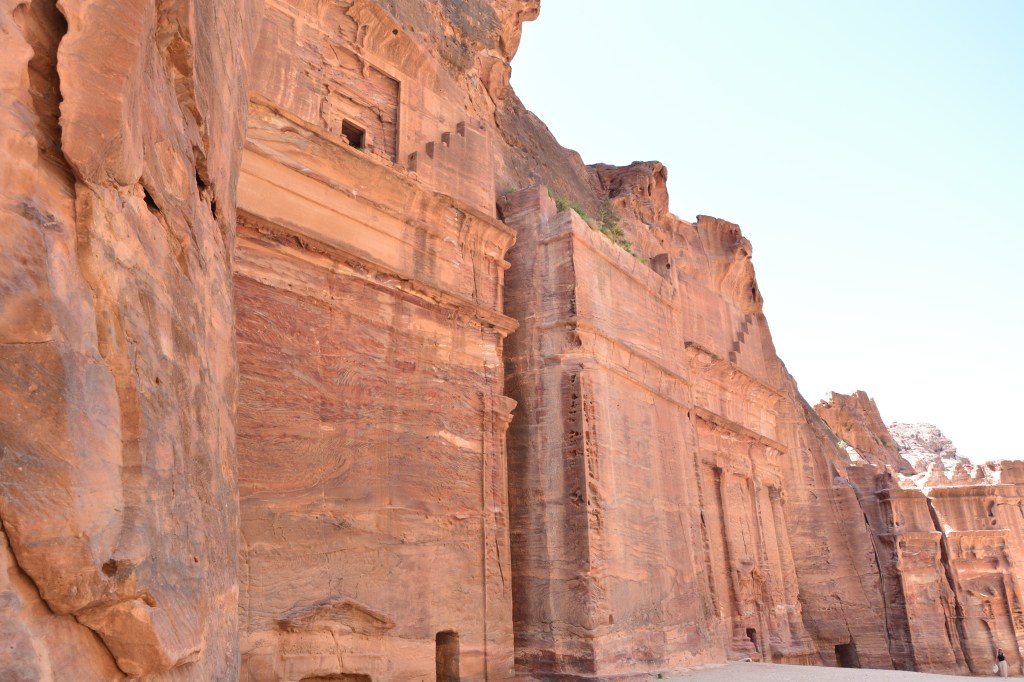
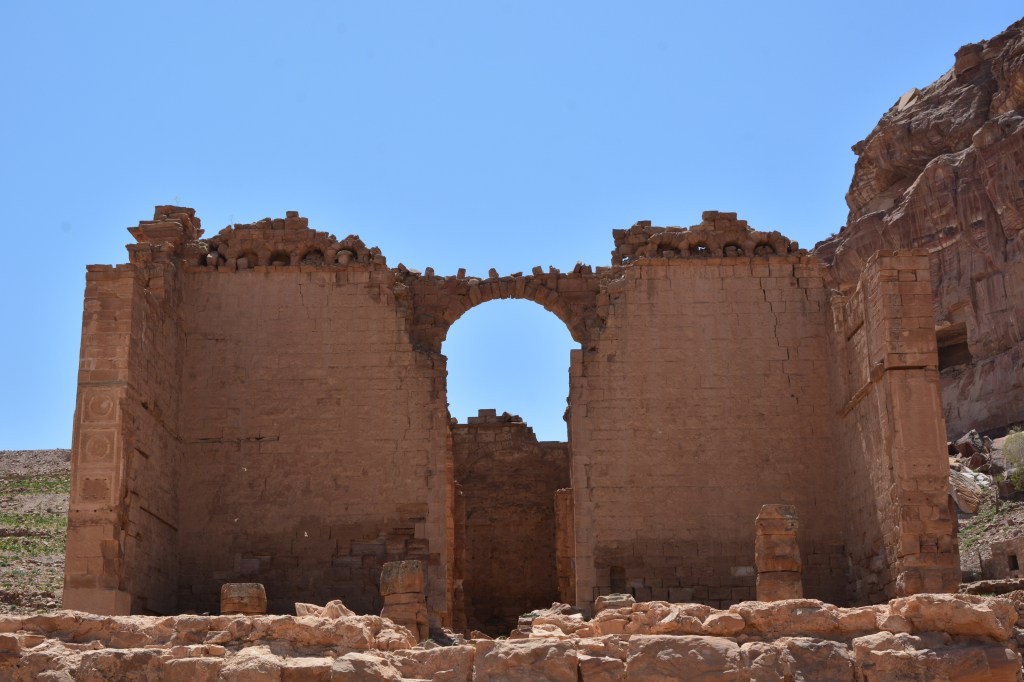
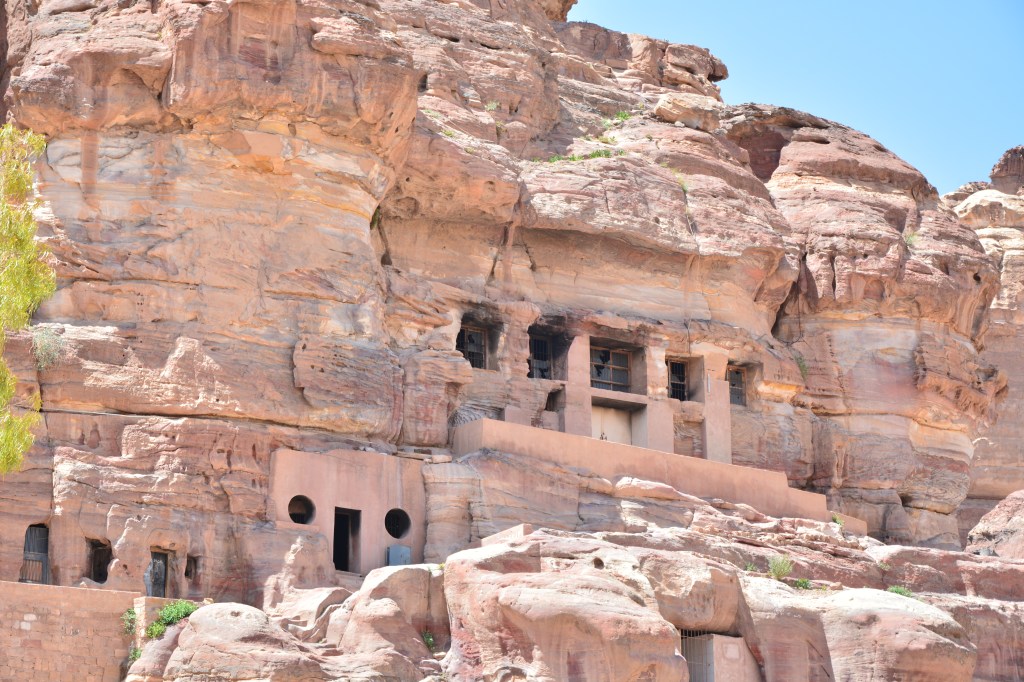
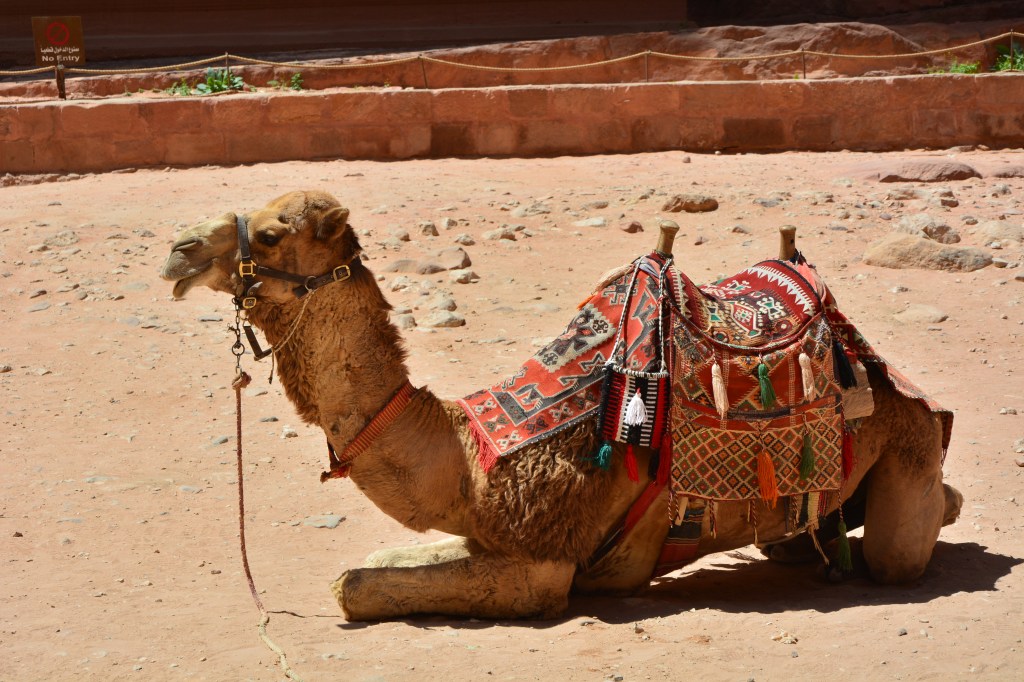
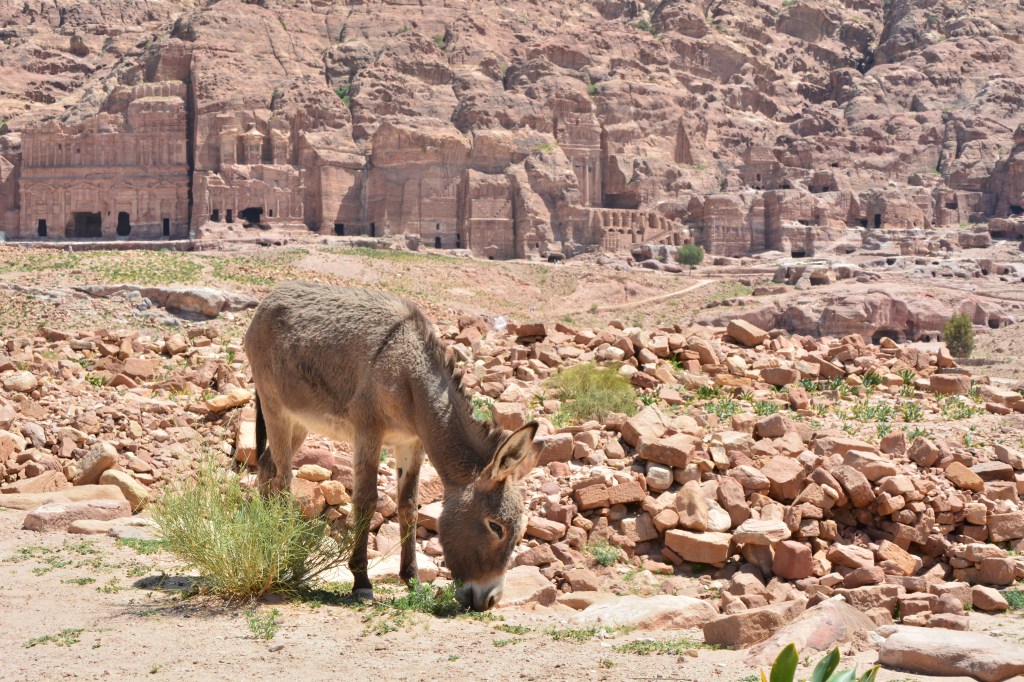
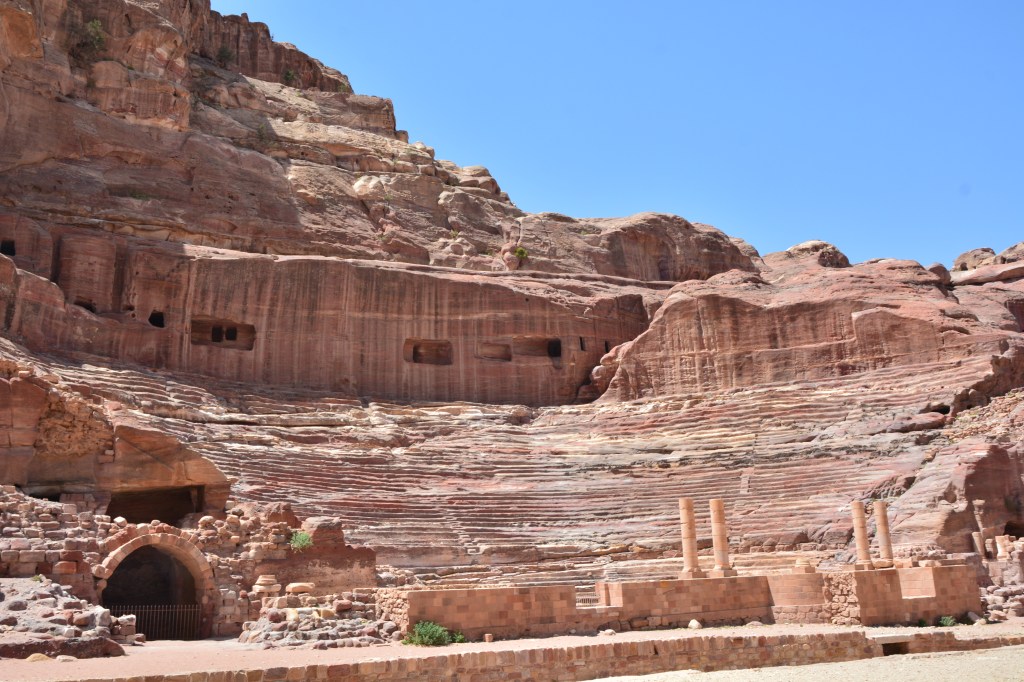
After the Treasury and the Siq, I continued out into the rest of the complex, including visiting some of the buildings carved into the hillside, and a theatre constructed by the Romans, I headed further out, to a Byzantine church built in the mid-400s – the tiled floors are still visible and you could even spot some ancient Greek inscriptions on the walls!
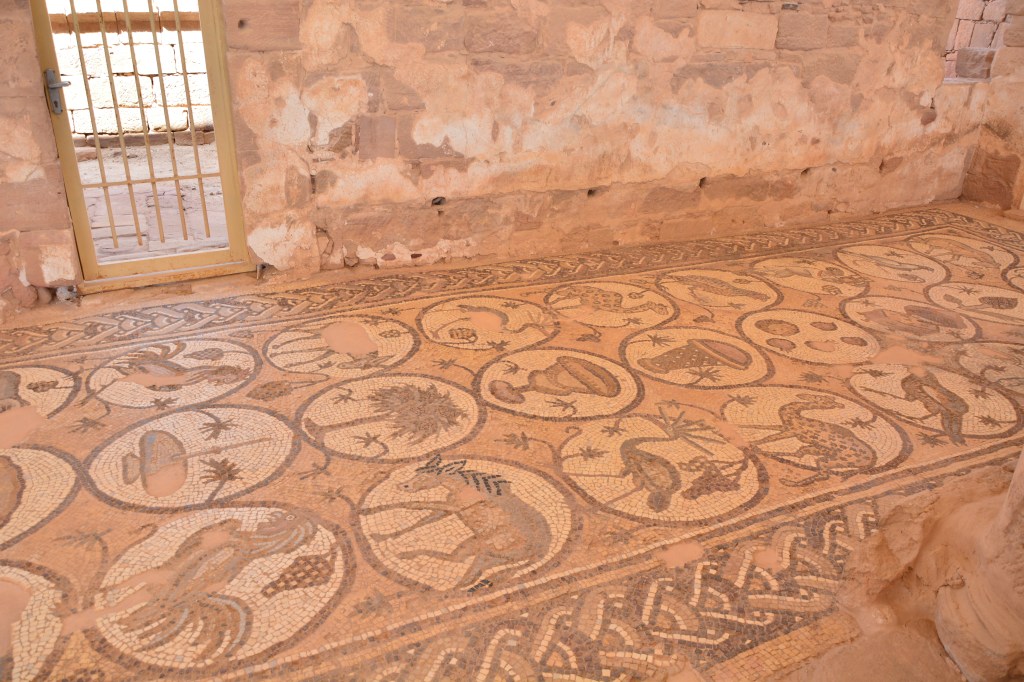
After exploring the complex (as far up as the Monastery), I made the long walk back to the Siq and the entrance to the complex.


At the Visitor’s Centre, one can visit the Petra Museum, which I believe only opened in 2019. I thought this museum was quite fascinating, as it explained in detail the history of the land, the civilisations that occupied it, and showed relics that had been left behind – it certainly made it easier to comprehend the history of what you’d just seen at the site itself!

The exterior of the new Petra Museum.
The Petra site closes at 6pm during summer hours, so that the Petra by Night event can be set up. I didn’t get a ticket for this, after being told by a few people that it probably wasn’t worth the $40AUD, and instead headed back to the Sofsaf Hotel for an early evening, watching the Liverpool game in bed!
 Global Wanderer
Leave a comment