


24/3/24 – 25/4/24
The Shatabdi Express I had stepped on in New Delhi trundled into Amritsar Junction, a sign proudly welcoming passengers to the Punjab capital. Instantly, you realise that this is a very different place to Delhi – it is cleaner and less chaotic – and the rickshaw drivers outside the train station were happy to take ‘no’ for an answer.

First impressions of Amritsar
My accommodation for the evening, City View Hotel (with Garden, as stressed by owner Avijit), was only a 30 minute walk from Amritsar’s railway station, and I decided it would be an easy way to quickly acquaint myself with the city. Once you’re off the main highway junction, you are very much in Amritsar-proper.
The Radcliffe line, drawn to divide a Hindu-majority Indian state and a Muslim-majority Pakistan, split the Punjab region in two. The result was significant upheaval, in which millions of people were moved either side of the line, causing a great deal of suffering on both sides. Amritsar, being located mere kilometres from the border, saw a lot of this.
I headed to the old Colonial Town Hall, now the location of Amritsar’s Partition Museum. It documents the tragedy of Partition, and the legacy it has left behind – quite harrowing, to say the least. The history of division, however, doesn’t extend to Punjabis on either side of the border – in Indian and Pakistani Punjab, people were at pains to remind me that they were all Punjabi first, national identities second.

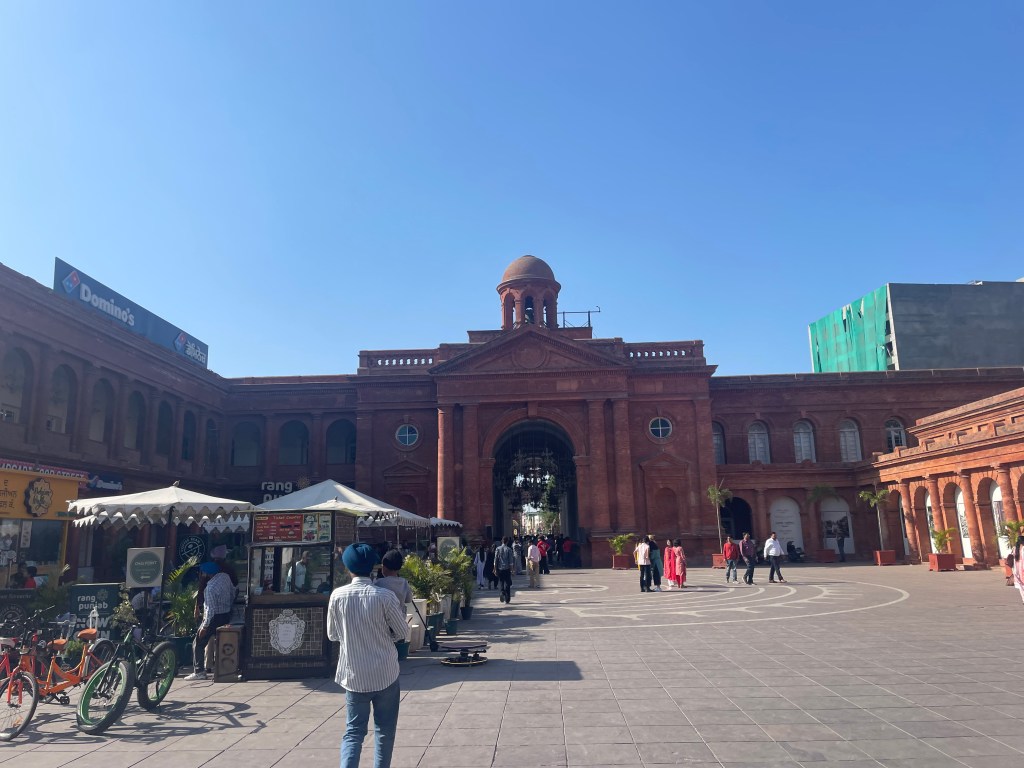
Heading to the Partition Museum
The second-largest city in in Sikh-majority Punjab, Amritsar is home to over 500,000 Sikhs, and is home to the Sri Harmandir Sahib, also known as the Golden Temple, which is one of Sikhism’s holiest sites. Amritsar is a very compact city, and it was only a 10 minute walk from the Partition Museum to the Temple.
There are few rules and regulations you must adhere to before entering the complex – including removing shoes and socks, and covering your hair (as a male), with a turban or cloth. I have exactly no idea how to tie a turban, so I approached one of the Sikh guards, who was more than happy to help me!

Outside the entrance to the Golden Temple complex
The Golden Temple itself is situated in the middle of a man-made lake in which Sikhs bathe themselves, and is surrounded by a marble concourse, containing several stations where Sikhs can drink the holy water, and a free communal restaurant (known as a langar). The Golden Temple is definitely one of the most beautiful buildings I’ve ever visited – the gold leaf covering practically shimmers in the sunlight! The complex also includes a free museum on Sikhism, which depicts through artwork, the development of the religion.
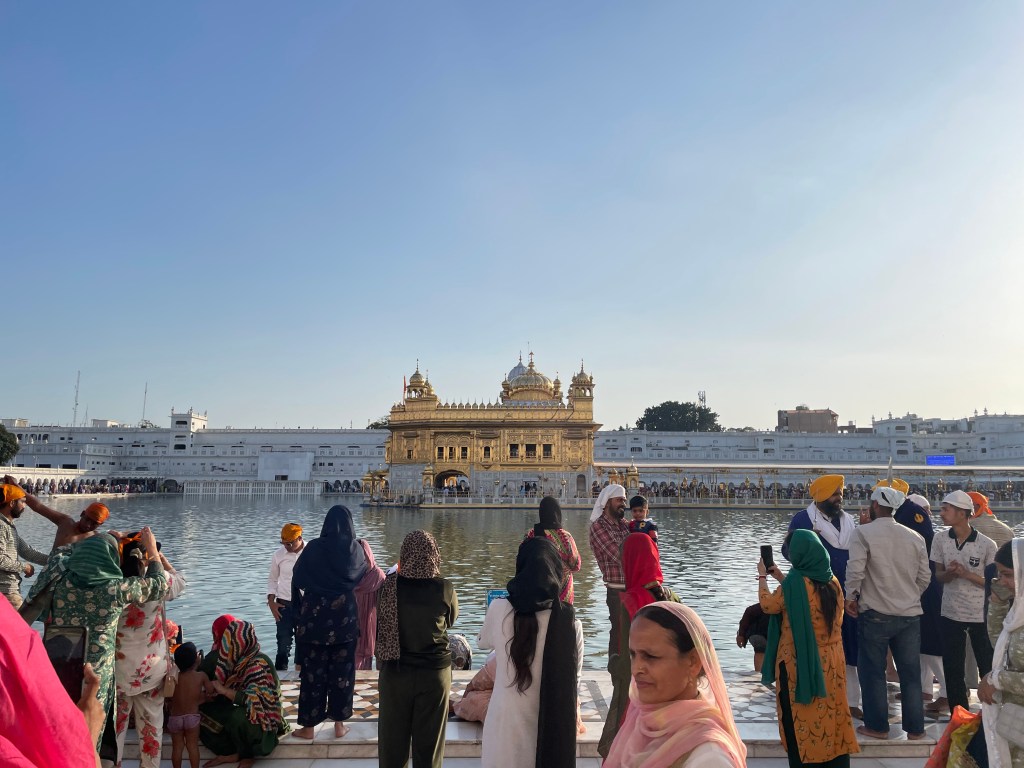
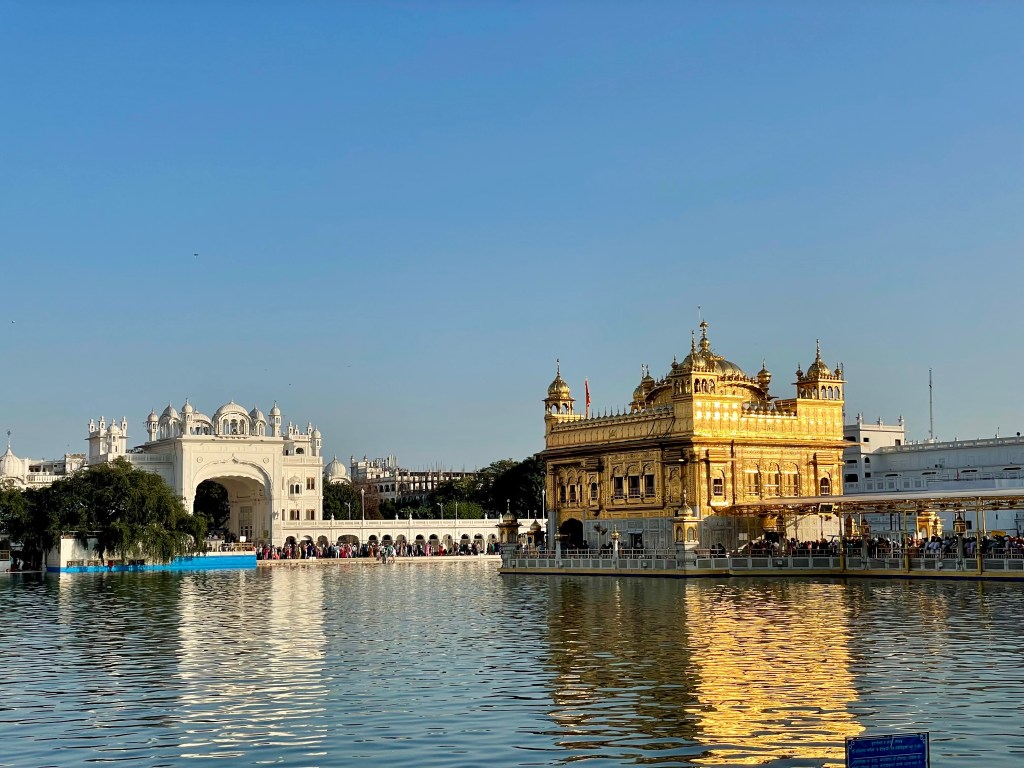

Shots from around the Temple

Sunset at the Golden Temple after food from the langar
As the sun began to set, I headed back into the city to the Jallianwala Bagh garden, the site of a horrific massacre by the British in 1919. I’d read about the killing in the museum at Delhi’s Red Fort, and was told by Avijit that there was a light show at the memorial after sundown which re-enacts the event.

Jallianwala Bagh lit up prior to the light show
A curry at Kesar Da Dhaba brought an end to my time not just in Amritsar, but in India, as tomorrow morning, I would be heading to the Wagah Border, and crossing into Pakistan!
 Global Wanderer
Leave a comment