


29/6/23 – 2/7/23
Today, we were heading across the border, and making our way south to Yerevan, the capital city of Armenia. There is a train that does this journey, but it takes something like 13 hours overnight, and only operates on alternating days, and the journey by road only took about 6 hours total. On the northern side of the river, between the Avlabari metro station (you’ll notice the gigantic Soviet apartment block behind it), and a small church, is the carpark where the marshrutkas to Yerevan depart. We got there handy, and didn’t have to wait long before the driver hopped in and we hit the road.
I can’t say I remember too much about this particular journey – the crazy curves that we had to navigate to get around the mountainside (and possibly the fact I hadn’t eaten anything that morning) – conspired to make me incredibly unwell, and so I spent most of the drive with my eyes shut and my headphones on, trying to think about literally anything else. The border crossing was straightforward – we all jumped out of the minibus to get stamped out of Georgia, and then walked to the Armenian side of the border, where we put our bags through scanners, and waited a good 30 minutes in line. Aside from the wait, it was actually a smoother process than I was expecting. The border guard took our photos, flicked through our passports, and the only holdup was that they had to take a photocopy of our passport pages that had Azeri stamps in them – but we weren’t questioned about them!

Just past the border crossing – we’re in Armenia!
Despite my travel sickness, there were some highlights: the driver, who’s nicotine addiction was probably stronger than most people’s need to breathe oxygen, smoked an entire pack of cigarettes during our short stop following the border crossing, and managed to suck on a vape throughout the entire drive (I’m not sure I saw him once take a breath of actual air); the views of the countryside for the few moments I had my eyes open for were beautiful; and the best part, where we stopped for a quick break in Armenia at a random, middle-of-nowhere grocery store that seemed to be halfway through some construction project, yet was clearly too indispensable to travellers to close, and so remained open with half a roof, two walls, and yet looked like any standard convenience store otherwise.
We finally made it into Yerevan, where the marshrutka pulled up on the southern end of the Yerevan Vernissage, which is basically a giant open-air flea market at the end of the straight boulevard that runs through the centre of the city. Our accommodation, Dave Hotel, was just past the northern end of this boulevard, and so we made our way in the scorching midday heat. I didn’t have a SIM card (yet), and my downloaded maps weren’t working, so I went old-school, cracked out the compass on my phone, and we eventually navigated our way there, taking in the streets of Yerevan as we went.
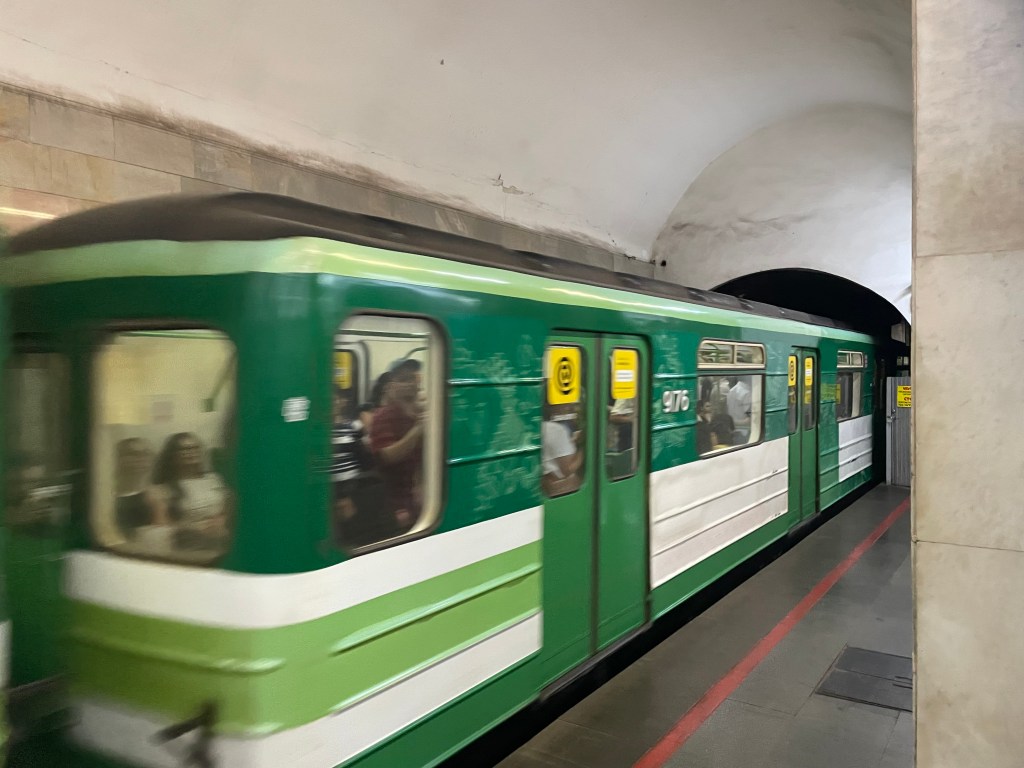
After we’d checked in at our accommodation, Dave Hotel – which we chose solely based on the name, and which turned out to be a very nice hotel in the northern part of the city – we headed over to Marshal Baghramyan metro station, and caught the train to Republic Square, in the centre of the city. Yerevan’s metro is strange – it is absolutely a Soviet system, that’s for sure – which consists of one line, and some of the strangest stations I’ve ever come across. Yerevan’s metro stations seemed to mimic the vibe of the city itself: utilitarian in design, and as if someone had designed a beautiful garden with a state-of-the-art irrigation system, and yet had never turned it on.
Once I’d acquired a SIM card at the VivaMTS store on Yerevan’s main drag, we headed over to the opera house. This magnificent building is located at the centre of a giant concrete square. Having now visited a number of communist and post-communist capitals on my travels, I’ve finally realised why you can find these concrete squares in all of them – they’re designed for military parades! Near the opera house is a pretty planned garden, with an artificial lake in the centre. Parts of the lake were dry, but that ceased to be a problem for long, because at that moment, the heavens opened up, and we were caught in a downpour. Given the intense heat just a few hours earlier, we were definitely a bit unprepared for this!
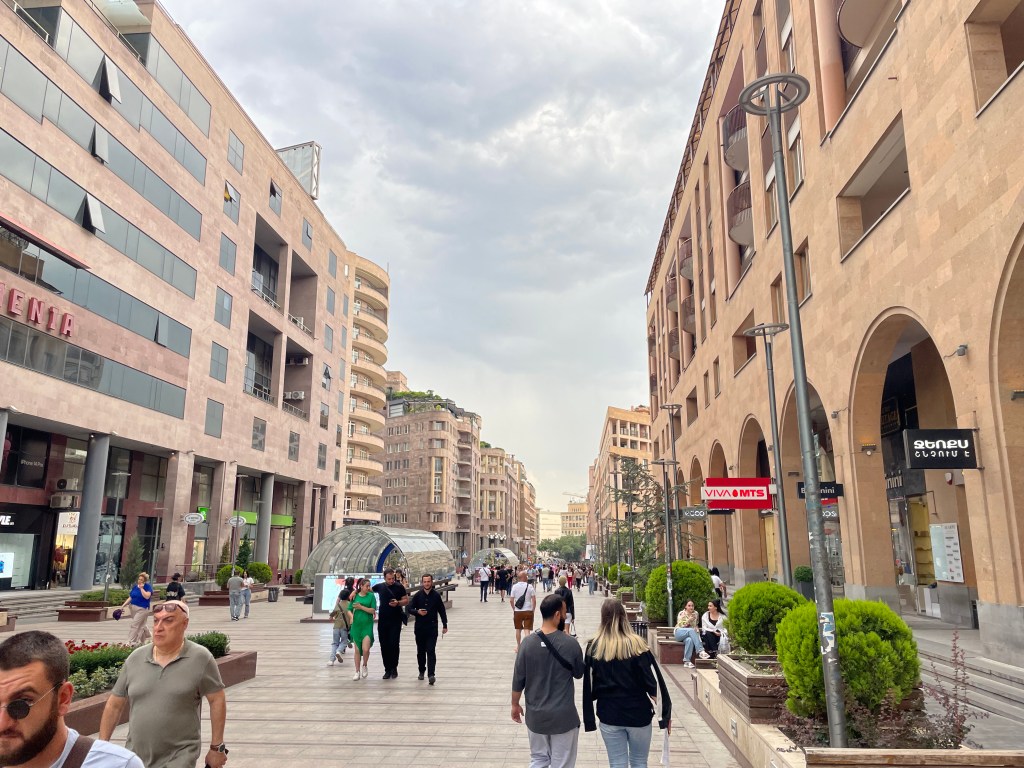
One of Yerevan’s major city streets
Yerevan itself is a fairly compact city, and so we decided to spend that afternoon walking around it in a large loop. Three things I noticed about Yerevan: all of the bricks are the same pink-y colour (I believe something to do with minerals in the rock!); every building has apartments in it (even if the main purpose of the building is something else, such as a bank); and Soviet-era statues are everywhere. After walking around for several hours, taking in the cityscape, we stopped for kebabs at a small shop off the main drag, and headed back to Dave Hotel for the night.
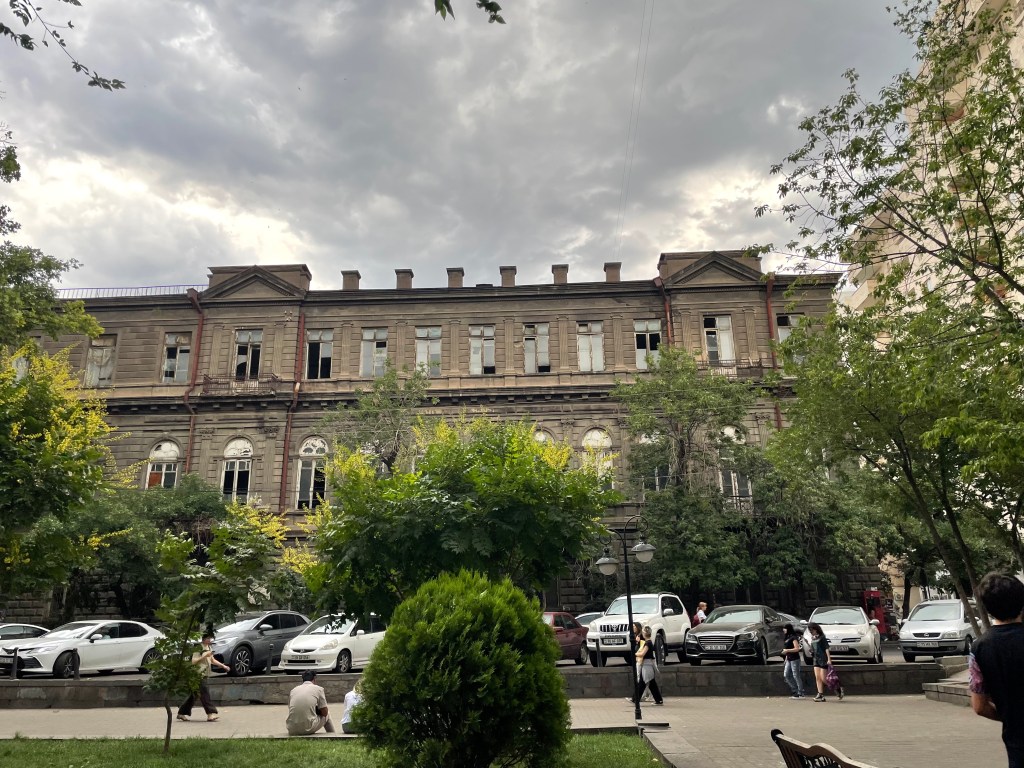


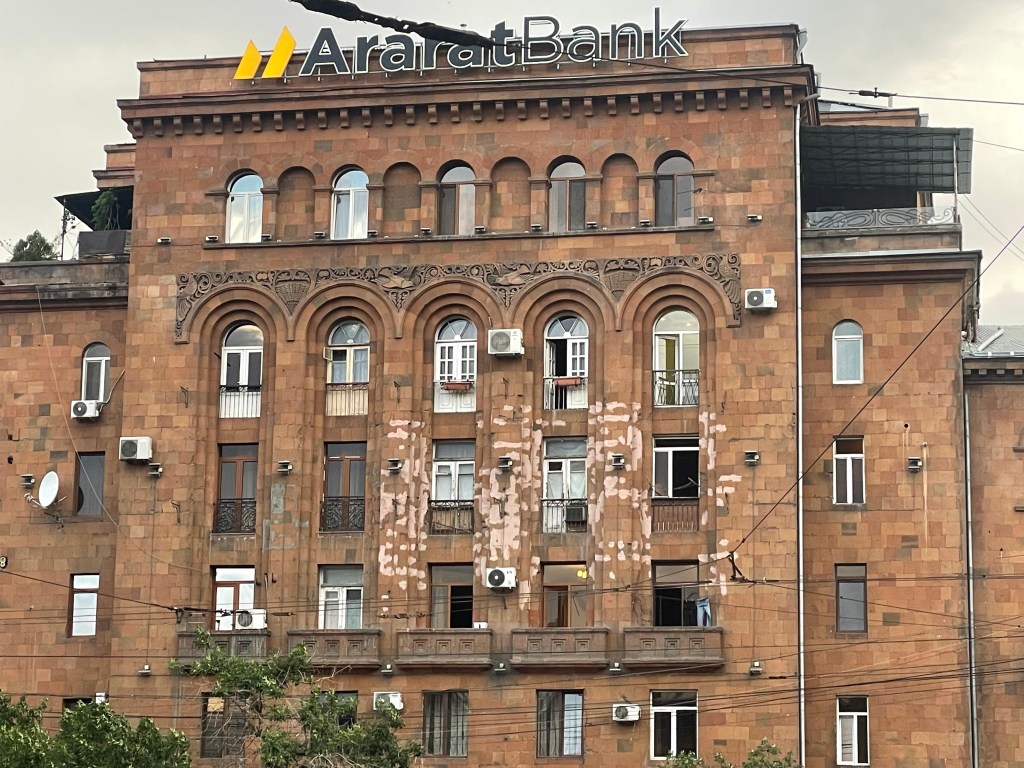
Some photos from Yerevan
On Friday morning, after a big breakfast at Dave Hotel, we headed up the Tsitsernakaberd hill to the Armenian Genocide Memorial and Museum. The museum itself is located in an underground bunker built into the top of the hill, and is deceptively large, with many exhibits and halls documenting the genocide – harrowing stuff. Outside, on the hilltop, sits the Genocide Memorial itself, with an eternal flame burning at the centre. From this vantage point, you also get an incredible view of Mount Ararat in the distance.
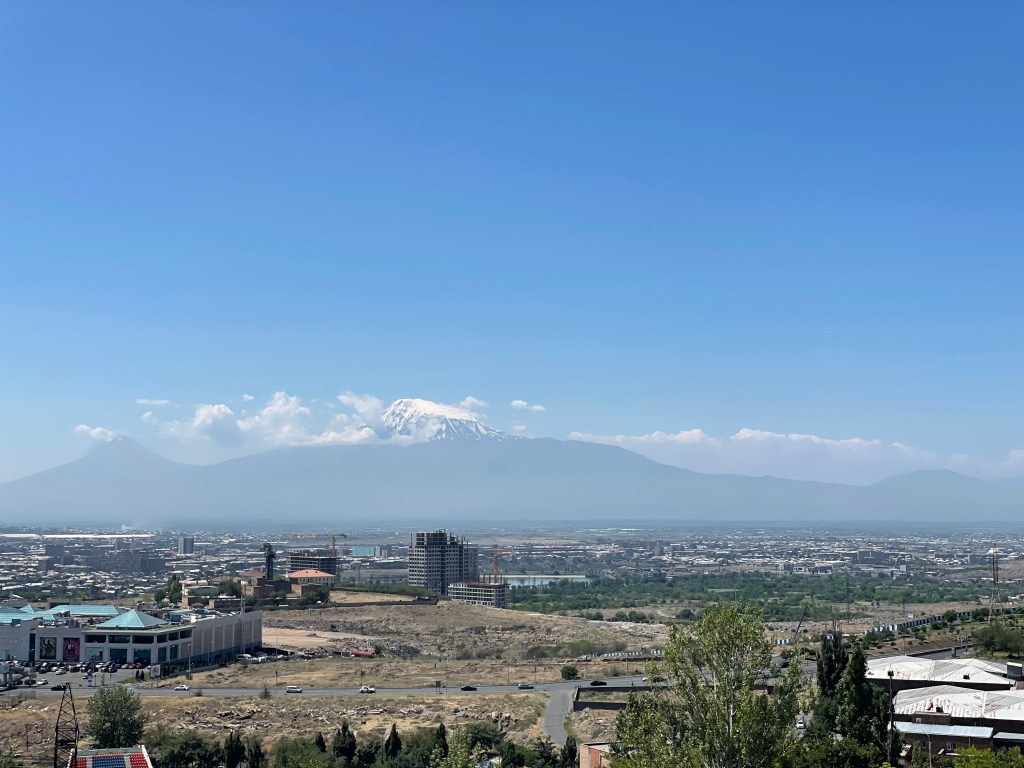
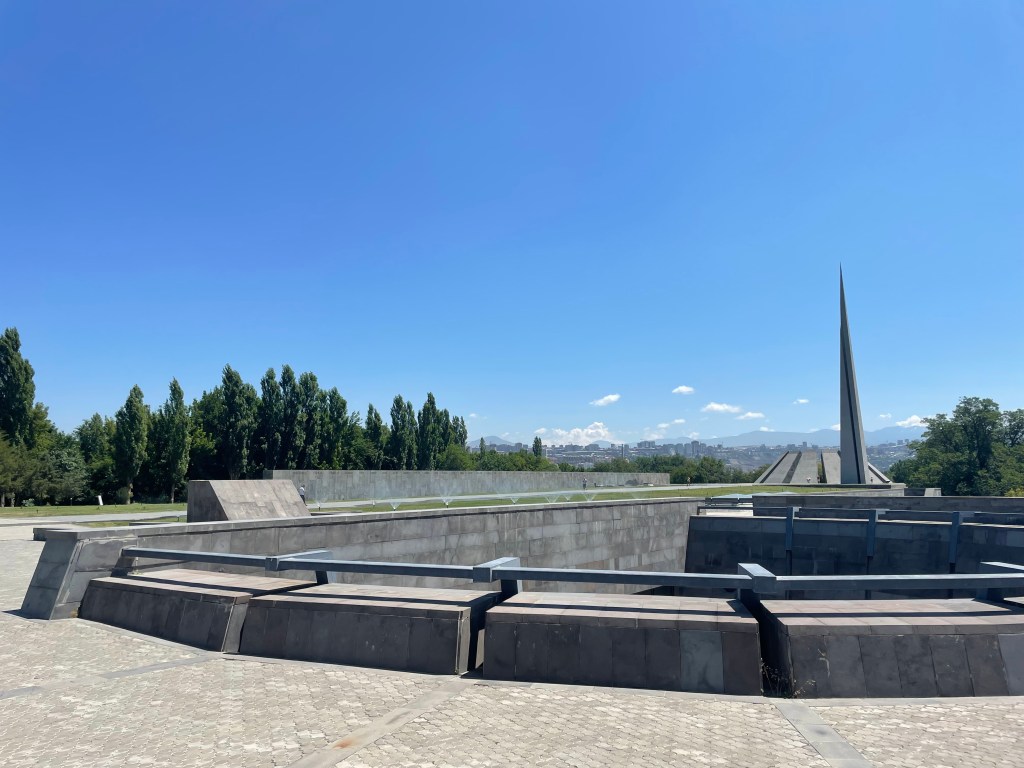
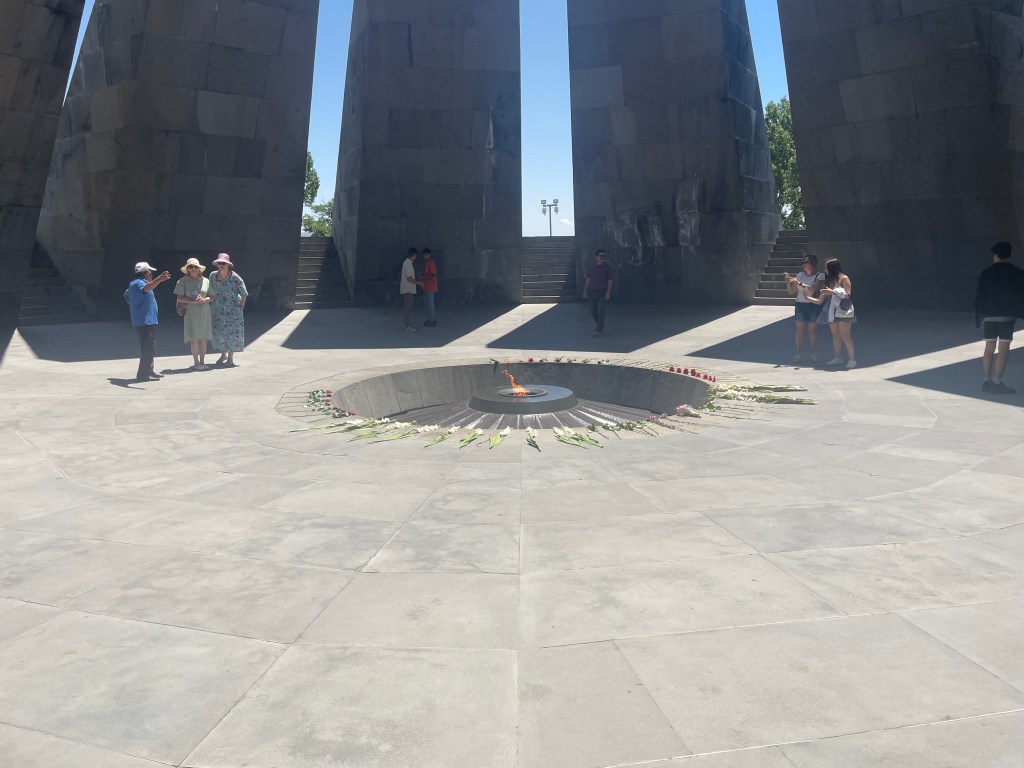
The Tsitsernakaberd Genocide Memorial – on the left you can see the view of Mount Ararat
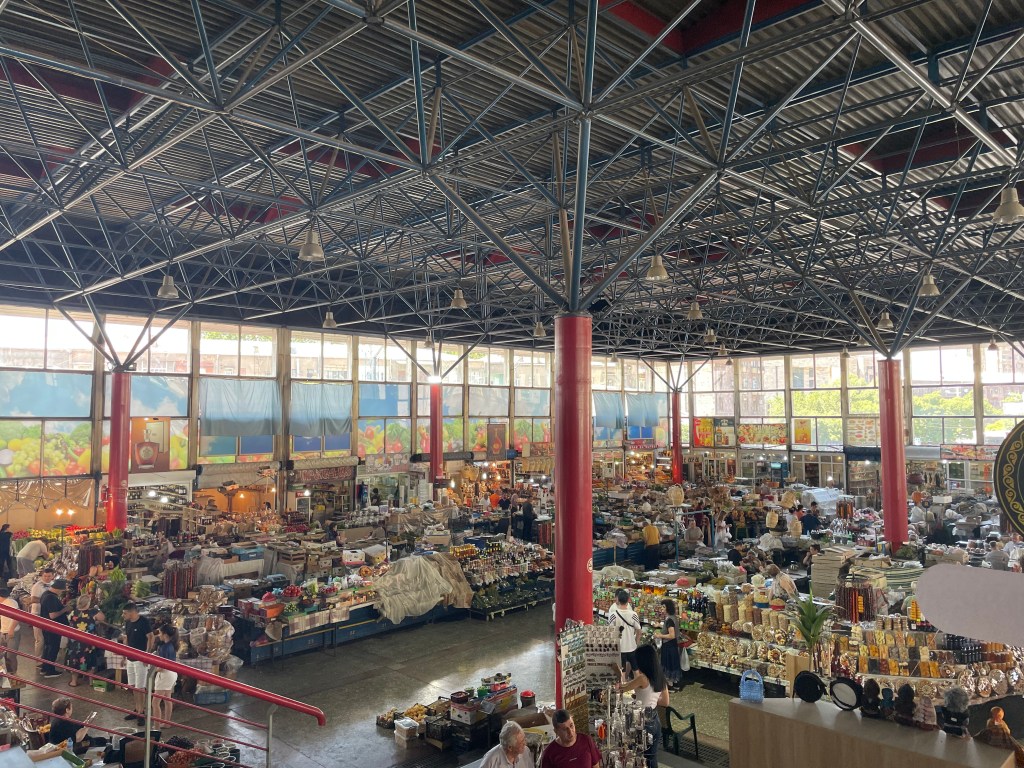
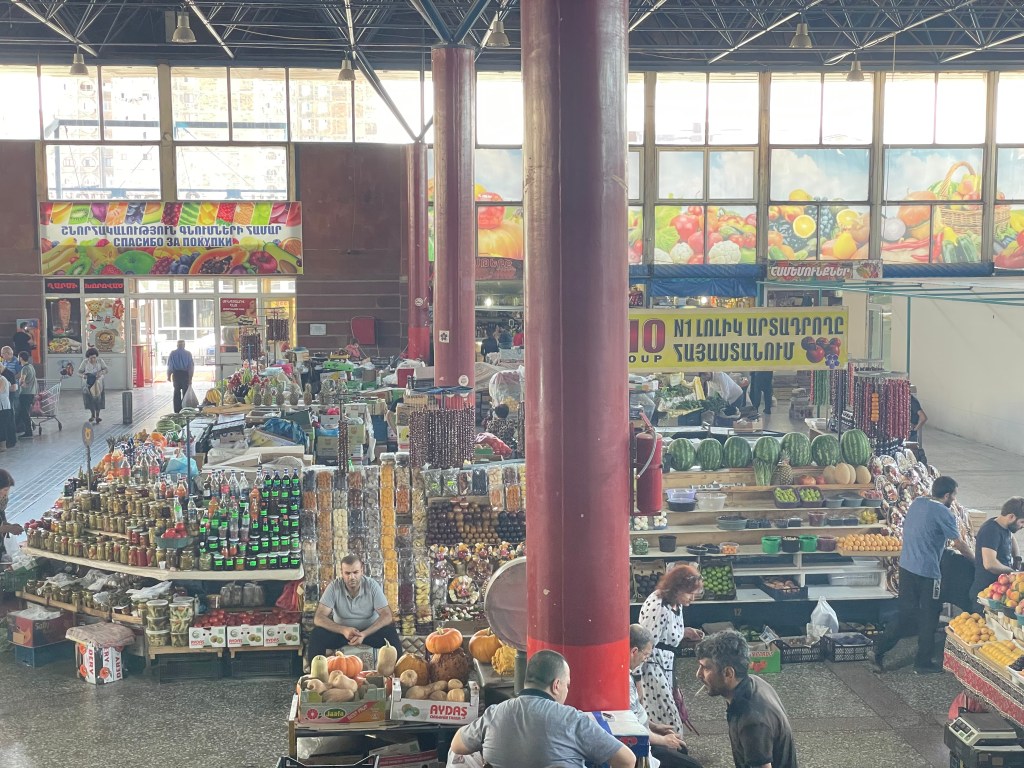
After spending some time at the Genocide Memorial, we headed down Tsitsernakaberd and took a metro to the GUM market, which was in Soviet times, the city’s centralised marketplace. Much like a classic Central Asian bazaar, it was filled with stalls selling fresh fruit, bread, spices, and meat, alongside a random variety of appliances. Full of people and some incredible smells, it was a great place to walk around and soak up the Yerevantsi atmosphere.
Down the street from the GUM market is the world’s largest Armenian Apostolic cathedral, that of St Gregory the Illuminator (Greg the Not-So-Dim, as we dubbed him). Even though it was built in 2001, it retains a classic design, complete with some impressive chandeliers!


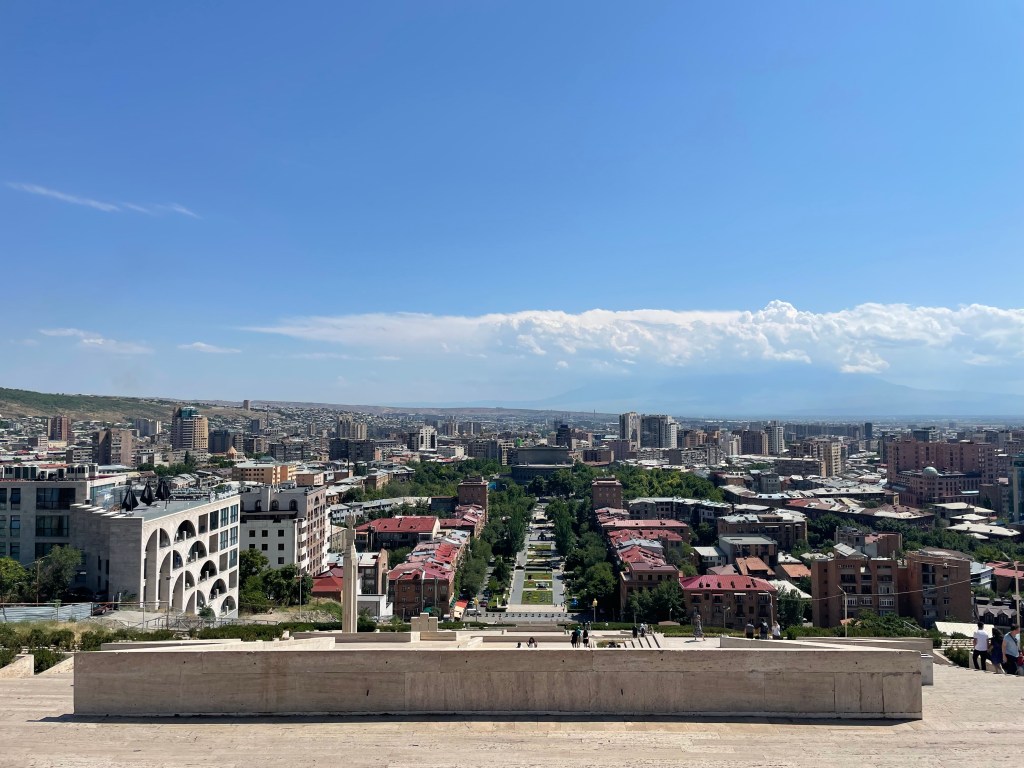
The Yerevan Cascade is a series of stone steps and blocks leading up a major hill, is home to an art museum, and provides some of the best views out over the capital. The structure’s construction began in the 1980s, but due to the collapse of the USSR, was suspended until the early 21st century, when the Armenian government green-lit its completion. It’s actually quite impressive, and at just over 300 metres tall, requires nearly 600 stairs to reach the top! We made our way there, and climbed to the top for the views over Yerevan, which were certainly worth the exertion!

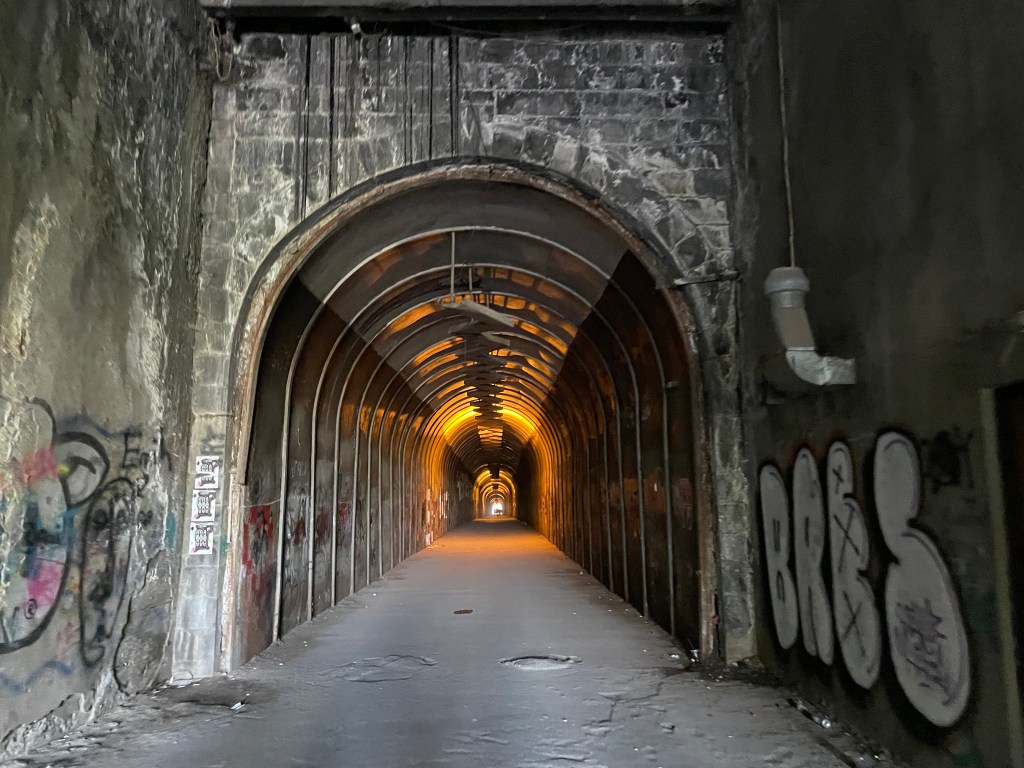
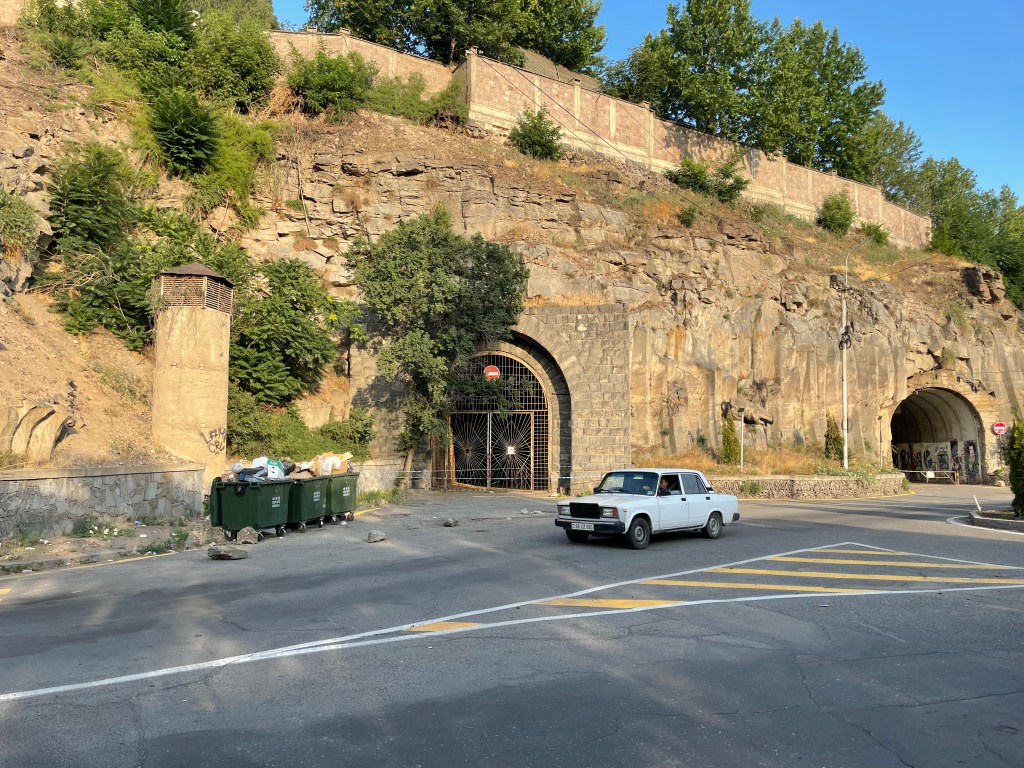
Yerevan is full of impressive works of architecture – after visiting the Cascades, we headed back to the north of the city, to walk through the Kond Pedestrian Tunnel. During the Soviet era, two parallel road tunnels were built to connect the higher levels of the city with the lower parts contained in the Hrazdan Gorge. Following independence, the tunnels fell into disrepair – one of them is still not operational, but the other has been renovated in order to provide access for pedestrians, and is quite cool to walk down – the tunnel is so long, you can’t see the end when you enter!
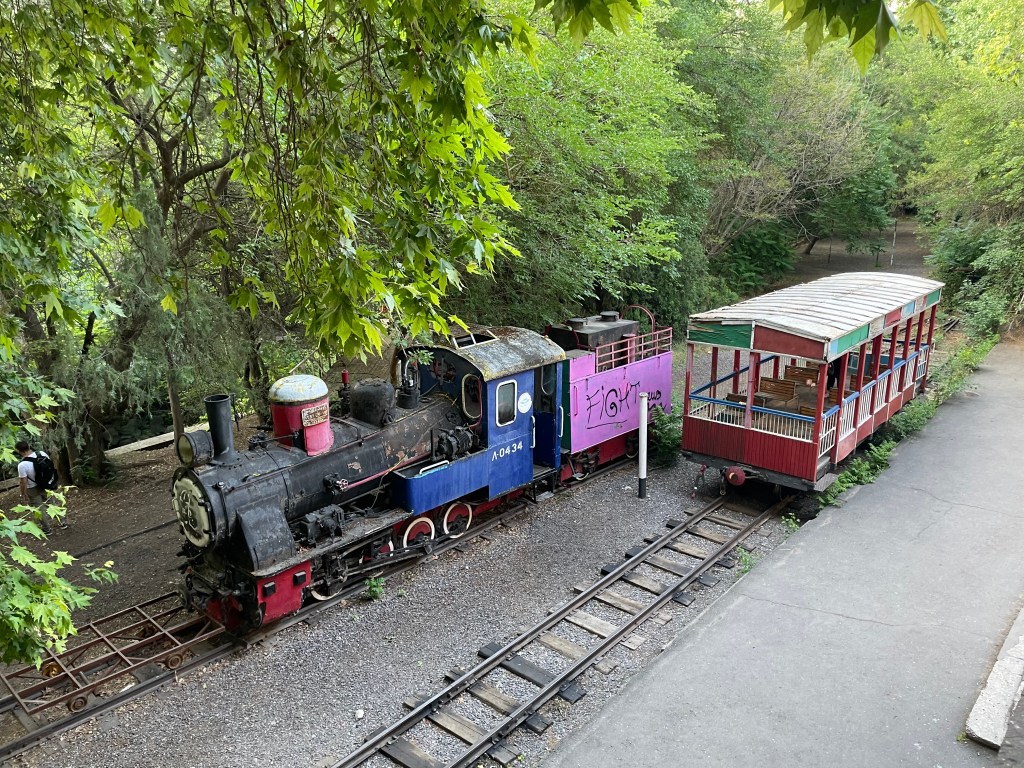
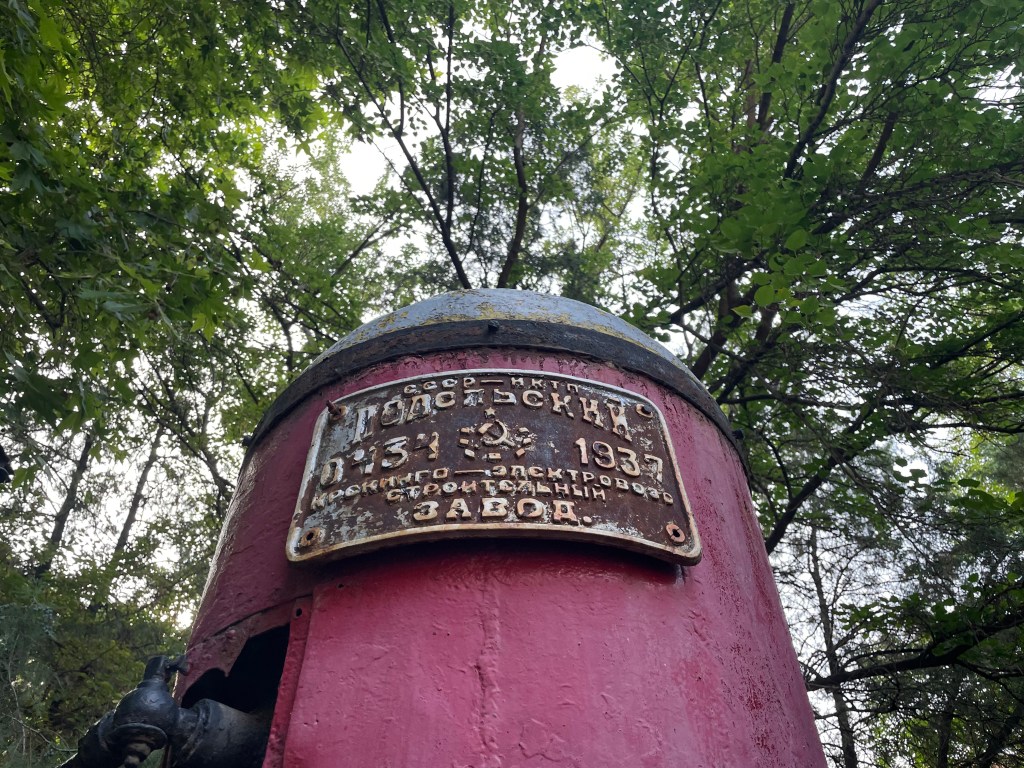
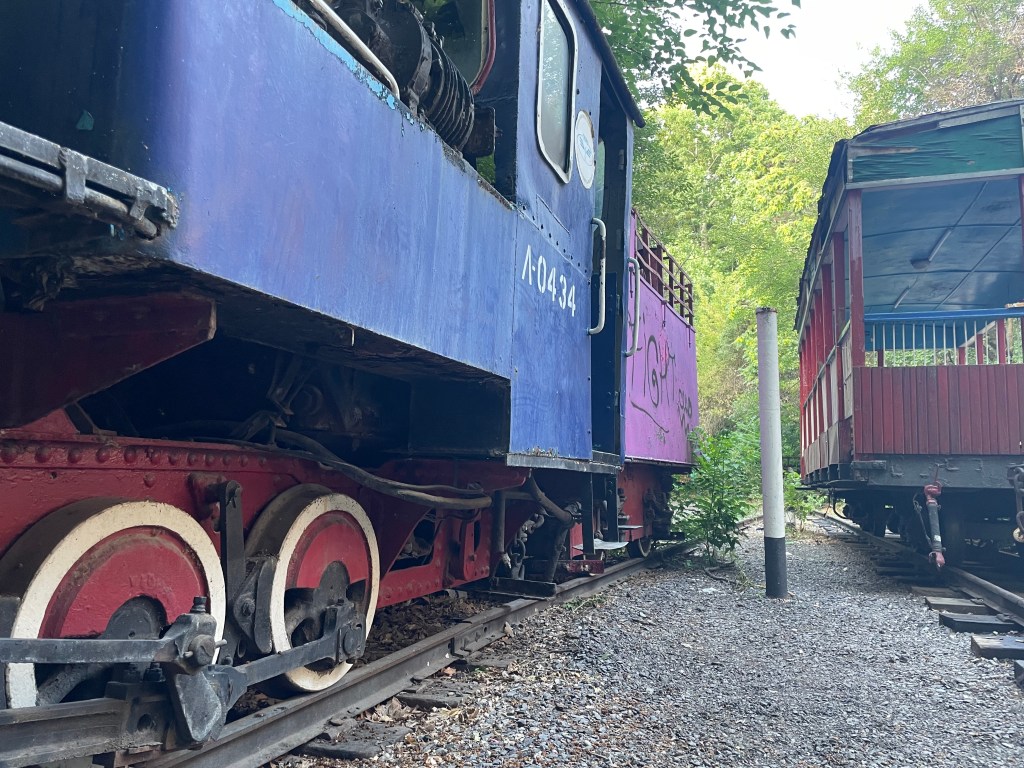
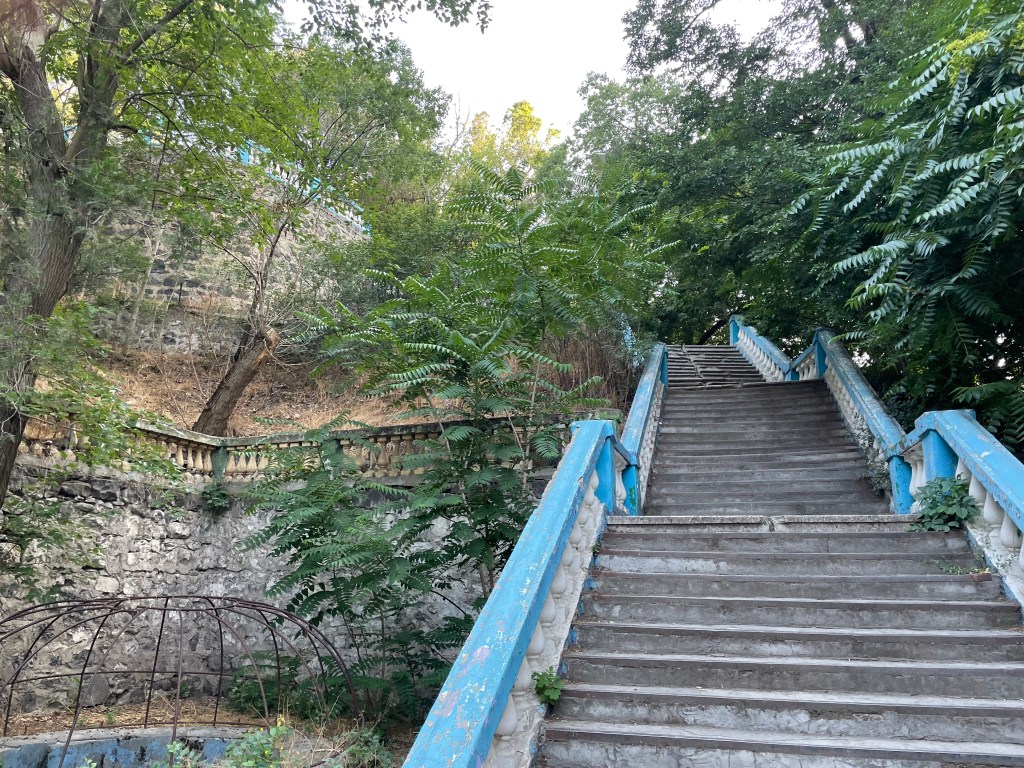
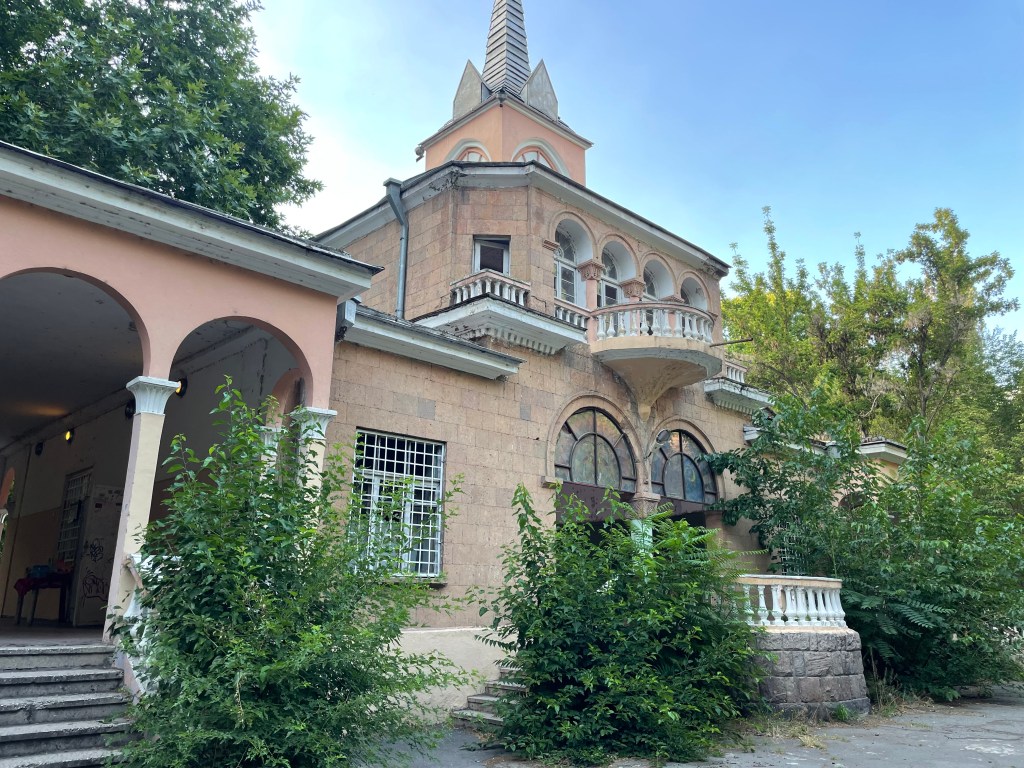
On the other side of the tunnel is the Hrazdan River, which along with a few newer developments, is home to a disused Soviet-era children’s railway. I found this absolutely fascinating to wander through, looking at the old Soviet locomotives, and the railway station itself, which was overgrown with shrubbery.
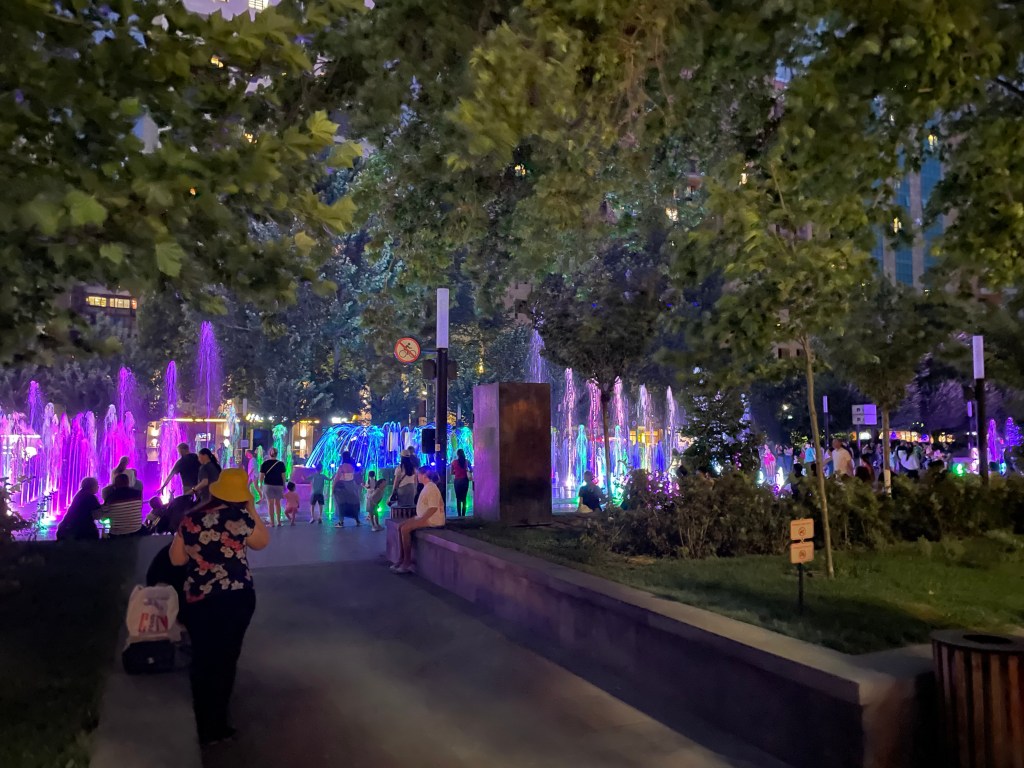
We walked back into the city as the sun began to set, lending a beautiful colour to Yerevan’s pink-brick buildings. Near the Kond Tunnel entrance are several squares between the two main streets – these were lit up fantastically, and were filled with people and families until late at night, which was wonderful to see!

 Global Wanderer
Leave a comment