


29/6/2022 – 2/7/2022
I woke up this morning, ate breakfast, and made sure that I was ready to depart for Khiva. There are several ways to get from Bukhara to Khiva, including a train line, private drivers, shared taxis, and marshrutkas. I had spoken to the guy who ran the place I had stayed at in Bukhara, who knew someone who was driving from Bukhara to Khiva that day, Nazrullo, who would be happy to take me with him, and would even detour by some of the Khorezm fortresses dotted around the desert. I met Nazrullo outside the accommodation, and we walked over to his car, where I was just about able to cram my bag into the boot, which was taken up by an obscenely large natural gas tank. The first 2 hours or so of our drive was spent laughing at the state of roadworks (a similar theme in every country it seems!), and spotting the odd camel on the side of the road. Nazrullo spoke no English, and my Russian and Uzbek combination was not the most effective, but we did manage to communicate somewhat, which was good!
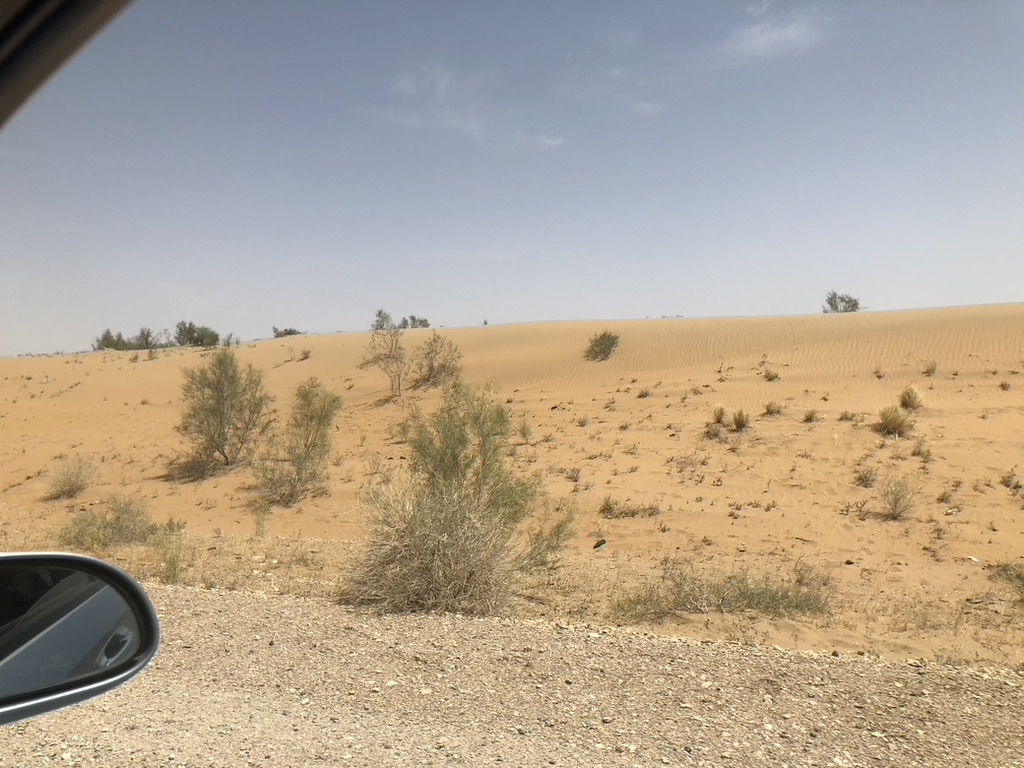
We continued to drive through the Kyzylkum desert, until we reached the first of our 4 castles – the remains of Katta Guldursun Kala. I left Nazrullo by the car, and walked my way around the southern wall of the fortress. It was certainly imposing on the landscape, and it was fascinating to stand inside the remains of the watchtowers that dotted the walls. Finally, after taking a good many photos, I headed back to the car, where Nazrullo had inexplicably acquired an immense bag of sunflower seeds. We drove with the windows down (on account of a lack of air-conditioning), and shared the sunflower seeds, Nazrullo periodically dumping the seed casings out of the window, whilst I tucked my away in a pocket of my backpack for a less messy disposal later.

We continued to drive up a barren stretch of road, interrupted occasionally by the odd camel trying to cross the road, when Nazrullo pointed ahead at the remains of Ayaz Kala, which had just come into view. Ayaz Kala is probably the most well-known of the Khorezm fortresses, and is actually a complex of three castles, one of which overlooks another. Nazrullo drove me up the stony path as far as the car would manage, then told me that I would have to get out and walk the rest of the way. At this point, the temperature was around 53º, so I donned my sunglasses and hat, and headed up the hillside. I must admit, the view from the top of the fortress was well and truly worth the drive. I spent around 30 minutes exploring the ruins, before I headed back to the car for the last stretch of the journey.

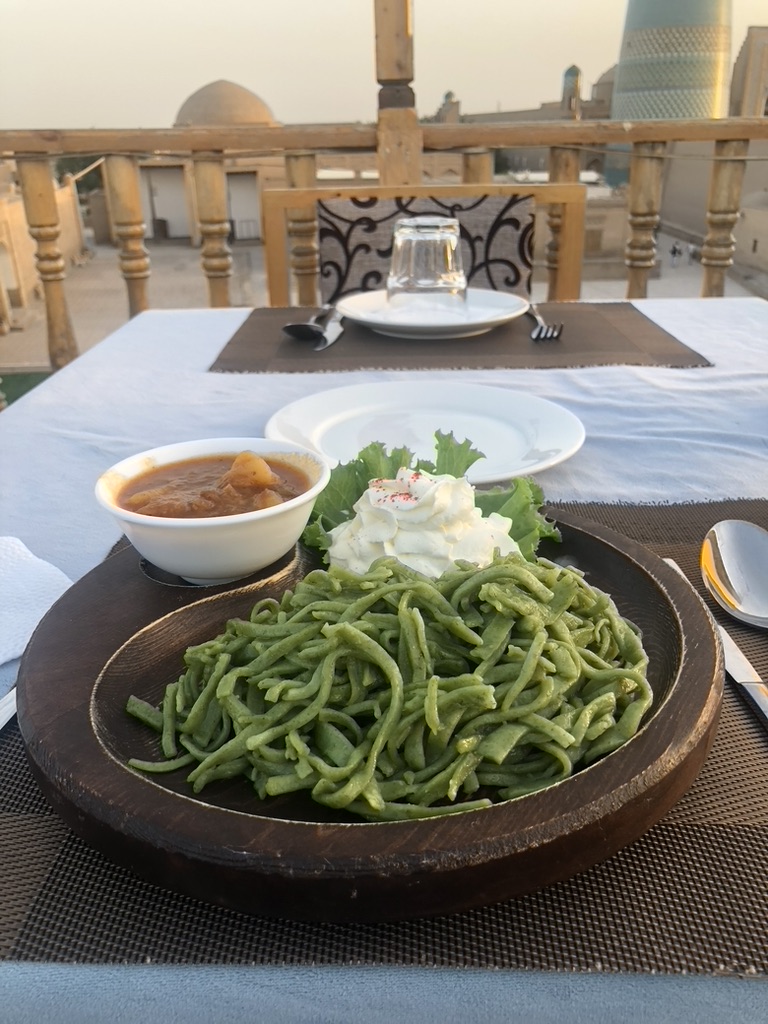
We stopped off for a short visit at two other fortresses before we found ourselves driving through Urgench on the road to Khiva. Finally, Nazrullo pulled through one of the back entrances to Itchen Kala, and dropped me off at the front of my accommodation for the next three nights, Meros B&B. Here, I met Jaloladdin, the owner, and his extended family that lived in the house. My room was upstairs, which meant that when I opened the blinds, I had a fantastic view over Khiva. It was getting late, and I was hoping to catch sunset from a rooftop somewhere, so I headed to Terrassa Cafe, a rooftop restaurant within the city walls, where I got to watch the sunset whilst eating shivit oshi, a Khivan specialty green noodle dish (incredibly tasty!).

The next morning, I went downstairs for my hearty Uzbek breakfast, then headed out to the Western Gate to buy my Itchen Kala ticket. I believe there used to be different types of tickets, but I was only offered one, which essentially gives you entry into all of the different museums and buildings dotted around the old city. The ticket cost me 130,000 som (about $16), which sounds like a lot, but worked out quite well given the amount of things you were able to visit for this one-off cost. I headed through the endless maze of side streets, and eventually found myself at the Khan’s Palace, which was one part museum, and one part archaeological masterpiece.

I spent a while wandering through the rooms of the Palace, before I left for the Juma Mosque. This mosque was one of the most interesting buildings that I had seen during my time in Uzbekistan – it was mostly underground, with the roof held up by a great number of intricately carved wooden poles. In the centre of the mosque, like an oasis, was a hole in the roof, which lit up a small, square, garden.

I spent the rest of the day wandering through the streets of Khiva’s old town, visiting sites such as the Islam Khodja mosque and minaret, and the iconic blue Kalta Minor. I tried to take full advantage of my ticket, and visited some rather niche museums dotted around Khiva, such as one dedicated to Khivan musicians, and another to the Mennonite community that once lived nearby. I then wandered outside the walls of Itchen Kala to a minimarket nearby for water (everything is MUCH cheaper outside the city walls!), and acquired some somsa for dinner on the walk home.

For my final full day in Khiva, I had a few errands to run, such as acquiring souvenirs. I had spotted a watercolour picture of the Kalta Minor at one of the stalls located along Itchen Kala’s ‘main strip’ (if you can really call it that), and spent some time talking to the artist once I had bought his picture. I then spotted one of Khiva’s many tilers, who invited me into his workshop-come-store to look at his decorative tiles. I decided that this would be perhaps the best way to bring home a piece of the beautiful blue Uzbek architecture, and bought two tiles, which immediately deposited back off at my accommodation. I then resumed my journey through Khiva, visiting the square in which slaves were sold (Khiva was once a major slave-trading hub on the Silk Road), and a small cemetery off the back of one of the mosques. For dinner that night, I again headed outside the walls of Itchen Kala to the nearby Khiva Moon restaurant, where I ate a brilliant plate of laghman, and watched the sunset from an entirely different perspective.

I had decided the night before to get up before the 5:00am sunrise for my penultimate morning in Uzbekistan, and watch from Meros’ own rooftop terrace. Whilst I was extremely exhausted, it was certainly worth it, as the rising sun turned Khiva’s vast expanse of sandy-coloured buildings into a sea of gold.

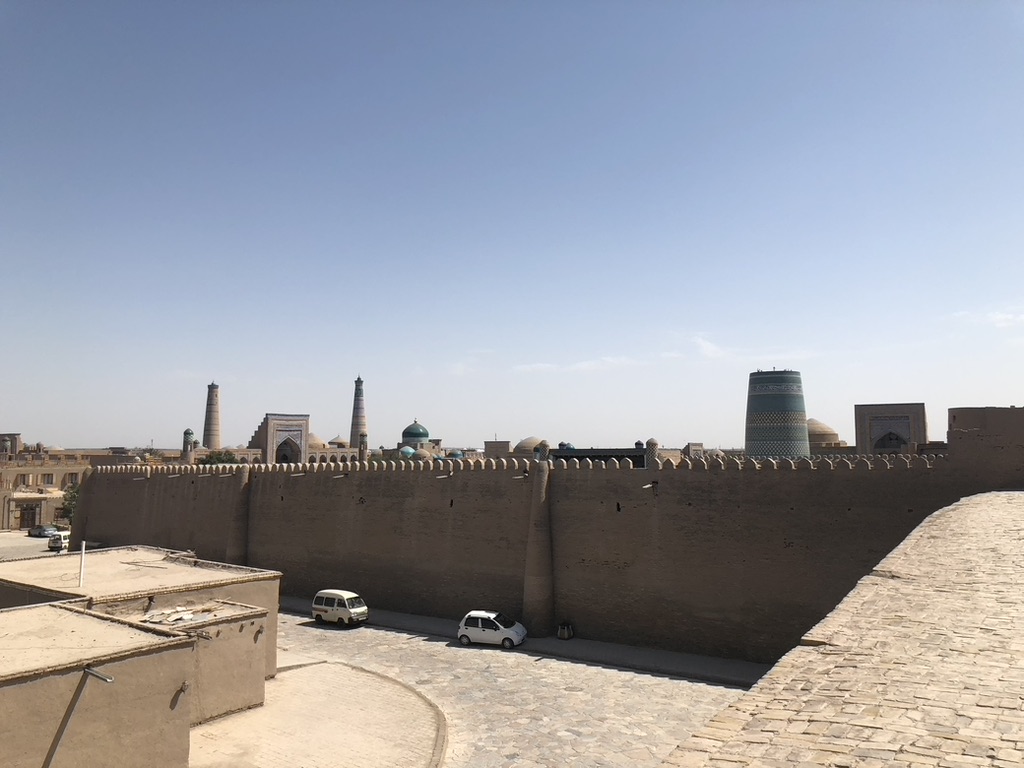
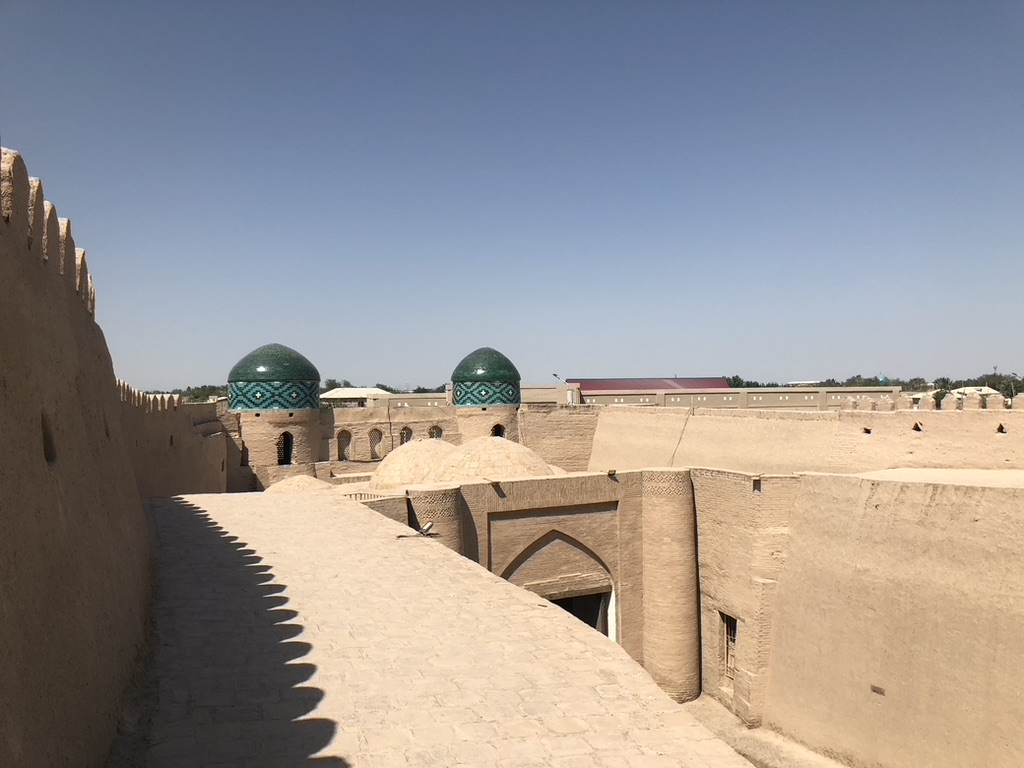
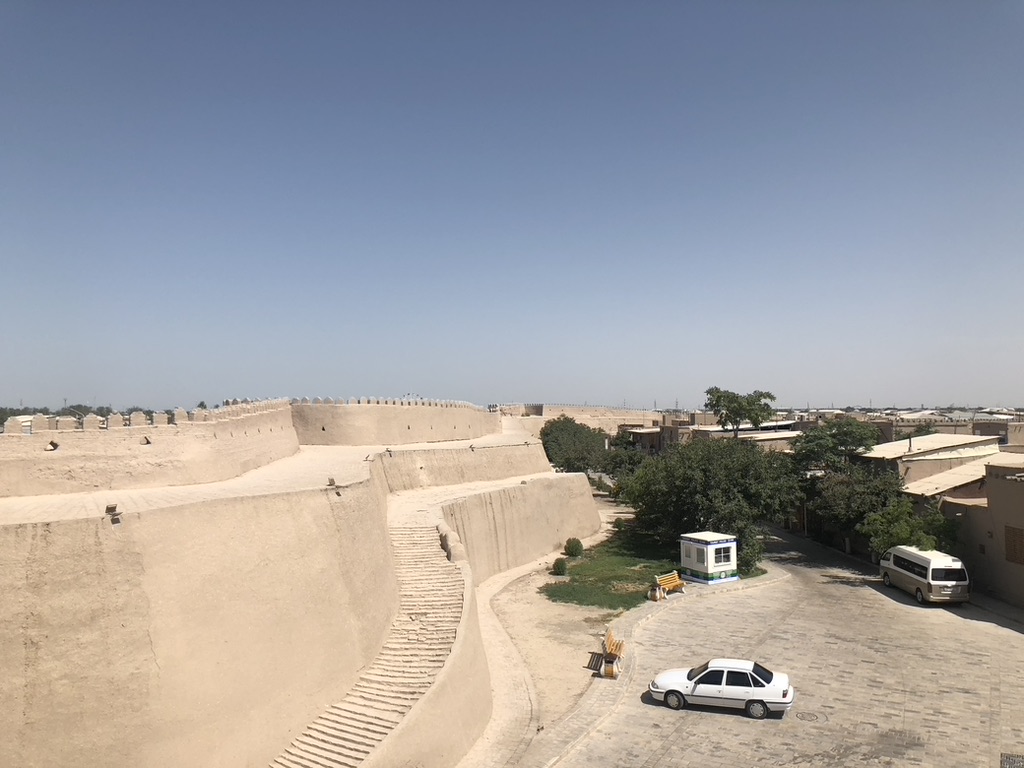
I then decided to climb the stairs at the Northern Gate, and walk along the old city walls. Whilst the walkway is not a continuous loop (meaning you do have to backtrack on yourself), it was worth the time to see the city from a completely different angle, and was one of the most peaceful places in Khiva.
Once I had made it back to Meros, I packed my bags, and ate my last proper Uzbek breakfast, before checking out, and heading for the bus stop just outside the Northern Gate, where I would make my way to my final Uzbek destination, Urgench.


 Global Wanderer
Leave a comment