

19/6/2022 – 22/6/2022
This morning, I woke up early, double-checked all my bags, and checked out of my hotel in Istanbul. I was finally off to Uzbekistan!
I caught the same Havaist bus that I caught from the airport, again 52 lira ($4.20), expecting the trip to take a similar amount of time. I was caught off guard though – we breezed through the traffic and got to the airport in 40 minutes, which must have been some kind of record! This left me about 3.5 early for my flight, which meant I had to loiter around the airport for a little bit (handy tip, Istanbul Airport doesn’t really have many facilities prior to passport control – but most Turkish Airlines flights let you check in pretty early so it’s usually no issue). Finally, the large boards in the check-in area told me the the Uzbekistan Airways flight to Tashkent check-in desk was open. I headed over and had my very first taste of Uzbek airline queueing etiquette – shove everybody out of the way and move to the front of the queue as fast as possible. However, before I could be jostled around too much, I was pulled out of line by some airline officials, who asked to look at my passport. Unable to determine if I was allowed visa-free entry into Uzbekistan (I knew that I was, but I didn’t want to argue), my passport was handed around a number of people, until one pulled out their phone and searched up the entry conditions. Sure enough, Australians are given visa-free entry into Uzbekistan! I checked in my bag, made my way through passport control, and whiled away the two hours til my flight by eating a kebab and drinking some kind of carrot-y juice.

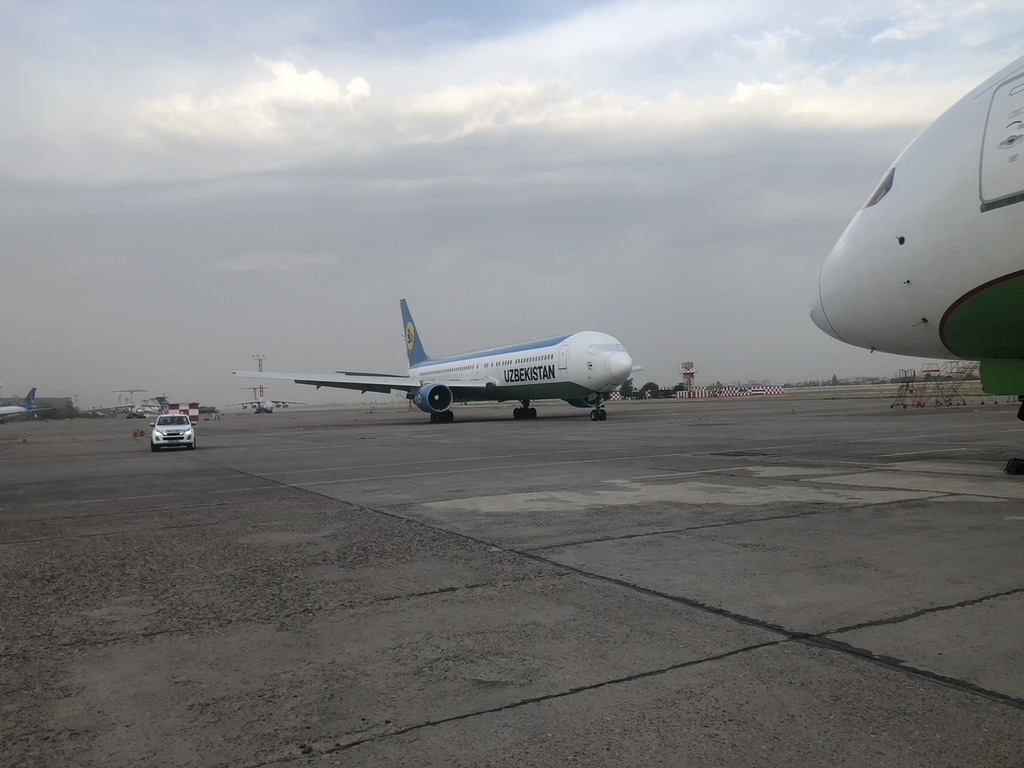
After an uneventful flight (aside from ordering drinks, where I forgot the Russian word for white (as in white wine) and decided not to embarrass myself so asked for Pepsi instead), we landed in Tashkent. I won’t lie, at this point I felt like Neil Armstrong when I stepped off the stairs and onto the tarmac. We were bussed to the terminal, and a stony-faced guard with an AK-47 strapped to his chest directed the foreigners to an immigration queue, where my passport was stamped and I was waved through. I had decided that, in spite of the costlier price of SIM cards at the airport, it was worth being able to order a Yandex (their version of Uber), and let everyone at home know that I had arrived safely. There was no working ATMs in the airport, however, so I was forced to exchange 20USD for around 214,000 som. I made my way through the pushy taxi drivers, found my Yandex, checked in at ART Hotel, and promptly went to bed.
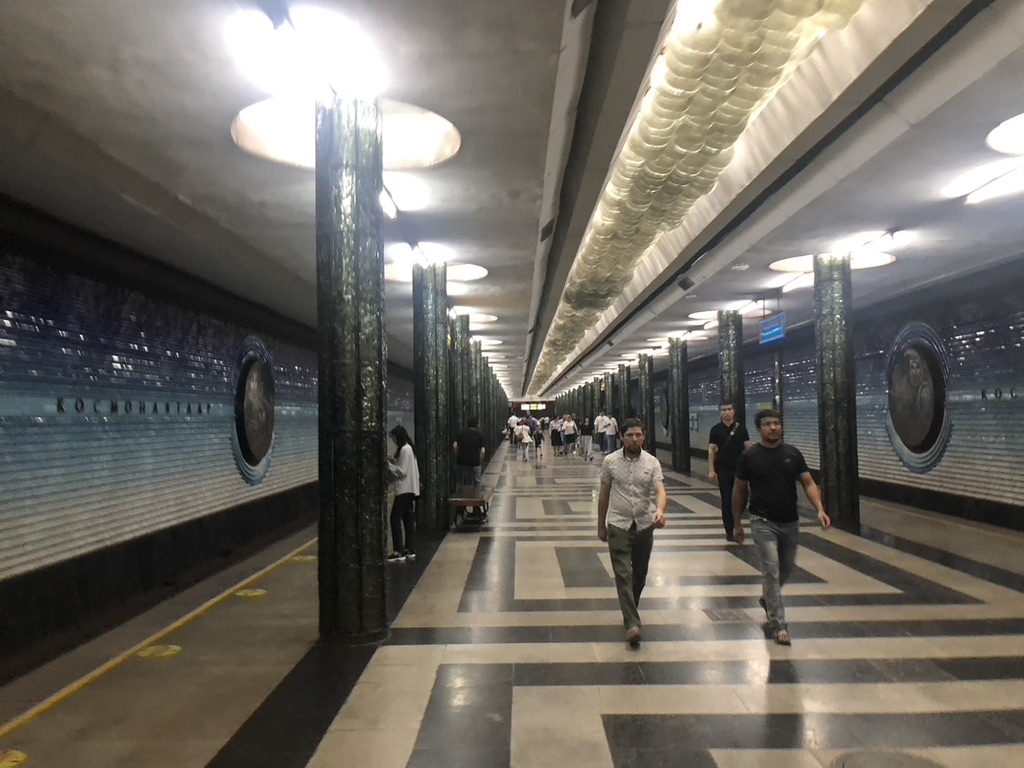
My first full day in Tashkent started with a basic Uzbek breakfast in the hotel, followed by a twenty minute walk to the nearest metro station, Kosmonautvlar. From here, I paid 1,400 som ($0.17) for a ticket, and rode the train to Tinchlik in the northwest of the city, where I got off and walked to the small Chigatay Bazaar. I had been told that one could find some of the best nokhat shurak here (chickpea, mutton, and onion dish), and sure enough, a nice old lady with gleaming gold teeth served me a large bowl with bread and tea for 45,000 som ($5).

At this point, the heavens opened, and I decided to scrap my original plan to walk to the Khast Imam complex, and ordered a Yandex instead, for about 15,000 som ($1.70). By this point the rain had mostly died off, and I was able to wander around the complex and visit the Koran museum at the centre, which I thought was a little expensive at 30,000 som ($3.25), until I realised how little it was in AUD. I did come to realise that 30,000 som was pretty much the standard entry fee to pretty much any museum, monument, etc. in Tashkent, Samarkand, and Bukhara.

Given that the weather seemed to have improved, I decided to walk my way to Chorsu Bazaar, and acquire some freshly baked non bread. The bazaar itself was huge, housed under a large blue and white dome, and was divided into quadrants – meat, fruit and veg, spices, and a fourth section that seemed to sell anything else. Outside the bazaar was more market stalls selling more fruit, veg, and spices, as well as a large building housing a number of bread ovens. The sights and smells here were incredibly interesting, and definitely worth walking around.


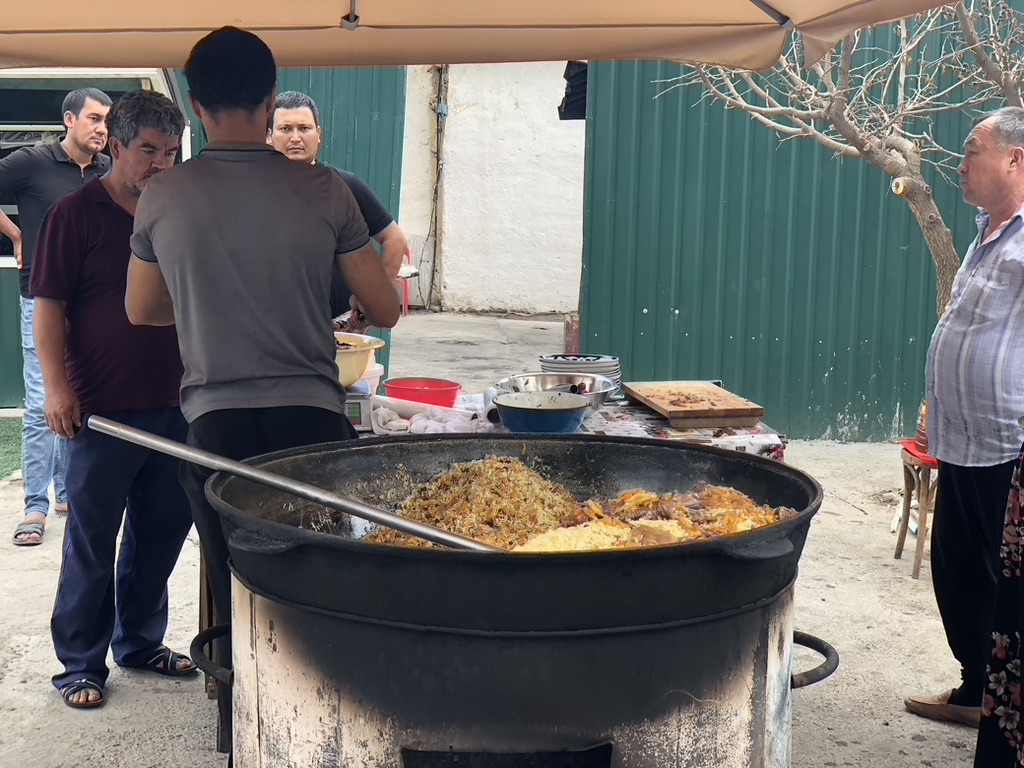
I realised that I had spent almost two hours happily wandering through the bazaar, so decided it was probably time to acquire some afternoon food. A small restaurant nearby with a large, steaming pot of plov outside seemed appealing enough, and I got my first taste of Uzbekistan’s national dish, along with a pot of green tea, for 25,000 som ($3). With my injured knee playing up, I decided it was probably time to call it a day, and made my way back to the hotel.
On my way, however, I managed a detour to a working madrassah which sat rather oddly between two large Soviet-era buildings, and a market thoroughfare. As I stood under the arches, marvelling at the tilework, the Imam came out to investigate what I was doing. I explained in broken Uzbek that I was enjoying looking at the tiling on the arch, to which the Imam smiled, and asked in English if I would like to take a quick walk around the interior of the madrassah. I enthusiastically agreed, and spent the next ten minutes wandering around the courtyard, peering into the students’ cells, and watching a class be taught. It was all rather fascinating, a glimpse into an entirely different world, and I thanked the Imam profusely on my way out. I then headed back to the hotel for the night.

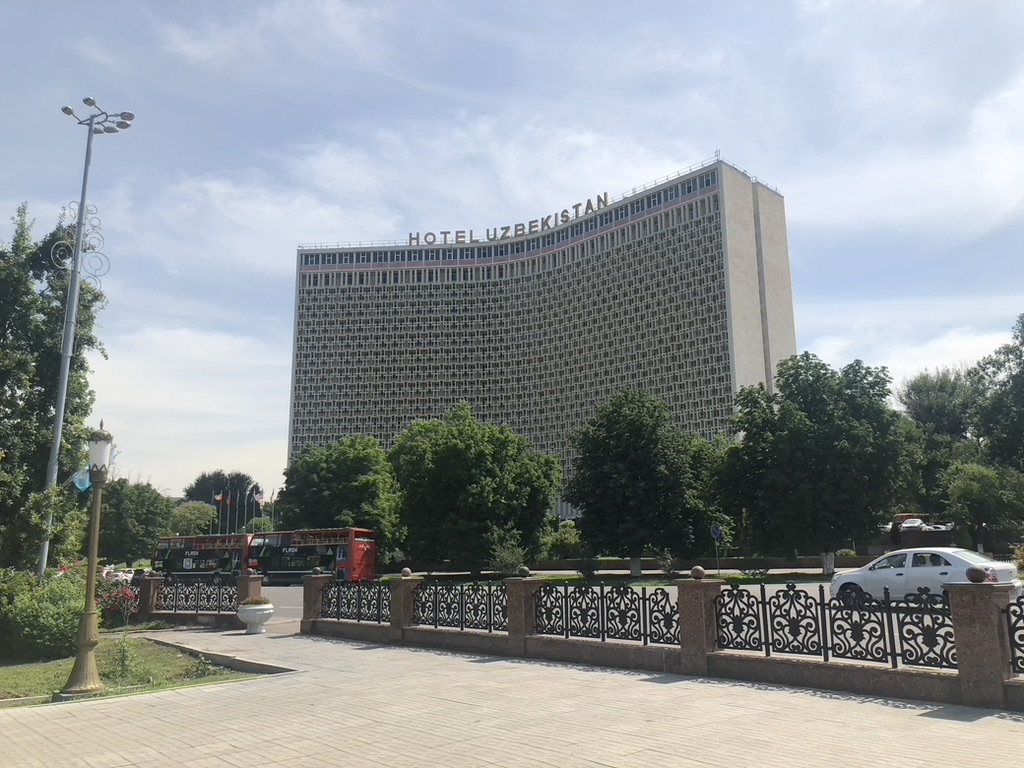
My second day in Tashkent started once again with Uzbek breakfast, following which I made my way to Kosmonautvlar station. I headed into the city centre, and found myself underneath the colossal Hotel Uzbekistan. This piece of insane Soviet concrete architecture had once been the Intourist (state tourism service for Westerners) hotel in Tashkent, and was one of the most impressive Soviet buildings I had seen. I walked a little further into the park ahead of the hotel to find a large statue of Amir Timur on horseback. The contrast between THAT Uzbekistan, and the one epitomised by the hulk of concrete behind it, was incredible.
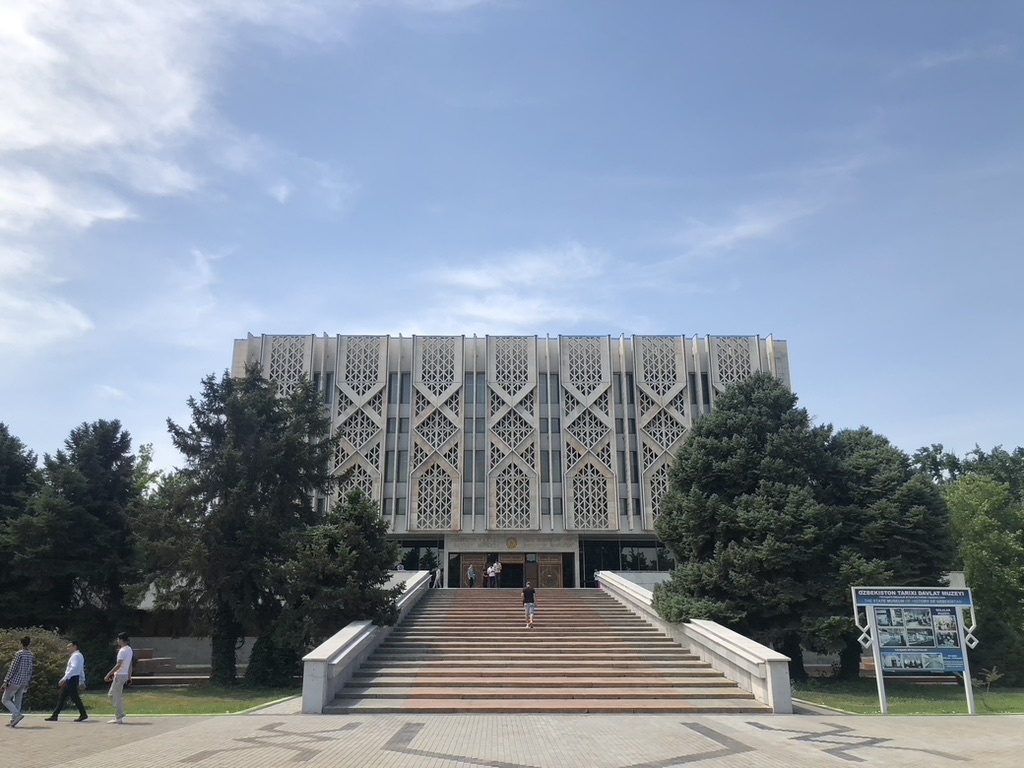
I then made my way to the State History Museum, where I deciphered that as a foreign student, I was entitled to some kind of discount. The lady at the ticket counter seemed a little confused by my Australian student ID card, but accepted it nonetheless, and I went inside 30,000 som ($3.50) lighter. The museum was relatively small, but gave an interesting insight into the history of Uzbekistan, from ancient times to the Russian conquest of the territory.
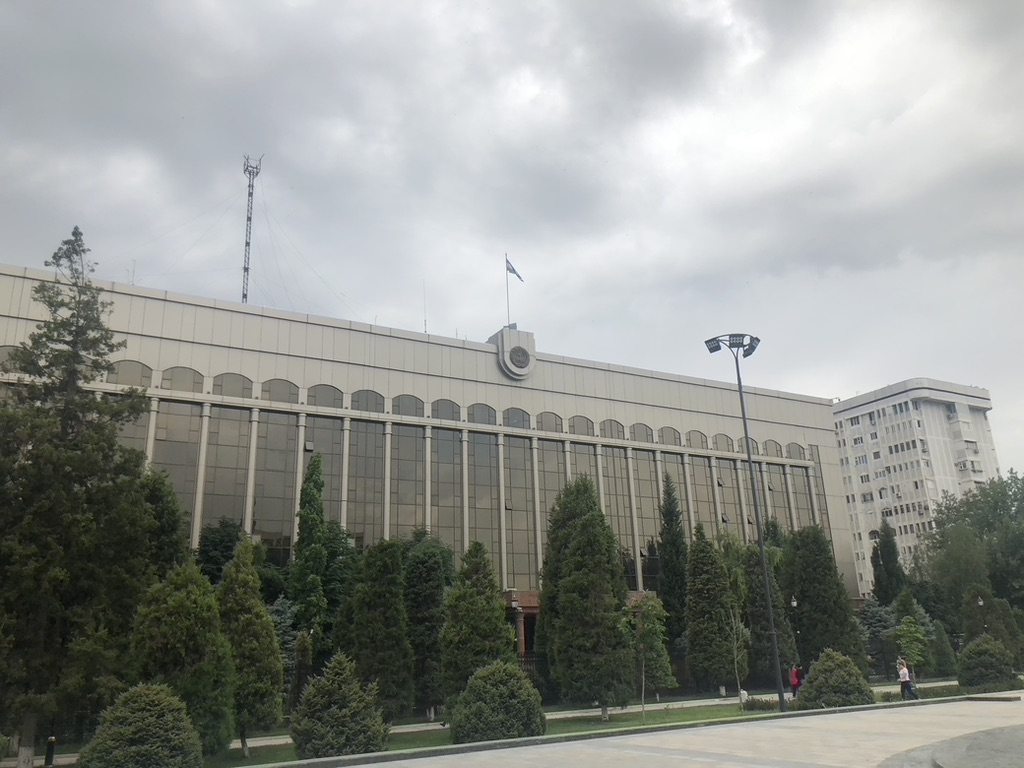
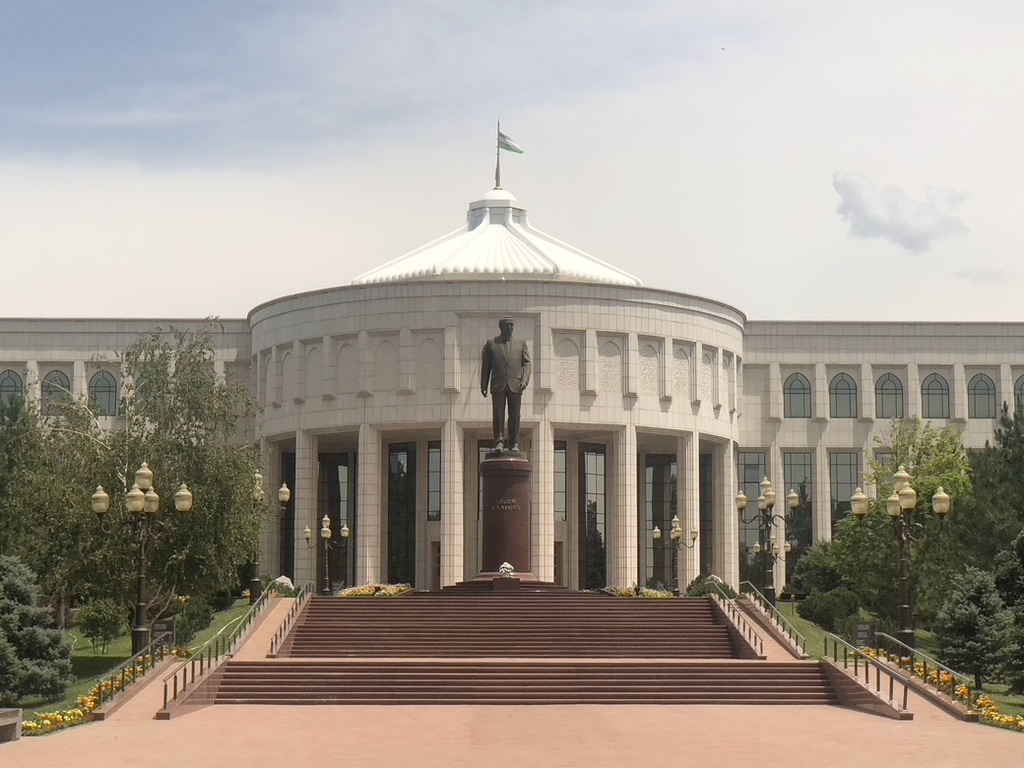
Next, I walked a little further along to the White House – the former residence of their late president, Islam Karimov. In the grounds was a building that housed a free ‘exhibition’ on the former president, which consisted of two halls, one filled with paintings and memorabilia, and the other filled with photographs. I was shown around by a middle-aged woman who told me all about their president’s achievements and how fantastic he was. It was certainly interesting to see the ‘loyalist’ take on his rule!
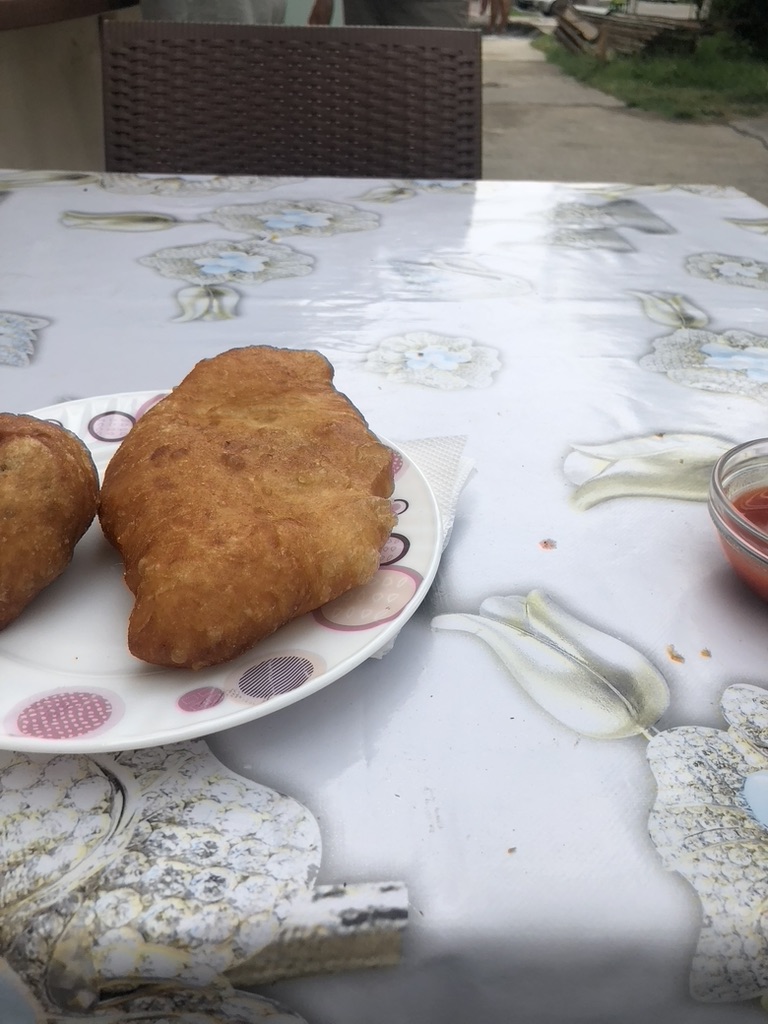
On my walk back, I stopped at a small hole-in-the-wall that appeared to be dishing out some kind of fried food to hungry locals. I figured out that what they were selling was called ‘gumma’ – a type of fried dough ball filled with vegetables and minced meat, but could not work out what meat it was, as the ladies cooking it only spoke Uzbek. I sat down nearby and discovered that it was perfectly edible, and quite tasty. I got talking with a local Uzbek who spoke some English (he worked for an Uzbek tech company), who too was eating gumma from the ladies on the street. I asked him if he knew what meat was in it – horse, apparently! Served with the gumma was a fried potato bread with chilli sauce, which was as delicious as it sounds.
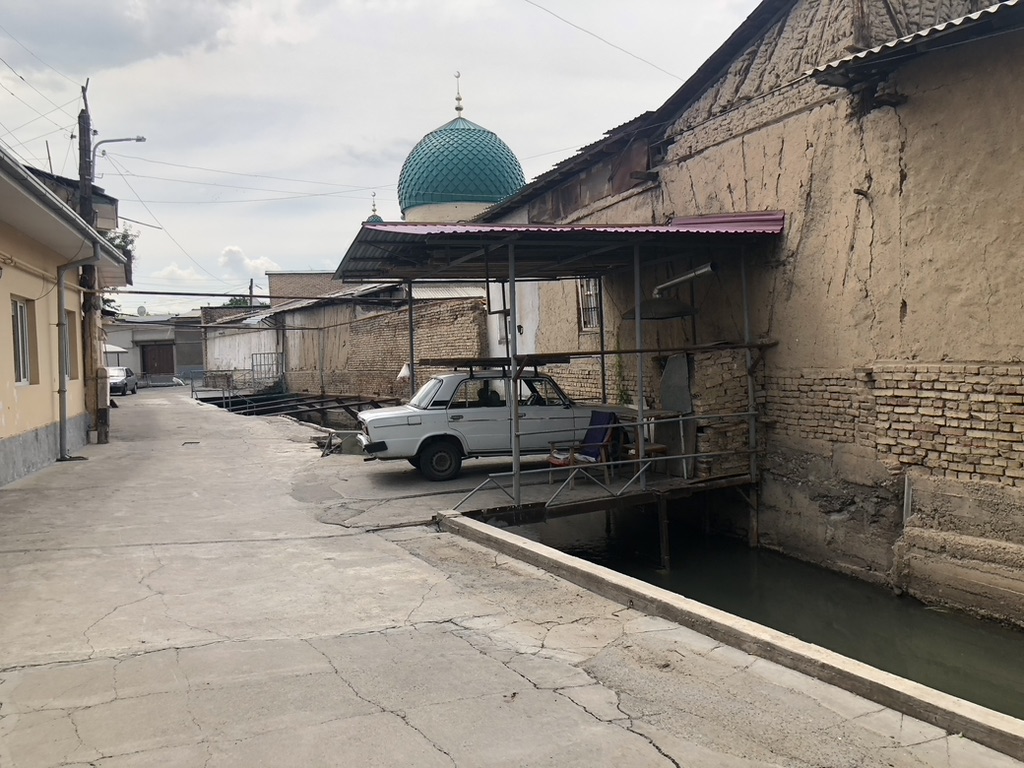
Once I had finished, I set off to the northwest of the city again, where I aimed to walk through the streets of the old Tashkent mahalla (local neighbourhood), following the winding Kolkouz canal. This was fascinating, as I saw locals going about their daily business, a donkey that seemed to look lost, and the occasional open courtyard, letting me glimpse into old-fashioned Tashkent living. Whilst most of Tashkent was rebuilt after the 1966 earthquake, Tashkent mahalla is a great example of what the city looked like prior to this. The highlight of my day came as I walked past a group of kids playing a game of football. Despite my knee screaming at me, I gave in to their pleas for me to join them, and spent the better part of 20 minutes being completely humiliated by these boys. Nevertheless, it was awesome to be a part of daily life if just for a fleeting moment.
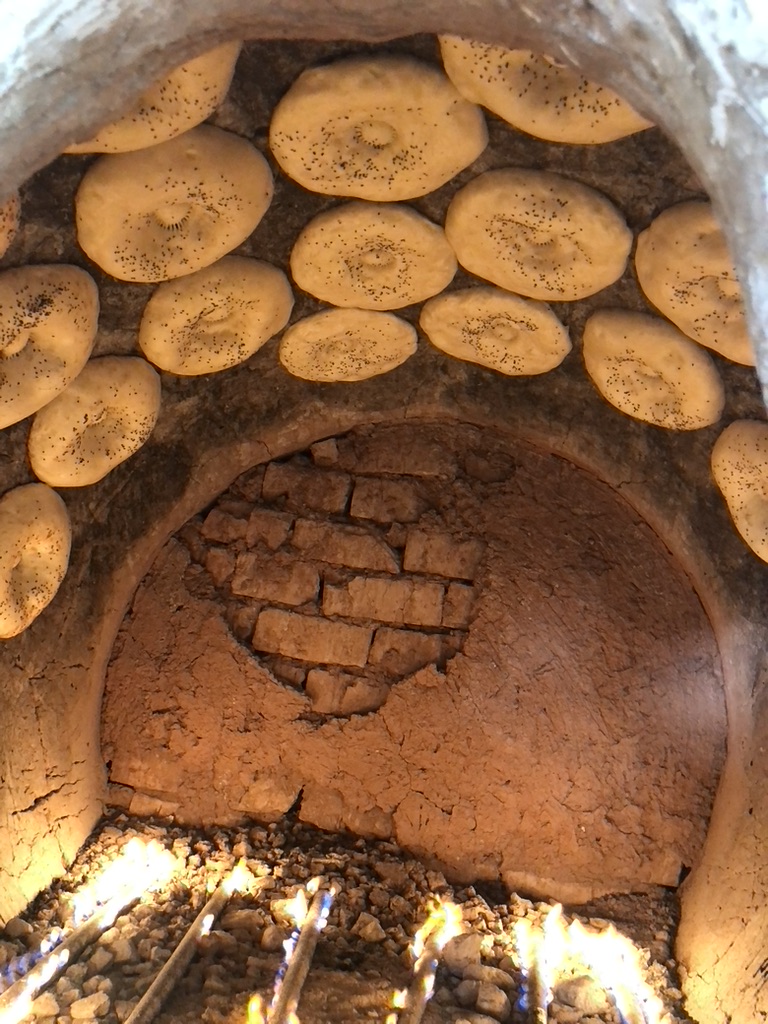
To finish off my day, I decided to head back to the bakery at Chorsu Bazaar, to acquire some bread for my train journey the following day, and to see if I could get a glimpse inside the giant ovens. Some basic Russian got me inside the bakery itself, and a few well-placed words of Uzbek along with my clear curiosity led one baker to let me take a look around his oven area whilst he worked around me. The heat off the oven was utterly intense, and I could only imagine what it would be like to work next to it all day, every day. The process for baking the non bread was fascinating – the baker, once he had shaped the bread, used a long metal rod to grab it in the centre, and ‘stick’ it to the walls and roof of the oven. He would then scrape it off when it was done, where it was sold steaming hot to customers outside for 5,000 som ($0.70). I thanked the baker for letting me see his oven, bought myself some bread, and made my way back to the hotel on the metro. I made sure my bag was all packed, and got an early night’s sleep ahead of the next day’s train journey to Samarkand!


 Global Wanderer
Leave a comment